
Comparison
Aleppo pepper vs gochugaru: which chili flake?
Aleppo is a finishing flake: sweet-sour raisin and tomato, dusted over the plated dish, sold in a 50g jar. Gochugaru is a cooking flake: ripe-fruit heat that builds, bought by the pound, mixed into kimchi paste and marinades. Both are gentle and fruity. Buy Aleppo to garnish, gochugaru to cook Korean.
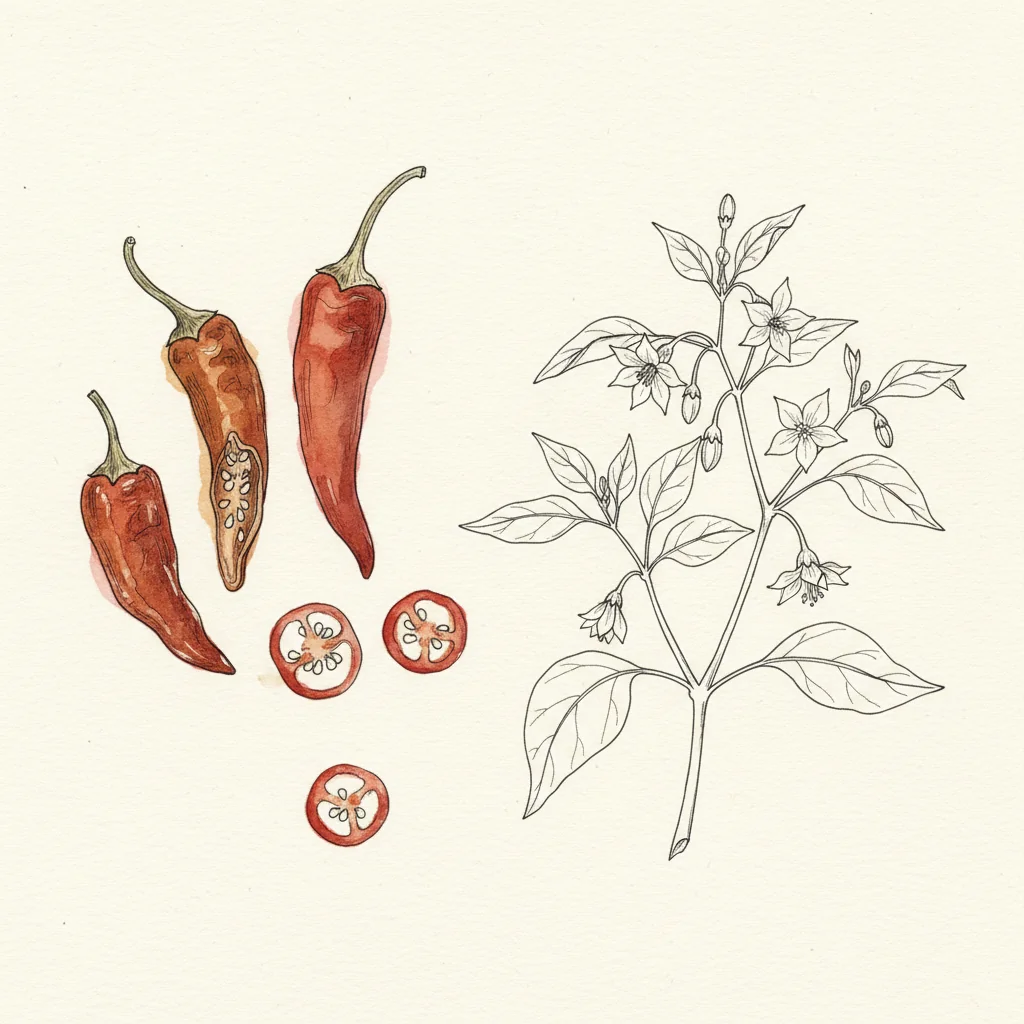
Spice · Chile
Aleppo Pepper
Southern Turkey (Gaziantep, Kahramanmaraş) and northern Syria (Aleppo), Turkey / Syria
sweet-sour fruit · raisin · sun-dried tomato
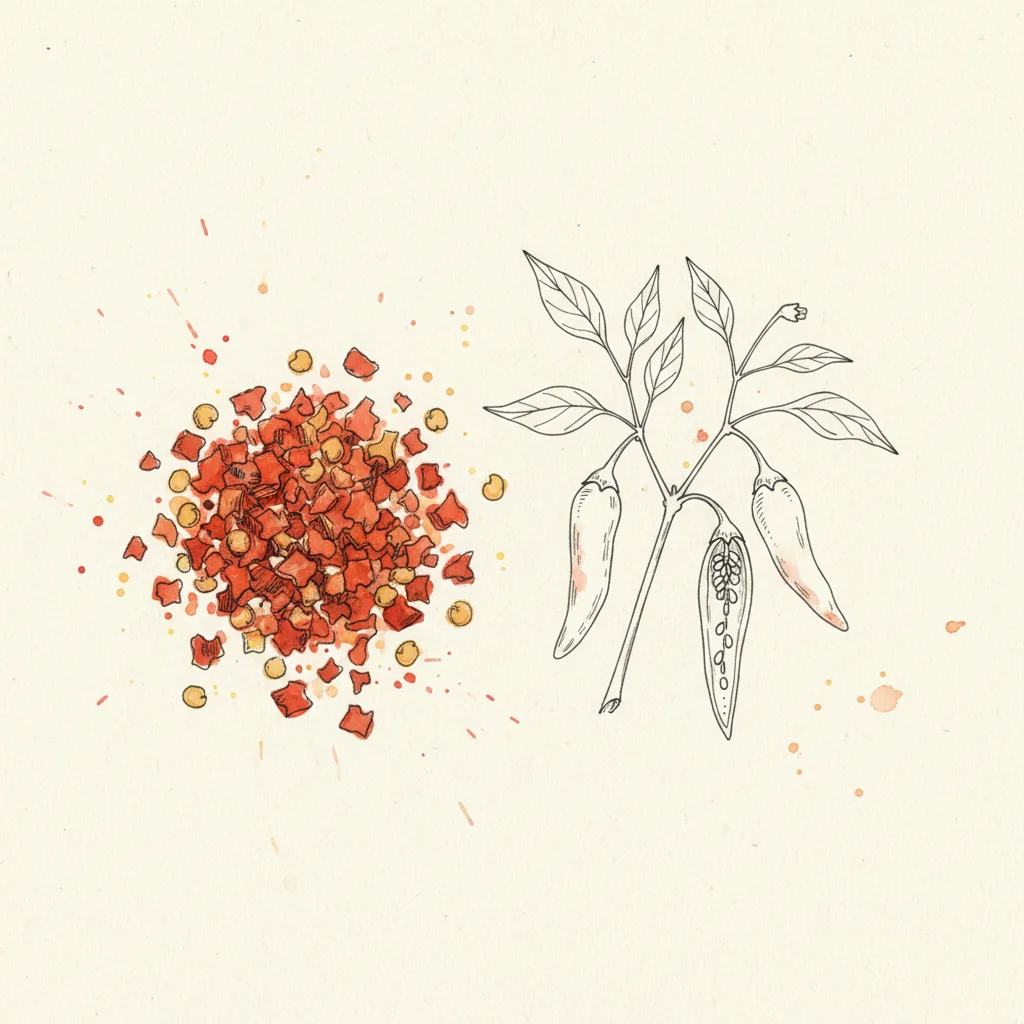
Spice · Chili flakes
Gochugaru
Yeongyang (Gyeongsang North) and Goesan (Chungcheong North), South Korea
ripe red fruit · baked apple · sun-dried tomato
Our verdict
Aleppo to finish a plate, gochugaru to build Korean dishes.
At a glance
| Criterion | Aleppo Pepper | Gochugaru |
|---|---|---|
| Origin | Southern Turkey / northern Syria | South Korea (Yeongyang, Goesan) |
| Flavor profile | Sweet-sour fruit, raisin, sun-dried tomato | Ripe red fruit, baked apple, sun-dried tomato |
| Intensity | 4/10, builds gently, never bites | 5/10, builds on the second taste |
| When it goes in | Finishing, dusted over the plate | Cooking, into marinades and kimchi paste |
| Best use | Hummus, eggs, tomato salads, grilled lamb | Kimchi, bibimbap, tteokbokki, bulgogi, chili oil |
| Median price | ~$9 / 50g jar | ~$15 / 1 lb bag |
| Value | Cheap per jar, garnish-scale doses | Bought in bulk because you cook with volume |
When to choose Aleppo Pepper
Aleppo pepper is the finishing flake, and you choose it whenever the chili goes on last. Now mostly grown and milled in southern Turkey, sold there as pul biber, it carries a sweet-sour, raisin-and-tomato fruit and a mild, oily warmth, a gentle 4 out of 10 that builds slowly and never bites. The point of Aleppo is the dusting at the end: it's bought in a small 50g jar precisely because you use it by the teaspoon over a plated dish, not by the cup in a pot. Four scenarios where Aleppo is the right call. First, over hummus or labneh, where the garnet color and fruity warmth are the finishing flourish. Second, on eggs and shakshuka, where it frames the yolk without cooking into the dish. Third, tomato salads and roasted vegetables, where its sweet-sour edge meets the produce raw. Fourth, grilled lamb, dusted at the table for fruit and color. The rule: finish, don't cook. One to two teaspoons for four, roughly 2 grams a portion. Don't bury it in a long braise that flattens the fruit. Where this matters against gochugaru: Aleppo is a Mediterranean and Middle Eastern garnish, gochugaru is a Korean cooking base, and they don't really do each other's jobs. If you want a flake to scatter over the finished plate, color and a gentle fruity warmth, Aleppo is built for exactly that. Color is your freshness gauge: lustrous garnet is alive, dull brown is dead, so buy small and use within about 15 months. At around $9 a jar it's the cheap, reflexive finishing move.
When to choose Gochugaru
Gochugaru is the cooking flake, and you choose it whenever the chili gets built into the dish rather than dusted on top. Korean red chili dried in the sun then crushed to a medium flake, it's a bright red-orange with a gentle 5 out of 10 heat that doesn't bite on contact, it settles in and builds on the second taste. This is the backbone of kimchi, bibimbap and gochujang, and you buy it by the pound, not the ounce, because Korean cooking uses it by volume. Four scenarios where gochugaru is the answer. First, napa cabbage kimchi, where it's mixed to a paste with water and fish sauce: two teaspoons per 2 pounds of cabbage. Second, a bulgogi marinade, where it's stirred in and given time to bloom. Third, tteokbokki and bibimbap, where its ripe-fruit, baked-apple sweetness is the dish's flavor, not a garnish. Fourth, homemade chili oil, where the medium flake gives both color and a slow, fruity heat. The rule: gochugaru is for cooking, stirred into a marinade or partway through, not sprinkled at the last second. Don't confuse it with Italian pizza-shop flakes that bite sharp; gochugaru is the opposite, a settling warmth. And don't waste it on jobs it isn't built for: delicate sweets like panna cotta, clear oil-and-vinegar dressings, or smooth fresh cheeses, where its fruity heat has nowhere to go. Store it in a resealable bag or airtight jar, ideally refrigerated after opening to hold the color and natural moisture; it keeps its punch about 12 months. A 1 lb bag runs about $15 and lasts months of real cooking. Where this beats Aleppo: if you're making anything Korean, or you want a flake that becomes part of the dish rather than a topping, gochugaru is the one to commit to in bulk.
Where to buy?
Aleppo Pepper
Links checked on
| Merchant | Price | Action |
|---|---|---|
| Burlap & Barrel (Silk Chili) | — | Burlap & Barrel (Silk Chili) |
| Amazon US | — | Amazon US |
| Sous Chef UK | — | Sous Chef UK |
Prices may vary depending on current promotions on the merchant site.
Gochugaru
Links checked on
| Merchant | Price | Action |
|---|---|---|
| Amazon US | — | Amazon US |
| Sous Chef UK | — | Sous Chef UK |
Prices may vary depending on current promotions on the merchant site.
Frequently asked questions
- Can I use Aleppo in place of gochugaru for kimchi?
- Not really. Kimchi needs gochugaru's volume, color and fruity heat built into the paste; Aleppo is a finishing flake sold in small jars and would be both expensive and flat in that role. For authentic kimchi, use gochugaru. Aleppo is a garnish, not a base.
- Which is hotter?
- Gochugaru, slightly, around 5 out of 10 to Aleppo's 4. Both are gentle, building warmths rather than sharp heat. Gochugaru settles in on the second taste; Aleppo builds slowly and finishes on a raisin-sweet note. Neither will hurt you.
- Do they taste similar?
- Closer than you'd expect. Both carry a sun-dried-tomato, ripe-fruit sweetness. Aleppo leans raisin and sour; gochugaru leans baked apple and honey. The bigger difference is how you use them: one finishes, one cooks.
- Why is gochugaru sold in such big bags?
- Because Korean cooking uses it by volume, two teaspoons per 2 pounds of cabbage for kimchi alone. A 1 lb bag at about $15 is normal and lasts months. Aleppo, by contrast, is a teaspoon-at-a-time garnish, so it comes in a 50g jar.
The best pairings
With Aleppo Pepper
With Gochugaru
Comparison prepared according to our methodology. Sponsored purchase links — see our affiliations.