
Aleppo Pepper, or Turkish Pul Biber — sun-dried Capsicum annuum flakes
In brief — Dark-garnet flakes once made around Aleppo in Syria, now mostly grown and milled across the border in southern Turkey, where the same crop is sold as pul biber. Sun-dried, deseeded, cut with a little salt and sometimes oil, they carry a sweet-sour, raisin-and-tomato fruit and a mild, oily warmth, nothing like the generic pizza-shop chili flake. This is an everyday heat, not a knockout. Its aromatic profile develops notes of sweet-sour fruit, raisin, sun-dried tomato, extended by olive oil and light cumin, for an intensity of 4/10. In the kitchen, it's best added as a finishing touch, dusted straight over the plated dish and it pairs with hummus and labneh, grilled lamb, eggs and shakshuka. Recommended dosage: 1 to 2 teaspoons for four people as a finish, roughly 2 g a portion. Expect from $7.00 to $12.00 per 1.8 oz (50 g) jar (median $9.00).
Origin : Southern Turkey (Gaziantep, Kahramanmaraş) and northern Syria (Aleppo), Turkey / Syria
Capsicum annuum
« The most useful chili flake to keep within reach: sweet-sour raisin fruit, real tomato warmth, and a heat mild enough for daily use. It only misses the top mark because shelf-faded, brown-toned jars are common and kill the whole effect. »
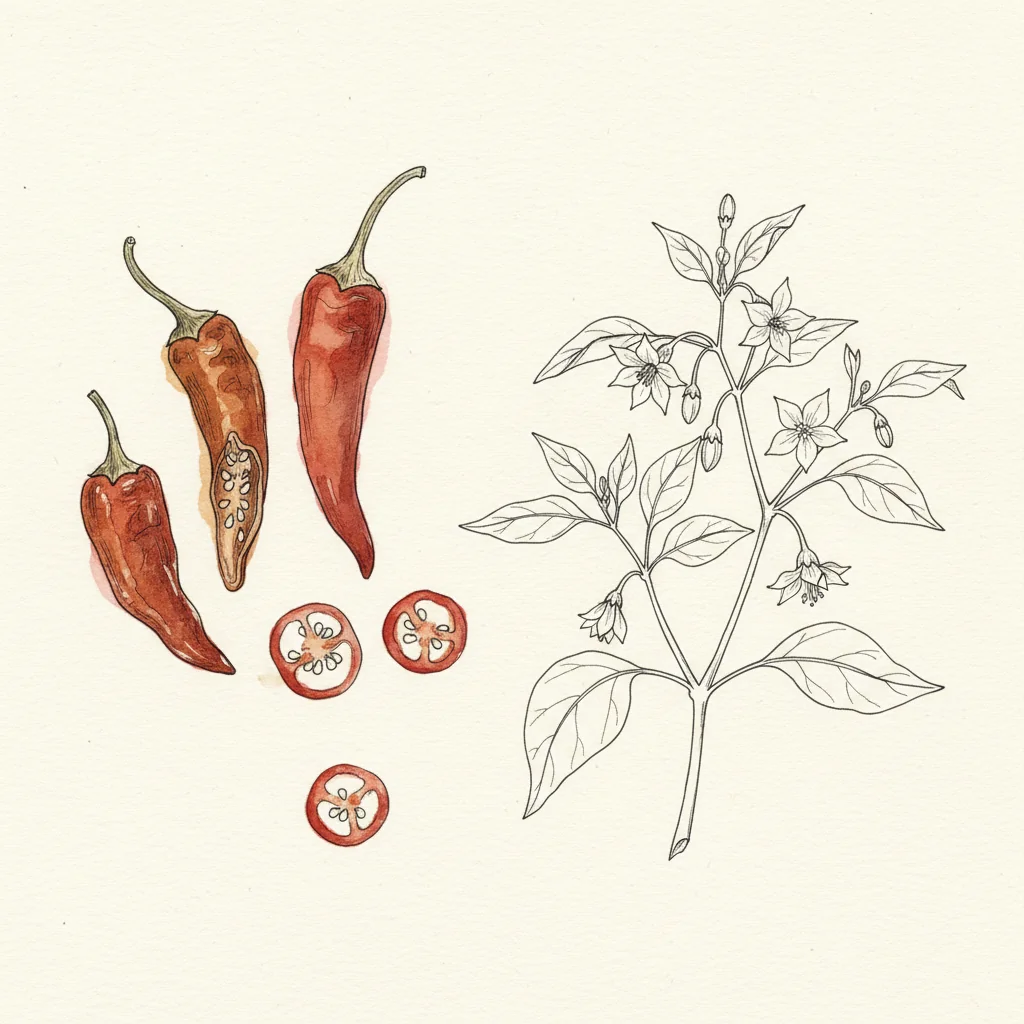
Dark-garnet flakes once made around Aleppo in Syria, now mostly grown and milled across the border in southern Turkey, where the same crop is sold as pul biber. Sun-dried, deseeded, cut with a little salt and sometimes oil, they carry a sweet-sour, raisin-and-tomato fruit and a mild, oily warmth, nothing like the generic pizza-shop chili flake. This is an everyday heat, not a knockout.
Spice · Chile
Aleppo Pepper
Southern Turkey (Gaziantep, Kahramanmaraş) and northern Syria (Aleppo), Turkey / Syria
sweet-sour fruit · raisin · sun-dried tomato
Aromatic profile
| Family | Capsicum annuum |
|---|---|
| Intensity | ●●○○○ (4/10) |
| Main notes | sweet-sour fruit · raisin · sun-dried tomato |
| Secondary notes | olive oil · light cumin · a whisper of balsamic |
| Mouthfeel | a warm, oily, slow heat that builds gently and never bites; fruity rather than fiery |
| Finish length | medium, finishing on a raisin-like sweet-sour note |
Culinary use
- When to add : finishing, dusted straight over the plated dish
- Dosage : 1 to 2 teaspoons for four people as a finish, roughly 2 g a portion
- Ideal pairings : hummus and labneh, grilled lamb, eggs and shakshuka, tomato salads, roasted carrots and squash, Greek yogurt
- Avoid with : long braises that flatten the fruit, dishes already loaded with competing heat, delicate sweet preparations
The grain in detail
Aleppo pepper, pul biber in Turkish (literally chopped pepper), comes from a regional Capsicum annuum cultivar long selected across the northern Fertile Crescent for its balance of warmth and fruit rather than raw burn. The traditional method, codified in Aleppo and the villages of northern Syria, is slow: the pods sun-dry for two to three weeks, then the seeds are removed by hand (they carry the bitterness), and the flesh is coarsely milled. The mix is cut with 2 to 5 percent salt and, in better grades, lightly worked with olive oil, which fixes the deep garnet color and holds the aromatic oils in place. Good Aleppo reads burgundy and faintly damp, never bright pillar-box red. The Syrian civil war from 2011 onward gutted the original Aleppo supply chain, and production shifted north to Gaziantep and Kahramanmaraş in Turkey, where the climate is near-identical. The market now splits into recognizable profiles: true Aleppo (historic Syria, the most sweet-sour, now rare), Maraş (Turkish, the mainstream flake you mostly buy, the style Burlap & Barrel sells as Silk Chili), and Urfa, which is a separate thing entirely, sweated rather than sun-dried so it goes near-black, raisiny and faintly smoky-chocolaty. Don't confuse the two. The heat here sits around 3 to 4 out of 10, which is the whole point: this is a finishing pepper you reach for daily, not a chili you respect from a distance. It is the signature accent of modern Levantine cooking, scattered over hummus, labneh, eggs and grilled lamb, and Yotam Ottolenghi did as much as anyone to carry it into Western kitchens. Heat does dull the fruit, so add it late: over the dish, off the flame, where the sweet-sour note actually survives.
History & origin
Grown for centuries in the northern Fertile Crescent, Aleppo pepper sits inside a sun-drying tradition that goes back millennia. Aleppo, a caravan hub between the Mediterranean and the East, traded it from at least the 18th century, and the craft peaked in the second half of the 20th. The Syrian civil war (2011-) collapsed the Aleppo supply, and Turkish production around Gaziantep took over, exporting heavily into Europe and the US as pul biber. No protected designation of origin exists for it to date.
Provenance & authenticity
What sets the real thing apart — appellation, species and verification cues.
- Species
- Capsicum annuum
- Grade / standard
- Coarse chilli flakes, oil-glossed
How to verify the real one
- Gaziantep/Kahramanmaras or Aleppo origin
- dark burgundy, slightly oily/moist (not dry powder)
- often salted - check for added salt
Indicative price
Reference format : 1.8 oz (50 g) jar — from $7.00 to $12.00 (median : $9.00).
Storage
Airtight, opaque jar, away from light and heat. Color is your freshness gauge: lustrous garnet is alive, a dull brown means it has oxidized and gone flat. Keeps about 15 months.
Where to buy?
Where to buy it
Links checked on
| Merchant | Price | Action |
|---|---|---|
| Burlap & Barrel (Silk Chili) | — | Burlap & Barrel (Silk Chili) |
| Amazon US | — | Amazon US |
| Sous Chef UK | — | Sous Chef UK |
Prices may vary depending on current promotions on the merchant site.
Alternatives if unavailable
Tags
- Syria
- Turkey
- Aleppo
- pul biber
- Marash
- Levant
- Capsicum annuum
- flake
Frequently asked questions
- How do you store Aleppo Pepper?
- Airtight, opaque jar, away from light and heat. Color is your freshness gauge: lustrous garnet is alive, a dull brown means it has oxidized and gone flat. Keeps about 15 months.
- What dosage for Aleppo Pepper?
- 1 to 2 teaspoons for four people as a finish, roughly 2 g a portion
- When should you add Aleppo Pepper in cooking?
- It's best used finishing, dusted straight over the plated dish.
- What should you avoid pairing Aleppo Pepper with?
- Avoid with: long braises that flatten the fruit, dishes already loaded with competing heat, delicate sweet preparations.
Go further
The dishes where this aleppo pepper shines
Also a recommended alternative for
As a complementary pairing with
See every dish where this product is mentioned →
Other spices to discover
Featured in these gift sets
Page prepared according to our methodology. Purchase links marked sponsored and liable to earn a commission — details on our Affiliations page.