
Comparison
Buckwheat vs chestnut honey — which dark honey?
Both are dark, bold cheese-board honeys at about $15 a jar. Buckwheat is sweet-savory: molasses, malt and a barnyard funk that loves cheddar and barbecue. Chestnut is the bitter, tannic one — savory more than sweet, built for blue cheese and duck. For barbecue glazes, buckwheat. For Roquefort, chestnut.
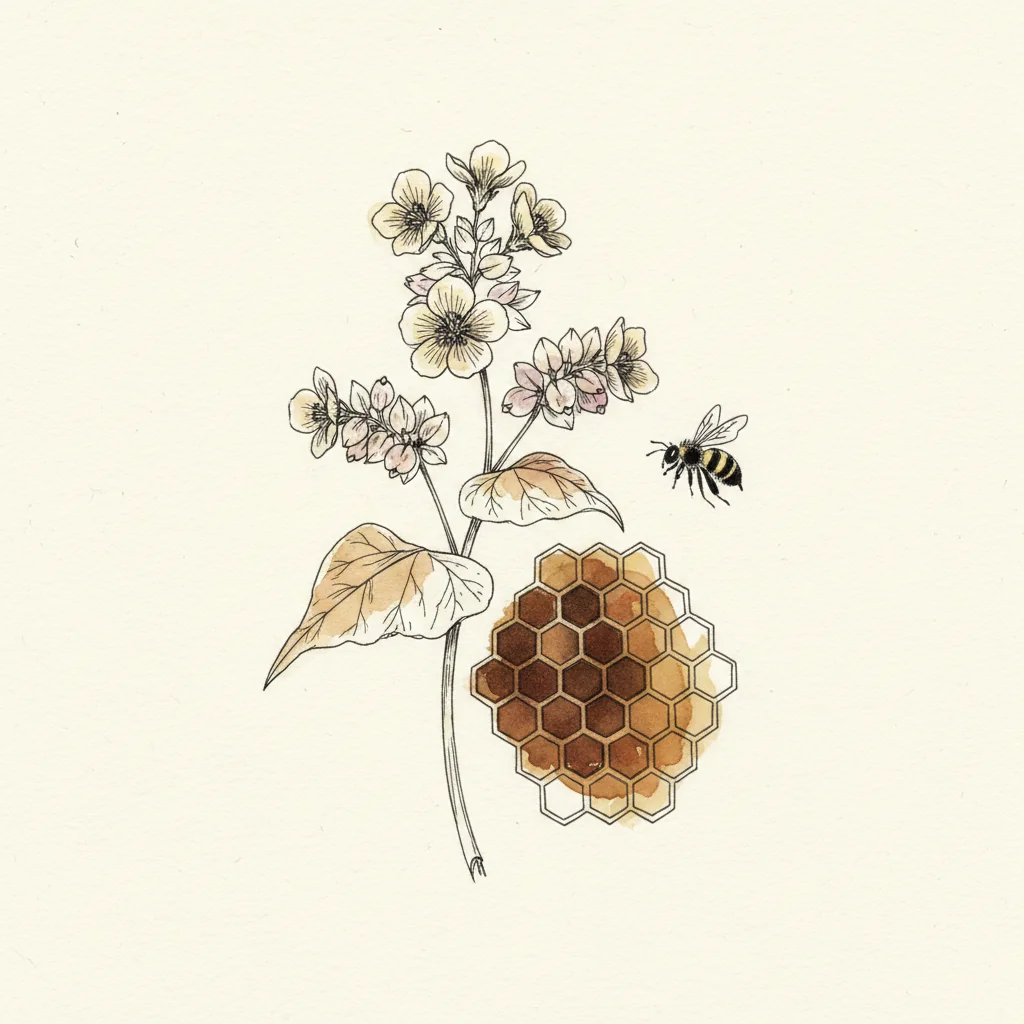
Honey · Monofloral honey
Buckwheat Honey
Upstate New York & Minnesota (also the Dakotas), United States
dark molasses · malt · barnyard funk
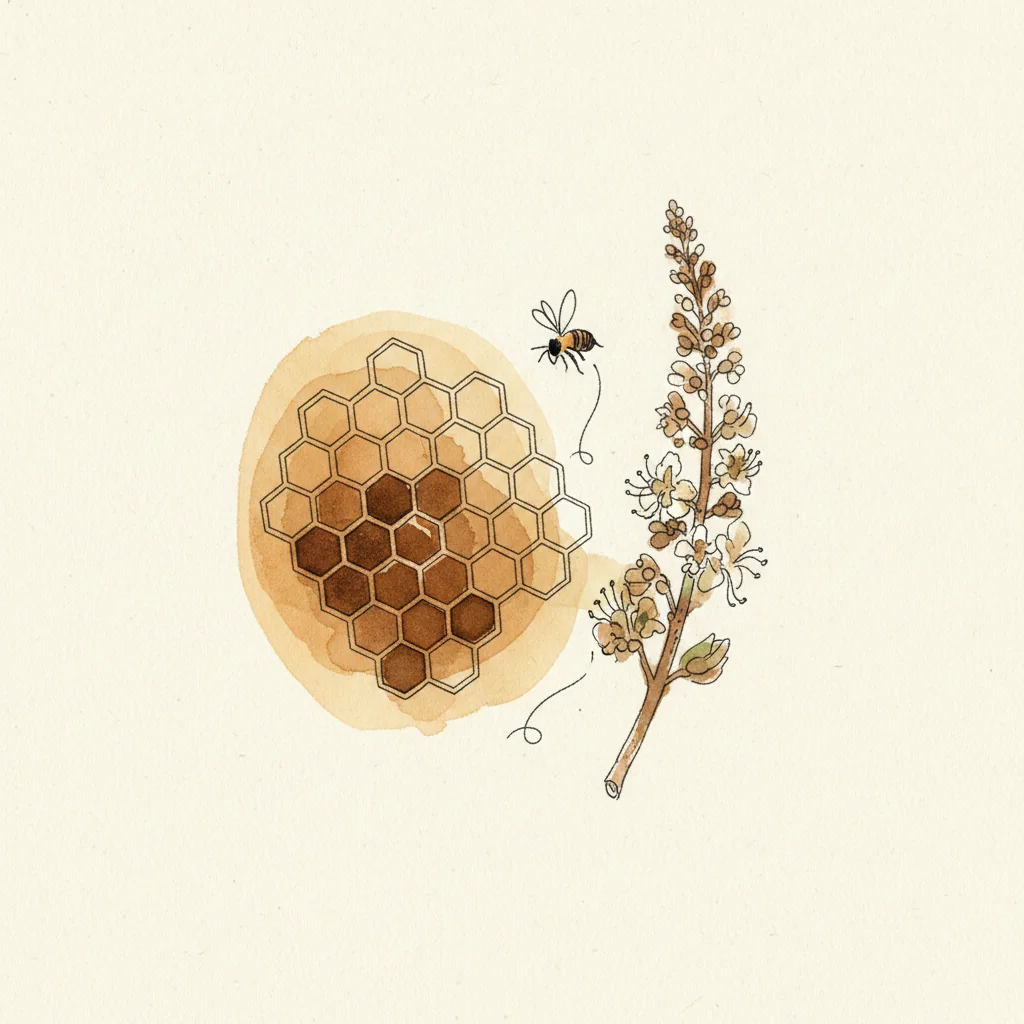
Honey · Monofloral honey
Chestnut Honey
Italian chestnut belt (Tuscany, Piedmont) and southern France (Cévennes, Corsica), Italy / France (PDO (Mele di Corsica — Miel de Corse, for the Corsican lots))
wood tannin · noble bitterness · roasted chestnut
Our verdict
Buckwheat for malty barbecue-and-cheddar boldness; chestnut for bitter, tannic depth on blue cheese and duck.
At a glance
| Criterion | Buckwheat Honey | Chestnut Honey |
|---|---|---|
| Origin | Upstate New York & Minnesota | Tuscany, Piedmont, Cévennes, Corsica |
| Botanical | Fagopyrum esculentum (buckwheat) | Castanea sativa (sweet chestnut) |
| Certification | None | PDO on Corsican lots (Miel de Corse) |
| Intensity | 9/10 — molasses, malt, funk | 8/10 — tannic, savory, bitter |
| Main notes | Dark molasses, malt, barnyard funk | Wood tannin, roasted chestnut, dark caramel |
| Best use | Cheddar, biscuits, barbecue glaze, stout | Blue cheese, seared duck, dark rye, ricotta |
| Median price | ~$15 / 12 oz jar | ~$15 / 250g jar |
| Value verdict | Bold, antioxidant-rich, cheap | Imbattable savory honey for the price |
When to choose Buckwheat Honey
Buckwheat is the dark honey to grab when you want bold and sweet-savory rather than bitter. It's the darkest honey on the American shelf, pours like motor oil, and tastes of molasses, malt and a genuinely savory, almost meaty barnyard funk — bold, but still recognizably a sweet honey underneath. Upstate New York and Minnesota are the heartland, and a 12 oz jar of the real raw stuff runs about $15. Four jobs where it beats chestnut. First, barbecue — a quick glaze off the heat on ribs or pulled pork, where the molasses depth is exactly what a sweet-savory glaze wants and chestnut's flat bitterness would fight. Second, sharp aged cheddar, where malt-and-molasses meets the cheese's sharpness without the tannic grip that suits blue better. Third, buttermilk biscuits and cornbread, where it reads almost like a dark-beer reduction. Fourth, a spoon stirred into black coffee or a stout. As a bonus, being the darkest honey it carries the heaviest antioxidant load of the two. The rule: if the dish wants molasses sweetness with a savory edge, it's buckwheat; if it wants frank bitterness, reach for chestnut. Start small — it dominates fast — and keep it raw or off the heat, since high-heat baking turns the funk flat and bitter. Its limit is delicacy: it bulldozes floral desserts and light teas, so don't use it where subtlety matters. But for a bold, cheap, antioxidant-rich honey built for cheddar, biscuits and barbecue, buckwheat is the one — and chestnut, for all its depth, can't sweeten a glaze the way this can.
When to choose Chestnut Honey
Chestnut is the dark honey to choose when you want bitter and savory rather than malty-sweet — the one honey that actually tastes savory. It's almost treacle-brown, with a frank bitterness and a tannic grip no other honey has: roasted chestnut, dark caramel, a whisper of leather. The Italian chestnut belt (Tuscany, Piedmont) and southern France (Cévennes, Corsica) make the best of it, and the Corsican lots carry a PDO under Miel de Corse. At about $15 a 250g jar it matches buckwheat on price but goes to a different place on the plate. Four jobs where it beats buckwheat. First, blue cheese — Roquefort and Gorgonzola want chestnut's tannin and bitterness against their salt, not buckwheat's sweeter molasses; this is its signature move. Second, seared duck breast, where the tannic grip cuts the fat cleanly. Third, full-fat yogurt and ricotta, where a savory bitterness keeps the sweetness honest. Fourth, dark rye bread with salted butter. The rule: if the dish wants a savory, almost-not-sweet honey with grip, it's chestnut; if it wants molasses sweetness, buckwheat. Add it raw or as a fast glaze brushed on at the end, and start small, because it's loud and the bitterness will ambush a dish expecting sweetness. Its limit is exactly that bitterness — it flattens floral and citrus pairings and is no use as a breakfast honey. But as the bitter, tannic counterweight to buckwheat's malt, built for blue cheese and duck, chestnut is imbattable for the money and does a job no sweeter honey can.
Where to buy?
Buckwheat Honey
Links checked on
Prices may vary depending on current promotions on the merchant site.
Chestnut Honey
Links checked on
| Merchant | Price | Action |
|---|---|---|
| Amazon US (Manoir des Abeilles, France) | — | Amazon US (Manoir des Abeilles, France) |
| Giannetti Artisans (Garfagnana, Tuscany) | — | Giannetti Artisans (Garfagnana, Tuscany) |
| Sous Chef UK (Napoleon, France) | — | Sous Chef UK (Napoleon, France) |
Prices may vary depending on current promotions on the merchant site.
Frequently asked questions
- Which dark honey should I buy, buckwheat or chestnut?
- Buckwheat for molasses-and-malt boldness on cheddar, biscuits and barbecue. Chestnut for bitter, tannic depth on blue cheese and duck. Both run about $15; pick by whether you want sweet-savory or savory-bitter.
- What's the real flavor difference?
- Buckwheat is sweet underneath, with molasses, malt and a barnyard funk. Chestnut is genuinely savory and tannic — more bitter than sweet, with roasted-chestnut and leather notes. Chestnut has grip; buckwheat has depth.
- Which is better on a cheese board?
- Both belong there, on different cheeses. Buckwheat suits sharp cheddar; chestnut is built for blue cheese like Roquefort and Gorgonzola, where its tannin meets the salt.
- Can either go in a barbecue glaze?
- Buckwheat, yes — its molasses sweetness is made for it. Chestnut's frank bitterness fights a sweet glaze, so keep chestnut for cheese, duck and dark bread instead.
The best pairings
With Buckwheat Honey
With Chestnut Honey
Comparison prepared according to our methodology. Sponsored purchase links — see our affiliations.