
Comparison
Maldon vs Cornish sea salt: which British flake salt?
Maldon has the bigger, louder flake; Cornish is finer, crisper and cheaper. For a deliberate crunch on a steak or cookie, Maldon, about $7 a box. For an everyday British finishing salt on fish and chips and seared seafood at half the price, Cornish, around £3 to £4 a tub.
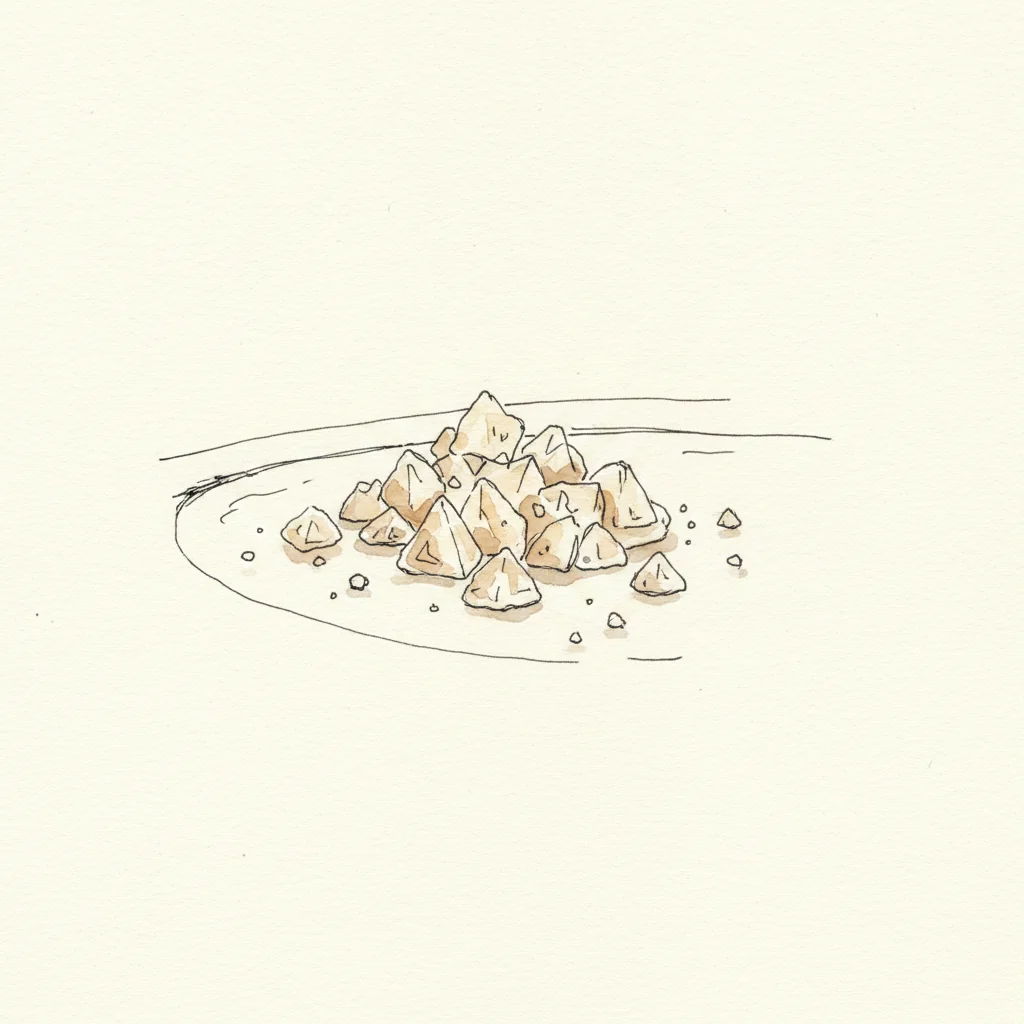
Salt · Flaky sea salt
Maldon Sea Salt
Maldon, Essex, Blackwater estuary, England
clean salinity · light brine · fresh sea air
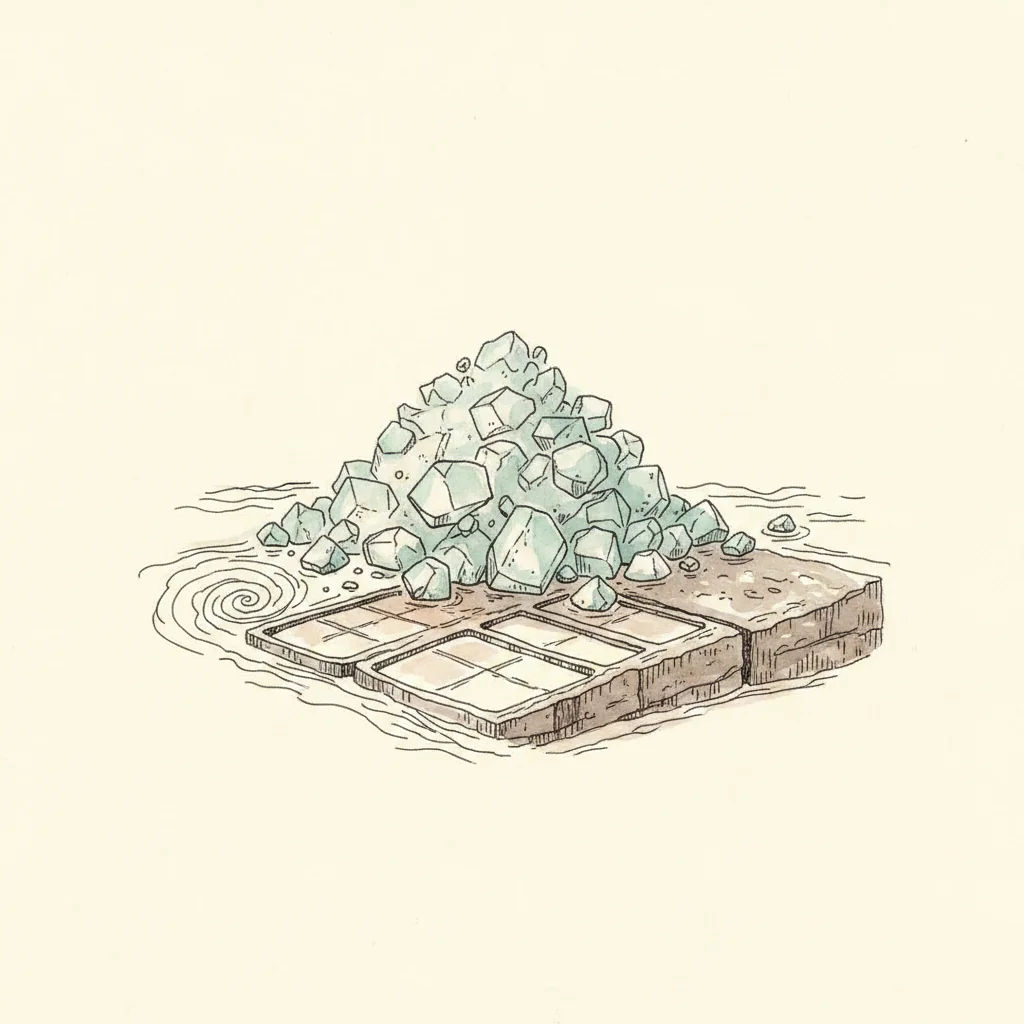
Salt · Flaky sea salt
Cornish Sea Salt
Lizard Peninsula, Cornwall, England
bright Atlantic brine · clean mineral · fresh sea note
Our verdict
Maldon for a bigger, louder flake, Cornish for a crisp everyday finisher at half the price.
At a glance
| Criterion | Maldon Sea Salt | Cornish Sea Salt |
|---|---|---|
| Origin | England, Maldon, Essex (Blackwater estuary) | England, Lizard Peninsula, Cornwall |
| Status | Made since 1882 | Atlantic flake, no PDO/PGI |
| Intensity | 7/10 - clean, bright salinity | 6/10 - brisk, bright Atlantic brine |
| Texture | Larger hollow pyramids, loud shatter | Smaller crisp flakes, fine quick crunch |
| Best use | Seared steak, Sunday roast, salads, caramel and cookies | Fish and chips, seared fish, roast potatoes, salads |
| Median price | ~$7.50 / 8.5 oz box | ~£3.75 / 150 g tub |
| Value | Cheapest upgrade in the kitchen, lasts a year. Worth it. | A sound everyday flake at half the price. Great value. |
When to choose Maldon Sea Salt
Pick Maldon when you want the flake to be seen and heard. Its hollow pyramids are larger and more architectural than Cornish's smaller, finer crystals, so they shatter with a louder snap and read as distinct flakes on the plate rather than a fine, even sprinkle. That makes Maldon the better choice anywhere the crunch is meant to be a feature: crushed over a rested sliced ribeye, scattered on warm chocolate-chip cookies or salted caramel, snapped over a salad that needs an obvious textural contrast. The salinity is clean and bright with no bitterness, and the firmer flake holds its shape a beat longer before it melts, so the crunch lasts. Maldon is also the more recognized name with a long history since 1882, which matters if a page leans on provenance or pedigree. Use it like any finishing flake: raw, at the very end, crushed between the fingers from a few inches up so the crystals fall unevenly. Where Maldon doesn't justify itself is price and subtlety. It costs roughly twice as much as Cornish, about $7 for 8.5 oz against around £3 to £4 for a Cornish tub, and for a lot of everyday British plates that difference buys you nothing the finer salt can't do. On fish and chips, on seared fish and seafood, on roast potatoes, Cornish's smaller crisp flake distributes more evenly and clings better to a wet or oily surface, where Maldon's big crystals can sit proud and uneven. So if you finish a lot of weeknight food and want value, Cornish wins on cost without giving up much. And as with all flaky salts, Maldon is wasted in the pot: in a braise, a stock or pasta water the crunch dissolves and a cheap coarse salt does the job. Season the pan with coarse salt, sear, rest, then crush the Maldon over the sliced meat at the end. Salt the slice, not the pan, a flake thrown into hot fat just melts and you've paid finishing-salt money for nothing. The split with Cornish is mostly flake size and budget: when you want the biggest, loudest crunch and don't mind paying for the name, Maldon; when you want a fine, even, affordable everyday British finisher, Cornish.
When to choose Cornish Sea Salt
Choose Cornish sea salt when you want a crisp, even British finishing flake without paying Maldon money. Harvested off the Lizard Peninsula in Cornwall, this Atlantic salt forms smaller, finer crystals than Maldon's big pyramids, with a brisk, bright brine and a clean trace minerality. The flake is crisp and gives a fine quick crunch that melts fast, and because the crystals are smaller they scatter more evenly and cling better to wet or oily surfaces. That makes Cornish the natural everyday finisher for British plates. On fish and chips it distributes evenly across the batter instead of sitting in big proud lumps; on seared fish and seafood its brisk Atlantic brine flatters the sweetness of the flesh; on roast potatoes and chips, on a dressed salad, on bread and butter, it gives a clean, light crunch that does the job without showing off. The value is the headline: around £3 to £4 for a small tub, roughly half the price of Maldon for a salt that covers the same everyday finishing work, so you can be generous with it on weeknight food and not think twice. It keeps for years dry, never goes bitter, and is widely stocked in UK supermarkets. The rule against Maldon is flake size, drama and price. If you want the biggest, loudest, most deliberate crunch, the kind that reads as distinct crystals on a special-occasion steak or a tray of cookies, Maldon's larger pyramids do it better and carry the more famous name. If you want a finer, even, affordable flake for the food you cook most nights, Cornish is the smarter buy. The two are close in quality and both are clean, additive-free sea salts; the difference is mostly crystal size and cost, not character. Use Cornish like any flaky salt: as a finisher, raw, at the very end, crushed lightly over the plate just before serving. Don't waste it in the pot, in a braise, a stock or pasta water the crisp flake dissolves and any cheap coarse salt does the same job. For an honest, brisk, half-price British finishing salt that earns its place on fish and chips and everyday plates, Cornish is the value pick; keep Maldon for when the crunch is the show.
Where to buy?
Maldon Sea Salt
Links checked on
| Merchant | Price | Action |
|---|---|---|
| Amazon US | — | Amazon US |
| Sous Chef UK | — | Sous Chef UK |
Prices may vary depending on current promotions on the merchant site.
Cornish Sea Salt
Links checked on
| Merchant | Price | Action |
|---|---|---|
| Amazon US | — | Amazon US |
| Cornish Sea Salt | — | Cornish Sea Salt |
Prices may vary depending on current promotions on the merchant site.
Frequently asked questions
- Is Maldon worth twice the price of Cornish?
- For special plates, maybe; for everyday food, not really. Maldon gives a bigger, louder flake and a famous name, which suits a showpiece steak or a tray of cookies. Cornish gives a finer, even crunch that clings better to fish and chips and costs about half as much, so it's the smarter everyday buy.
- Which flake is bigger?
- Maldon. Its hollow pyramids are larger and more architectural, so they shatter louder and read as distinct crystals on the plate. Cornish forms smaller, finer flakes that scatter more evenly and cling better to wet or oily surfaces, which is why it suits fish and chips and seared seafood.
- Which is better for fish and chips?
- Cornish, comfortably. Its smaller crisp flake distributes evenly across the batter and clings to the oily surface, where Maldon's big crystals sit proud and uneven. It's also Cornish and cheaper, so you can be generous. Add it the moment the chips come out of the fryer, while they're still hot.
- Can I cook with either?
- No. Both are finishing salts used raw at the end. In a braise, a stock or pasta water the crunch dissolves and you've wasted finishing-salt money, more so with Maldon. Season the pot with a cheap coarse salt and save these flakes for the plate, scattered just before serving.
The best pairings
With Maldon Sea Salt
With Cornish Sea Salt
Comparison prepared according to our methodology. Sponsored purchase links — see our affiliations.