
Cornish Sea Salt Flakes (Lizard Peninsula, Cornwall, England)
In brief — Cornish Sea Salt is a small, crisp Atlantic flake harvested off the Lizard Peninsula in Cornwall. The crystals are finer than Maldon, with a brisk, bright brine that suits fish and chips and seared seafood. Around £3 to £4 for a small tub, a sound everyday flaky salt for British plates. Its aromatic profile develops notes of bright Atlantic brine, clean mineral, fresh sea note, extended by soft trace minerality and no bitterness, for an intensity of 6/10. On the palate, it offers small crisp flakes with a fine crunch that melts quickly and clean, with a medium finish, a clean brisk salinity. In the kitchen, it's best added as a finishing touch and it pairs with fish and chips, seared fish and seafood, Sunday roast and roast potatoes. Recommended dosage: a pinch crushed over the plate, raw, just before serving. Expect from $3.00 to $5.00 per 150g tub (median $3.75).
Origin : Lizard Peninsula, Cornwall, England
Cornish Sea Salt is a small, crisp Atlantic flake harvested off the Lizard Peninsula in Cornwall. The crystals are finer than Maldon, with a brisk, bright brine that suits fish and chips and seared seafood. Around £3 to £4 for a small tub, a sound everyday flaky salt for British plates.
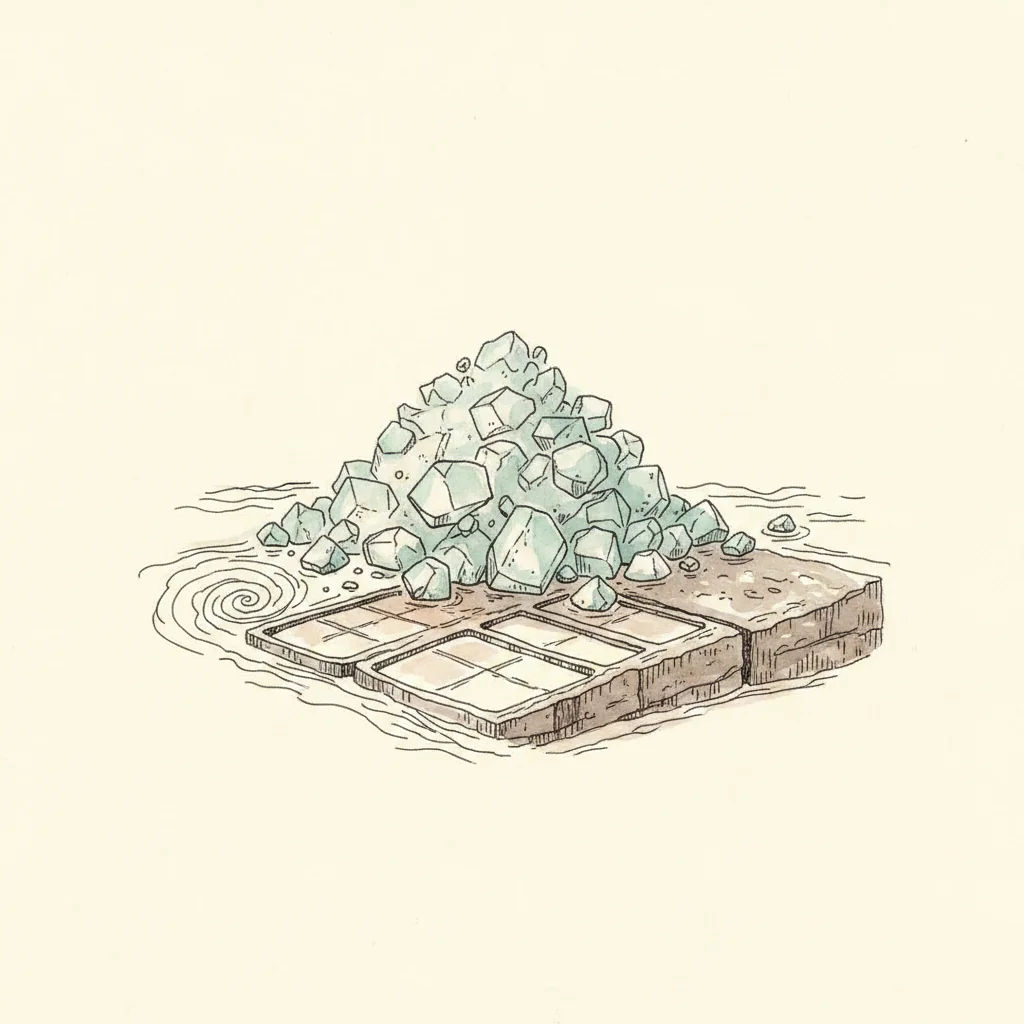
Salt · Flaky sea salt
Cornish Sea Salt
Lizard Peninsula, Cornwall, England
bright Atlantic brine · clean mineral · fresh sea note
Aromatic profile
| Family | Halite (sodium chloride) |
|---|---|
| Intensity | ●●●○○ (6/10) |
| Main notes | bright Atlantic brine · clean mineral · fresh sea note |
| Secondary notes | soft trace minerality · no bitterness |
| Mouthfeel | small crisp flakes with a fine crunch that melts quickly and clean |
| Finish length | medium, a clean brisk salinity |
Culinary use
- When to add : finishing
- Dosage : a pinch crushed over the plate, raw, just before serving
- Ideal pairings : fish and chips, seared fish and seafood, Sunday roast and roast potatoes, salads, fresh bread and butter, chips and fries
- Avoid with : long braises (the crunch is lost), boiling water and brines (use a cheap coarse salt), already salty dishes
The grain in detail
Cornish Sea Salt is harvested by the Cornish Sea Salt Company from Atlantic water off the Lizard Peninsula, the most southerly point of mainland Britain, drawn from a protected stretch of coast. The flakes are smaller and crisper than Maldon, giving a fine crunch that melts quickly, with a bright, brisk brine and a soft trace minerality. It is a finishing salt: scatter it raw at the end on fish and chips, seared fish and seafood, the Sunday roast and roast potatoes, salads, bread and butter, and chips. Don't waste it in boiling water or a long braise, where the texture disappears. Among British flaky salts it sits as a slightly finer, brighter alternative to Maldon's larger pyramids, and it is a sound everyday pick for UK plates. Note it is a quality Cornish sea salt but it does not hold the PDO that protects Halen Môn, so the claim to make for it is the place and the texture, not a protected designation.
History & origin
The Cornish Sea Salt Company was founded in 2008 on the Lizard Peninsula, reviving sea-salt harvesting on a Cornish coast where Iron Age salt-working sites have been found. It draws Atlantic water from a designated conservation stretch of coastline and produces flakes and a smoked version for UK retail and restaurants.
Indicative price
Reference format : 150g tub — from $3.00 to $5.00 (median : $3.75).
Storage
Airtight tub, dry. Keeps for years.
Where to buy?
Where to buy it
Links checked on
| Merchant | Price | Action |
|---|---|---|
| Amazon US | — | Amazon US |
| Cornish Sea Salt | — | Cornish Sea Salt |
Prices may vary depending on current promotions on the merchant site.
Alternatives if unavailable
Tags
- England
- Cornwall
- Lizard Peninsula
- flaky salt
- finishing salt
- Atlantic
Frequently asked questions
- How do you store Cornish Sea Salt?
- Airtight tub, dry. Keeps for years.
- What dosage for Cornish Sea Salt?
- a pinch crushed over the plate, raw, just before serving
- When should you add Cornish Sea Salt in cooking?
- It's best used finishing.
- What should you avoid pairing Cornish Sea Salt with?
- Avoid with: long braises (the crunch is lost), boiling water and brines (use a cheap coarse salt), already salty dishes.
Go further
The dishes where this cornish sea salt shines
Also a recommended alternative for
As a complementary pairing with
See every dish where this product is mentioned →
Other salts to discover
Featured in these gift sets
Page prepared according to our methodology. Purchase links marked sponsored and liable to earn a commission — details on our Affiliations page.