
Pillar guide
Black Truffles: What You're Actually Paying For
Black truffle (Tuber melanosporum), what it really costs, when it's in season, how to spot the fakes, and how to cook it without burning off the aroma you paid for.
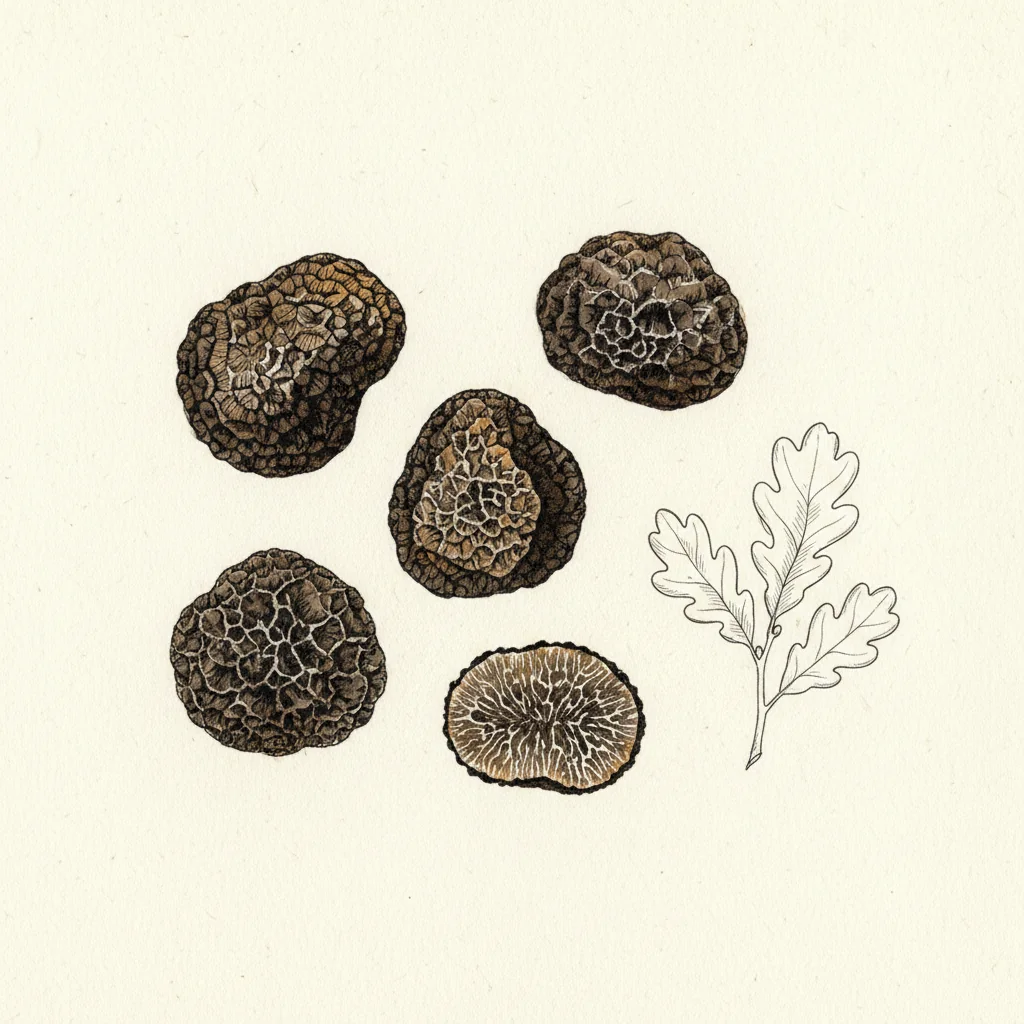
Here's the verdict up front: a fresh Périgord black truffle (Tuber melanosporum) is worth the money, and almost everything sold around it is not. The fresh winter truffle runs roughly $45 to $95 an ounce at US retail. A truffle the size of a golf ball, about one ounce, feeds two people across several meals if you treat it as a finishing ingredient. The "truffle oil," the "truffle salt," the "truffle butter" on the supermarket shelf are almost all flavored with one synthetic compound — 2,4-dithiapentane — and contain no truffle worth naming. So the entire game is this: buy the real thing, in season, from a seller who'll tell you the harvest date, and don't cook the aroma off the moment you get it home.
That's the whole guide in a paragraph. The rest is the here's why.
What's on this page
- What you're actually buying
- The season is the price
- What it costs, honestly
- The fakes: truffle oil and friends
- How to store it (you have days, not weeks)
- How to use it without wasting it
- Pairings that hold up
- FAQ
What you're actually buying
The Périgord black truffle is a subterranean fungus that grows in symbiosis with the roots of oak — chiefly the pubescent oak (Quercus pubescens) and holm oak (Q. ilex) — plus hazel and hornbeam. It fruits 5 to 30 cm underground and only fruits at all under a strict set of conditions: free-draining limestone soil, a south-facing slope, summer rain in August, and a mild winter frost. There is no greenhouse shortcut. You can plant inoculated oak seedlings and wait seven to ten years, which is exactly why supply is thin and the price stays where it is.
The classic French zones are the Quercy (around Lalbenque and Limogne, in the Lot), the historic Périgord (around Sarlat, in the Dordogne), the Vaucluse (Carpentras, Richerenches), and Drôme provençale. Spain is now the largest producer by volume, with serious cultivation in Aragón and Castilla y León. A trained dog finds them; the weekly markets — Lalbenque on Tuesdays, Richerenches on Saturdays — set the wholesale price.
The flavor reads as damp forest floor, unsweetened cocoa, and oak humus, with toasted hazelnut and soft leather underneath, and a woodland finish that lingers five to ten minutes. At full maturity, chemists have identified more than 200 aromatic molecules in it. That depth is the thing you're paying for, and it's also the thing you can destroy in thirty seconds of careless heat.
One number that matters for trust: France harvested close to 1,000 tonnes of black truffle a year before the First World War. Today the figure is 20 to 30 tonnes a year. Rural depopulation, two wars, and changing land use gutted production — and the scarcity is real, not marketing.
The season is the price
Black truffle is a winter truffle, full stop. The honest season runs November to late March, with the aromatic peak in December, January, and February. Before mid-November the truffle is immature: pale-fleshed, faint, not worth the money. After the third week of March it deteriorates fast.
This matters because "fresh black truffle" sold in July is not Tuber melanosporum. It's almost always Tuber aestivum, the summer truffle — a genuinely different, much milder mushroom that costs a fraction as much and should be priced and labeled that way. It isn't a fraud if it's sold honestly as summer truffle. It is a fraud when a July truffle is sold at January prices. The single best fake-detector you have is a calendar: if someone offers you cheap fresh winter truffle in spring, or a "Périgord truffle" in midsummer at full freight, walk away.
What it costs, honestly
For a US cook, here's where the money lands. Fresh whole Tuber melanosporum runs roughly $45 to $95 an ounce at retailers like D'Artagnan, Gourmet Food Store, and Marky's, with the per-ounce figure climbing in lean weeks and at the start of the season. Call it about $65 an ounce in a normal year.
The sticker shock softens once you do the math. A single one-ounce truffle — about 28 grams — at a dose of 3 to 5 grams shaved per person is six to nine servings. Treat it as a finishing ingredient over scrambled eggs, risotto, and pasta across a few days, and that $65 truffle is more like $7 to $10 a plate for one of the most distinctive flavors in cooking. That's the framing that makes it make sense: not a $65 mushroom, but nine plates of something nothing else can do.
Buy whole when you can. Truffle "peelings" and brisures (broken pieces under 5 grams) are cheaper per gram and perfectly good for infusing butter, eggs, or a sauce — but you can't verify the firmness and skin of a jar of peelings the way you can a whole truffle, so buy peelings only from a seller you already trust.
The fakes: truffle oil and friends
This is the section a shop selling truffle oil could never write, which is precisely why we will.
Skip commercial "truffle oil" entirely. The overwhelming majority of it — including bottles in respectable kitchens — is a neutral oil dosed with 2,4-dithiapentane, a lab-made aroma compound that mimics one note of white truffle. There is no truffle in it. It tastes loud and one-dimensional, it doesn't behave like real truffle on the plate, and it has quietly miscalibrated a generation of palates into thinking truffle is supposed to taste like that. The same logic applies to most "truffle salt," "truffle honey," and "truffle butter" at supermarket prices: read the ingredients, and if you see "aroma" or "flavoring" before any actual Tuber, you're buying the synthetic.
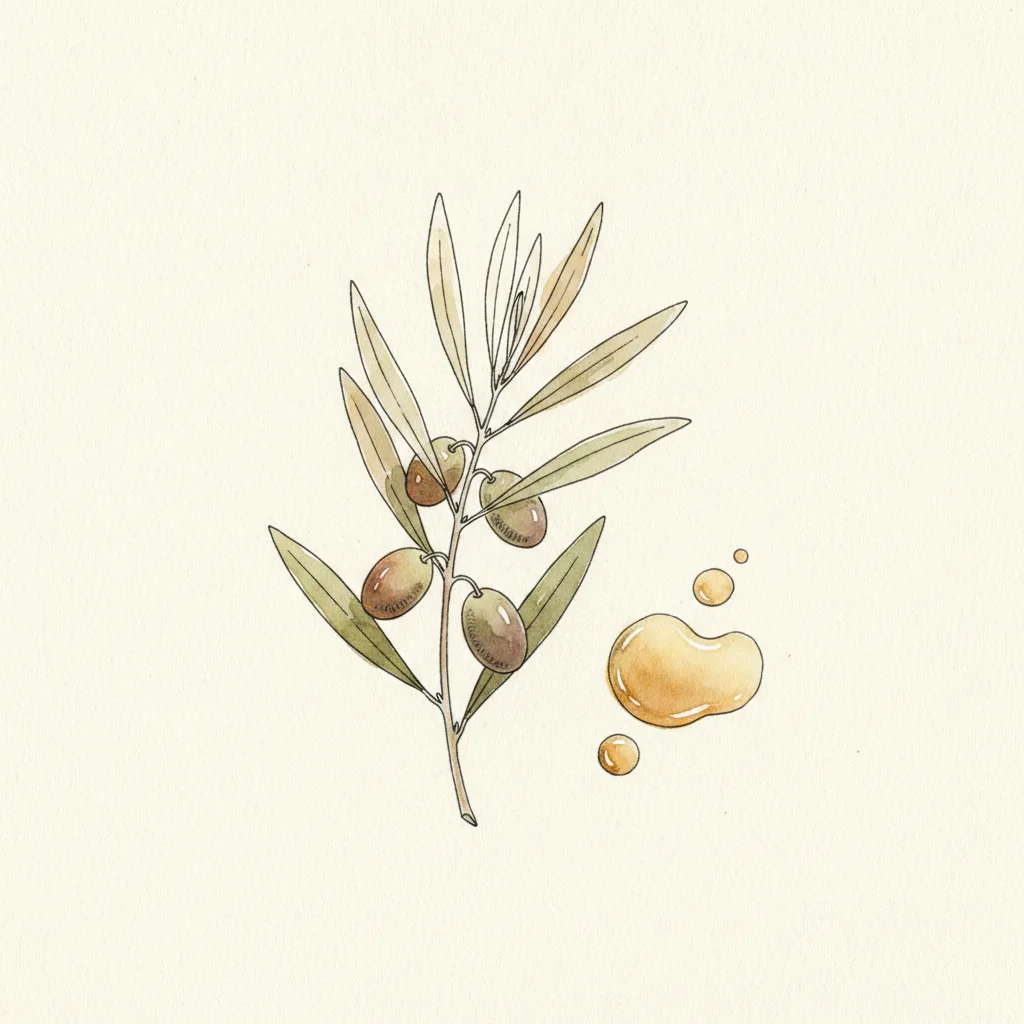
If you want a truffled fat, make it yourself. Seal a real truffle in a jar with eggs or with good butter for a day or two — the aroma migrates — and you'll get something honest. The carrier matters: truffle needs gentle fat and warmth to open up, which is why a genuinely good finishing oil pulls its weight here. A bottle of Provence PDO olive oil — green almond, raw artichoke, a soft peppery tail, about $30 for 500ml — is a clean, mild base that won't fight the truffle the way an aggressive young oil would. The catch: do not warm a delicate finishing oil to force infusion; you'll cook off both the oil's aromatics and the truffle's. Cold infusion, in the fridge, over a couple of days.
And for an East Asian table, the same anti-fraud rule cuts the other way: when you want a deep, roasted, savory aroma over rice or noodles, don't reach for fake truffle oil — reach for the real thing it's imitating the idea of. A few drops of toasted sesame oil (deep toasted nut, warm sesame, about $9 for an 11oz bottle of Kadoya) delivers an honest aromatic lift off the heat. It's a different flavor entirely, but it's real, it's cheap, and it teaches the same lesson: the aroma you want comes from a genuine ingredient added at the end, not a synthetic added anywhere.
How to store it (you have days, not weeks)
A fresh black truffle is perishable. You have 5 to 7 days, not weeks. Wrap it in a dry cloth or paper towel, changed daily — the truffle releases moisture and a damp wrapping turns it to mush — and keep it in a sealed glass jar in the fridge at 36–39°F (2–4°C). Brush it clean with a dry brush; never wash it until the moment you use it, because water accelerates the rot.
The oldest trick still works best: put the wrapped truffle in a jar with a few eggs, in their shells, for 24 to 48 hours. The porous shells drink up the aroma, and you get truffled scrambled eggs for the price of the eggs. Freezing works if you vacuum-seal, but it costs you about 30% of the aroma, so freeze only what you can't use in time.
How to use it without wasting it
The single most important rule: black truffle takes gentle heat, never harsh heat. Unlike the white Alba truffle, which you never cook at all, melanosporum opens up with warmth — but five to ten minutes in a sauce, broth, or warm butter is the ceiling, never a hard boil and never under a broiler. Over fifteen minutes of real heat and the aroma is gone; you've boiled off the thing you paid $65 for.
It needs fat and warmth to bloom, so butter, cream, or egg yolk is the carrier every time. The canonical, hard-to-beat uses:
- Soft scrambled eggs, the truffle infused into them a day ahead in the jar trick, then shaved fresh on top.
- Risotto finished off the heat with a knob of butter and a shower of shavings.
- Silky mashed potato or fresh pasta in cream — fat carries it.
- Beef tenderloin en croûte, where the pastry protects the truffle from the oven's full force.
Shave it, don't chop it: a mandoline or a dedicated truffle slicer gives you thin sheets with maximum surface area, which is where the aroma lives. Chef's note: add half your shavings during the gentle warming step and save the other half to shave raw at the very last second, off the heat, at the table. The cooked portion infuses the fat; the raw portion delivers the top notes that warmth would have erased. Dose about 3 to 5 grams per person, doubled if the dish is built around the truffle.
When you buy, press it gently: a soft truffle is old or rotten. Check for unbroken skin and an honest woodland smell the instant the bag opens — no ammonia note, which signals decay.
Pairings that hold up
A few combinations are worth the spend, and a few aren't:
- Black truffle + eggs + a neutral, gentle fat. The most reliable pairing in the book. Eggs are blank, fatty, and warm — the perfect canvas. Finish with a thread of Provence olive oil if you want a green, grassy lift under the earth.
- Black truffle + aged cheese. Ripe brie or camembert, a little parmesan in a risotto. Fat and umami amplify it.
- Black truffle + acidic or heavily spiced dishes. Skip it. A sharp vinaigrette or a chili-forward sauce buries the truffle, and you've wasted it. Same goes for strongly perfumed oils that mask the earth.
Browse the full set of tested combinations in our pairings index, where each one carries the mechanism behind why it works — or doesn't.
FAQ
How much black truffle do I need per person? About 3 to 5 grams shaved fresh per person, doubled for a dish built around the truffle. A one-ounce (28-gram) truffle therefore covers six to nine servings if you use it as a finishing ingredient rather than a main event.
Why is truffle oil so much cheaper than fresh truffle? Because most truffle oil contains no truffle. It's a neutral oil flavored with a synthetic aroma compound, 2,4-dithiapentane, that imitates one note of white truffle. It's cheap because it's a lab flavoring, not a fungus. Buy the real truffle, or make your own truffled butter or oil by cold-infusing a fresh one.
Can you cook black truffle, or only shave it raw? You can cook Tuber melanosporum gently — five to ten minutes in warm butter, a sauce, or a broth — which is what separates it from the white Alba truffle, which you never cook. But harsh, direct heat or anything over about fifteen minutes burns off the aroma. The smart move is half cooked into the fat, half shaved raw at the last second.
When is black truffle in season? November to late March, with the aromatic peak in December through February. "Fresh black truffle" sold in summer is almost always the much milder, much cheaper summer truffle (Tuber aestivum) — fine if it's labeled and priced as such, a fraud if it's sold as winter truffle at winter prices.
How long does a fresh black truffle keep? Five to seven days in the fridge, wrapped in a dry cloth changed daily, inside a sealed glass jar. Brush it clean dry and never wash it until you use it. Vacuum-freezing works but costs about 30% of the aroma.
Is the expensive truffle actually worth it? For a real, in-season, fresh Tuber melanosporum: yes, if you treat it as a finishing ingredient. At roughly $65 an ounce spread across six to nine plates, you're paying $7 to $10 a serving for a flavor nothing else replicates. For commercial truffle oil and supermarket "truffle" products: no — that's synthetic flavoring, and the money is wasted.
Products cited in this guide
-
Spice · Truffle
Périgord Black Truffle
Périgord (Dordogne) & Quercy (Lot), plus Vaucluse and Drôme, France
-
Oil · Olive oil
Provence PDO Olive Oil
Provence (Bouches-du-Rhône, Vaucluse, Var, Alpes-de-Haute-Provence), France (PDO)
-
Oil · Sesame oil
Toasted Sesame Oil
Japan (Kadoya, Yamada in Osaka and Kyushu) and South Korea (Korea-grown sesame, with much seed imported from India, Sudan, and Nigeria), Japan / South Korea (none)