
Pomegranate Molasses / Dibs Rumman (Levant, Middle East)
In brief — Pomegranate molasses is pomegranate juice cooked down for hours to a thick, dark, sweet-sour syrup — the backbone of Levantine cooking from muhammara to fattoush. It brings a fruit-acid bite no lemon can match, with a molasses depth behind it. Buy a single-ingredient bottle: a 14 oz bottle of Al Wadi runs about $10. The cheap ones cut it with sugar and citric acid. Its aromatic profile develops notes of tart pomegranate, dark fruit, bright sour edge, extended by molasses depth and dried cranberry, for an intensity of 8/10. In the kitchen, it's best added raw at the finish, or stirred into dressings and marinades off the heat and it pairs with muhammara and walnut dips, fattoush dressing, roasted eggplant and cauliflower. Recommended dosage: a teaspoon or two whisked into a dressing, or a thin drizzle over the finished plate. Expect from $8.00 to $13.00 per 14 oz / 400 ml bottle (median $10.00).
Origin : the Levant — Lebanon, Syria, Turkey, Iran, Lebanon
Punica granatum
« The Levantine acid lemon can't fake — sweet-sour with dark fruit and molasses depth. Backbone of muhammara and fattoush. Read the label: one ingredient, pomegranate juice. The sugar-cut bottles are flat. Worth it. »
Pomegranate molasses is pomegranate juice cooked down for hours to a thick, dark, sweet-sour syrup — the backbone of Levantine cooking from muhammara to fattoush. It brings a fruit-acid bite no lemon can match, with a molasses depth behind it. Buy a single-ingredient bottle: a 14 oz bottle of Al Wadi runs about $10. The cheap ones cut it with sugar and citric acid.
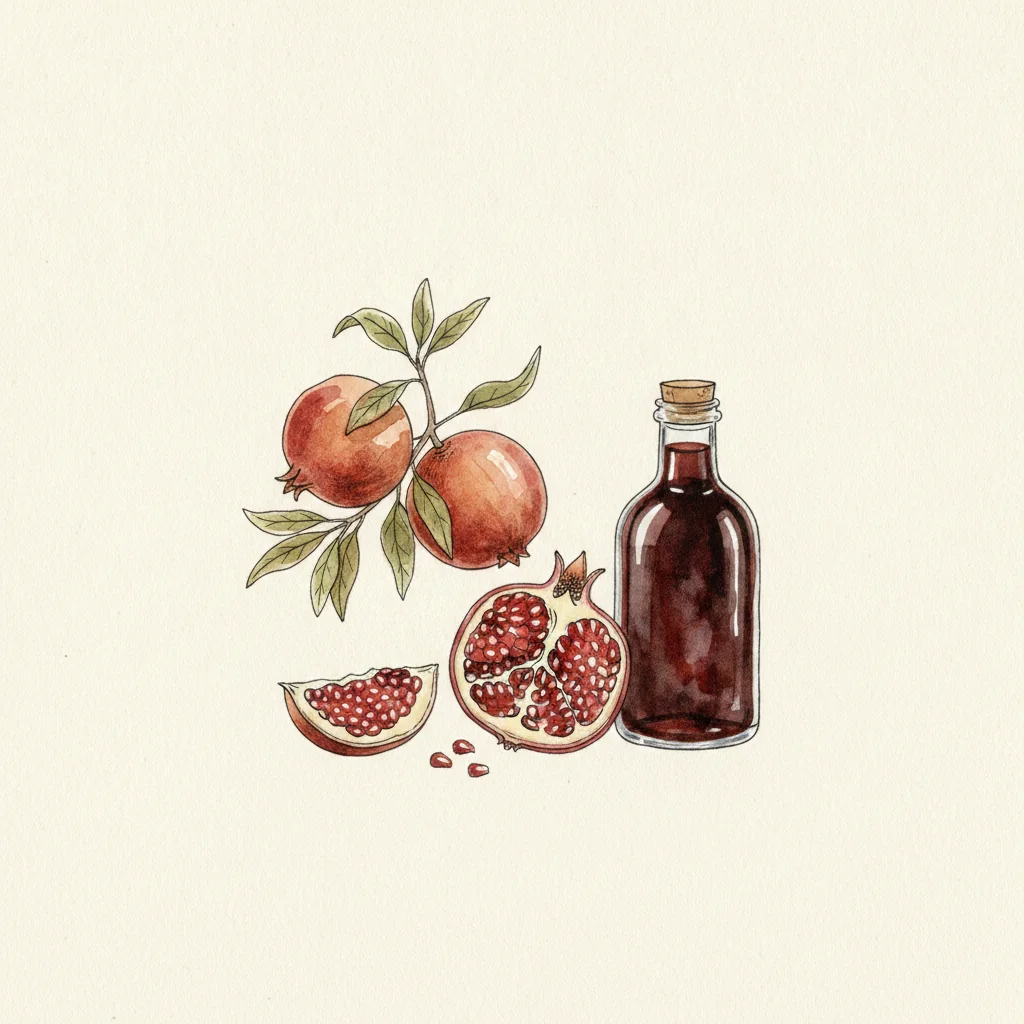
Vinegar · Fruit molasses
Pomegranate Molasses
the Levant — Lebanon, Syria, Turkey, Iran, Lebanon
tart pomegranate · dark fruit · bright sour edge
Aromatic profile
| Family | Reduced fruit must (Punica granatum) |
|---|---|
| Intensity | ●●●●○ (8/10) |
| Main notes | tart pomegranate · dark fruit · bright sour edge |
| Secondary notes | molasses depth · dried cranberry · faint bitterness |
| Mouthfeel | thick and glossy, syrupy like warm honey, a sharp fruit-acid hit up front that mellows into a dark, slightly bitter sweetness |
| Finish length | long, a puckering tartness that fades slow into raisin and caramel, never cloying |
Culinary use
- When to add : raw at the finish, or stirred into dressings and marinades off the heat
- Dosage : a teaspoon or two whisked into a dressing, or a thin drizzle over the finished plate
- Ideal pairings : muhammara and walnut dips, fattoush dressing, roasted eggplant and cauliflower, grilled lamb and chicken marinades, drizzled over hummus or labneh, glazed roast carrots and beets, vinaigrettes that need a fruit-acid lift
- Avoid with : long high-heat reductions that scorch the sugars and turn it bitter, delicate fish or anything where a splash of lemon would read the same and cost less, dishes already carrying a sweet glaze
The grain in detail
Pomegranate molasses — dibs rumman in Arabic, nar ekşisi in Turkish, rob-e anar in Persian — is one of the foundational souring agents of the Levant, the way lemon is in the West or tamarind is across South Asia. The real thing is brutally simple: fresh pomegranate juice, nothing else, simmered slowly in open pots for hours until it reduces to a fraction of its volume and thickens into a dark, glossy syrup somewhere between cranberry-red and near-black. As the juice concentrates, the natural sugars caramelize and the fruit's sharp acidity deepens, leaving a syrup that is sweet and sour at once, with a faint, pleasant bitterness behind it. That sweet-sour balance is the whole point: it brings an acid lift that lemon can't, because it carries dark fruit and molasses depth along with the pucker. It is not a vinegar — there's no fermentation, no acetic turn — but it lives in the same drawer, the bottle you reach for when a dish needs sourness with body. Use it the way Lebanese, Syrian, Turkish and Persian cooks do: it's the binding tartness in muhammara, the walnut-and-red-pepper dip; it sharpens a fattoush dressing; it glazes roasted eggplant, cauliflower, carrots and beets; it goes into marinades for lamb and chicken; and it's drizzled raw over hummus, labneh or grilled meat at the table. The single most important move is reading the label. A real bottle lists one ingredient: pomegranate juice (often 100%, sometimes with a touch of sugar and lemon in honest Lebanese versions). The cheap supermarket bottles bulk it out with glucose syrup, added sugar and citric acid, which gives you flat sweetness and a one-note sour without the fruit. Al Wadi and Mymouné from Lebanon are the reliable single-origin picks in the US; Belazu is the UK standard. A 14 oz bottle keeps for a year or more and a little goes a long way, so the upgrade to the pure stuff costs pennies per dish.
History & origin
Reducing fruit juice into a thick syrup — dibs — is one of the oldest preserving techniques of the Eastern Mediterranean and Persia, predating cane sugar as a sweetener and souring agent. Pomegranate, native to the region from Iran to the Levant and cultivated for millennia, was a natural candidate: its tart juice concentrates into a syrup that keeps without refrigeration. Pomegranate molasses remains central to Lebanese, Syrian, Turkish, Armenian, Iranian and Georgian cooking, where it predates and outlasts every imported acid. It is not a PDO or PGI product; quality is signalled by the ingredient list, not a seal — a single-ingredient bottle of 100% pomegranate juice is the mark of the real thing.
Provenance & authenticity
What sets the real thing apart — appellation, species and verification cues.
- Species
- Punica granatum
Indicative price
Reference format : 14 oz / 400 ml bottle — from $8.00 to $13.00 (median : $10.00).
Storage
Keep the bottle tightly capped in a cool, dark cupboard; no need to refrigerate. Sugar crystals or thickening at the neck are normal — warm the bottle gently to loosen. Keeps a year or more.
Where to buy?
Where to buy it
Links checked on
| Merchant | Price | Action |
|---|---|---|
| Amazon US | — | Amazon US |
| Sous Chef UK | — | Sous Chef UK |
Prices may vary depending on current promotions on the merchant site.
Alternatives if unavailable
Tags
- Lebanon
- Levant
- pomegranate
- fruit molasses
- sweet-sour
- dibs rumman
Frequently asked questions
- How do you store Pomegranate Molasses?
- Keep the bottle tightly capped in a cool, dark cupboard; no need to refrigerate. Sugar crystals or thickening at the neck are normal — warm the bottle gently to loosen. Keeps a year or more.
- What dosage for Pomegranate Molasses?
- a teaspoon or two whisked into a dressing, or a thin drizzle over the finished plate
- When should you add Pomegranate Molasses in cooking?
- It's best used raw at the finish, or stirred into dressings and marinades off the heat.
- What should you avoid pairing Pomegranate Molasses with?
- Avoid with: long high-heat reductions that scorch the sugars and turn it bitter, delicate fish or anything where a splash of lemon would read the same and cost less, dishes already carrying a sweet glaze.
Go further
Other oils, vinegars & honeys to discover
Page prepared according to our methodology. Purchase links marked sponsored and liable to earn a commission — details on our Affiliations page.