
Noirmoutier Sea Salt (Noirmoutier Island, Vendée, France)
In brief — Noirmoutier sea salt is the honest workhorse of the French kitchen. Hand-raked from the island's tidal salt marshes off the Vendée coast, the grey-flecked crystals carry a frank salinity and a wet, mineral edge. This is your everyday cooking salt, not a finishing flake, and it stays cheap: roughly $5 to $8 a kilo. Use it in the pot, save the fleur de sel for the plate. Its aromatic profile develops notes of frank salinity, clean brine, wet mineral, extended by Atlantic iodine and faint clay, for an intensity of 7/10. In the kitchen, it's best added during cooking and it pairs with pasta and vegetable cooking water, court-bouillon and seafood broths, salting meat before a sear. Recommended dosage: about 10 g per liter of cooking water, or 2 to 3 g per 100 g of meat salted ahead of the sear. Expect from $5.00 to $9.00 per 1 kg coarse (median $7.00).
Origin : Noirmoutier Island, Vendée, Atlantic coast, France
« An honest everyday cooking salt, the Vendée's quieter answer to Guérande grey. Damp crystals, frank clean salinity, real clay minerality. No PGI, just the cooperative's hand method. Cheap and dependable; skip it for finishing, where fleur de sel wins. »
Noirmoutier sea salt is the honest workhorse of the French kitchen. Hand-raked from the island's tidal salt marshes off the Vendée coast, the grey-flecked crystals carry a frank salinity and a wet, mineral edge. This is your everyday cooking salt, not a finishing flake, and it stays cheap: roughly $5 to $8 a kilo. Use it in the pot, save the fleur de sel for the plate.
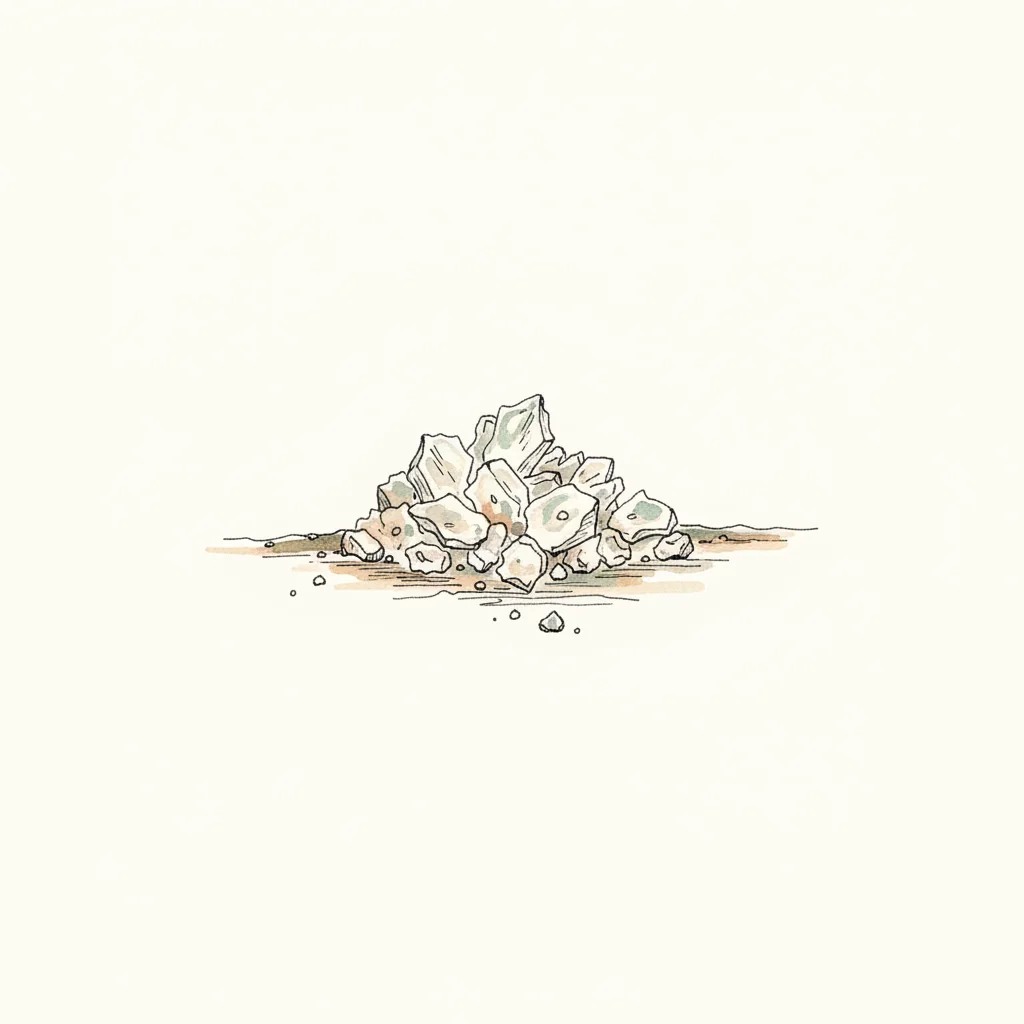
Salt · Sea salt
Noirmoutier Sea Salt
Noirmoutier Island, Vendée, Atlantic coast, France
frank salinity · clean brine · wet mineral
Aromatic profile
| Family | Halite (sodium chloride) |
|---|---|
| Intensity | ●●●●○ (7/10) |
| Main notes | frank salinity · clean brine · wet mineral |
| Secondary notes | Atlantic iodine · faint clay |
| Mouthfeel | damp, slightly soft crystals that hold their grip on the tongue, then release a long, even salinity rather than a sharp hit |
| Finish length | long, with a steady mineral tail and no bitterness |
Culinary use
- When to add : during cooking
- Dosage : about 10 g per liter of cooking water, or 2 to 3 g per 100 g of meat salted ahead of the sear
- Ideal pairings : pasta and vegetable cooking water, court-bouillon and seafood broths, salting meat before a sear, bread dough and lacto-fermentation, roasted potatoes, everyday seasoning
- Avoid with : raw finishing (reach for fleur de sel instead), delicate pastry work where an even melt matters, anything already heavily seasoned
The grain in detail
Noirmoutier sea salt comes from the tidal marshes that ring this low island off the Vendée coast, worked by hand using the same gravity-fed method the salt makers, the sauniers, have run since the medieval monks of Saint-Philbert dug the first ponds. Atlantic seawater is let in on the tide, walked through a chain of shallow clay basins where the sun and wind concentrate it, and finally raked from the crystallizing pans. The crystals pick up a faint grey tint and a wet softness from the basin clay, which carries trace magnesium and calcium alongside the sodium chloride. That damp finish is deliberate and useful: it dissolves evenly and seasons without the harsh top note of dry refined salt. The flavor is frankly saline, clean, with a mineral, slightly clay-edged depth and a whisper of Atlantic iodine. No washing, no anti-caking agents, no additives, which is exactly why it works for lacto-fermentation and bread as well as the pot. This is a cooking salt, full stop, and a good one: salt your pasta water, your court-bouillon, your meat before the sear, your dough. It is not a finishing salt. Throw it raw over a steak and you get a flat saline hit with none of the shattering crunch you would buy fleur de sel for, so use the cheaper grey salt where it earns its keep and keep the flower for the plate. Noirmoutier sits in the same league as Guérande grey salt, its better-known cousin a little to the north, and often costs about the same.
History & origin
Salt has been raked on Noirmoutier since at least the Middle Ages, when monks from the Abbey of Saint-Philbert organized the marshes; by the eighteenth century the island's salt was a serious Atlantic trade good shipped up the coast. Cheap industrial salt nearly killed the craft in the twentieth century, but a saunier revival from the 1990s, anchored by the island cooperative, rebuilt it as a hand-harvested artisanal product. Unlike Guérande grey salt, Noirmoutier carries no PGI; the guarantee is the cooperative's name and the manual method, not an EU stamp.
Indicative price
Reference format : 1 kg coarse — from $5.00 to $9.00 (median : $7.00).
Storage
Airtight jar or stoneware crock, away from direct humidity. Keeps for years; the natural dampness is normal, not spoilage.
Where to buy?
Where to buy it
Links checked on
| Merchant | Price | Action |
|---|---|---|
| Amazon US | — | Amazon US |
| Formaggio Kitchen | — | Formaggio Kitchen |
| Sous Chef UK | — | Sous Chef UK |
Prices may vary depending on current promotions on the merchant site.
Alternatives if unavailable
Tags
- France
- Vendée
- Noirmoutier
- sea salt
- grey salt
- cooking salt
Frequently asked questions
- How do you store Noirmoutier Sea Salt?
- Airtight jar or stoneware crock, away from direct humidity. Keeps for years; the natural dampness is normal, not spoilage.
- What dosage for Noirmoutier Sea Salt?
- about 10 g per liter of cooking water, or 2 to 3 g per 100 g of meat salted ahead of the sear
- When should you add Noirmoutier Sea Salt in cooking?
- It's best used during cooking.
- What should you avoid pairing Noirmoutier Sea Salt with?
- Avoid with: raw finishing (reach for fleur de sel instead), delicate pastry work where an even melt matters, anything already heavily seasoned.
Go further
The dishes where this noirmoutier sea salt shines
Also a recommended alternative for
Page prepared according to our methodology. Purchase links marked sponsored and liable to earn a commission — details on our Affiliations page.