
Pillar guide
Single-Origin Vanillas: Madagascar, Tahiti, PNG
Which vanilla bean to actually buy: Madagascar Bourbon, Tahitian, or Papua New Guinea. Flavor profiles, honest US prices, baking and savory uses. The chef tells you straight which one to buy and when.
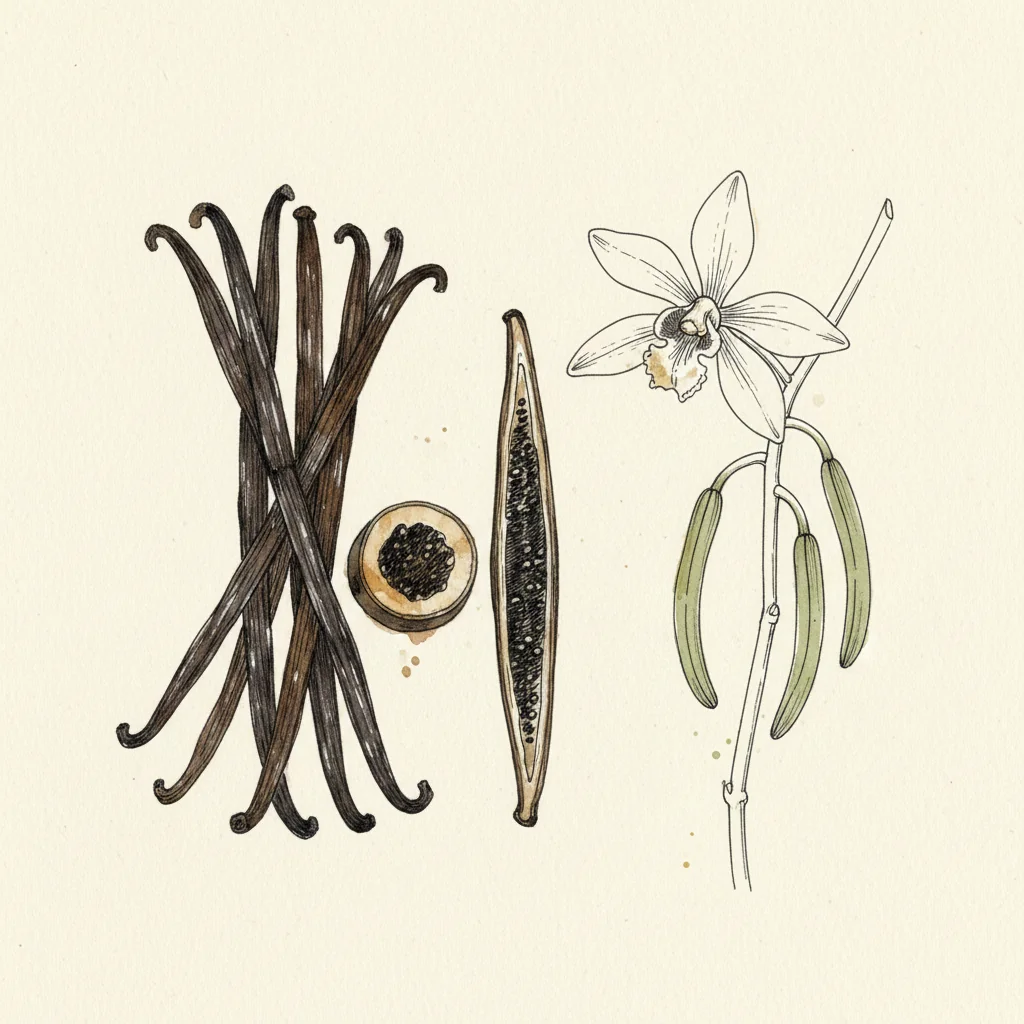
Three vanillas are worth buying as whole beans, and they're not interchangeable. Madagascar Bourbon is the round, custard vanilla you want for anything built on cream, milk, or chocolate — cocoa, caramel, dried fruit. Tahitian is the floral, anise-scented one: more expensive, more delicate, best raw or barely warmed over fruit and cold creams. Papua New Guinea is the pro pastry kitchen's secret — the same tahitensis species as Tahiti, but woody and tobacco-toned, at roughly half the price. The rule: Madagascar for milk-and-cream desserts, Tahiti for fruit and finishing, PNG when you want a tahitensis profile without the Tahitian markup. And tonka beans for the chocolate variations, in tiny shavings.
On this page
Origin and history
Vanilla is the cured seed pod of a climbing orchid, Vanilla, native to Mexico. The Totonac people cultivated it long before the Spanish arrived. For three centuries it grew nowhere else: without its native pollinator, a stingless Melipona bee, the flower stayed sterile everywhere it was transplanted.
That changed in 1841, when Edmond Albius, a twelve-year-old enslaved boy on Réunion, worked out hand-pollination with a sliver of bamboo. That technique — still used on every plantation today — is the only reason vanilla grows outside Mexico at all.
Bourbon vanilla takes its name from Île Bourbon, the old name for Réunion, from where cultivation spread to Madagascar, the Comoros, and the Seychelles. Madagascar now produces roughly 75% of the world's cured black vanilla, almost all of it from the SAVA region on the northeast coast (Sambava, Antalaha, Vohémar, Andapa).
Two species reach your kitchen. Vanilla planifolia — the Bourbon bean, round and cocoa-heavy — comes from Madagascar, Réunion, the Comoros, and Uganda. Vanilla tahitensis — floral and anise-toned — comes from French Polynesia and Papua New Guinea. They are genuinely different orchids, not the same bean grown in two places.
One more thing you should know before you buy: this is a wildly volatile market. After the 2017–2019 price spike — Malagasy cyclones plus speculative hoarding pushed wholesale Bourbon past $300 a kilo — prices have settled. A retail Grade A Madagascar bean runs about $2.50 to $3.50 today. Anyone still charging spike-era prices is hoping you didn't notice it ended.
The varieties worth knowing
Madagascar Bourbon vanilla — Vanilla planifolia
Madagascar Bourbon (about $2.50–$3.50 a bean for Grade A) is the workhorse, and that's a compliment. Grown on living tutor trees in low-altitude shade around 200 m, pollinated by hand the morning each flower opens, harvested about nine months later. Then the signature Bourbon cure: scalding at around 150°F, sweating under cover, slow sun-drying, and months of conditioning in closed boxes. That cure is what builds the vanillin — 1.8 to 2.2% in a good lot — and the deep cocoa-caramel profile.
The flavor is cocoa, dried fruit, caramel, a hint of dark rum and prune, with a round, fatty mouthfeel that carries on a film of cream. It's the most heat-stable of the three, which is why it owns the custard.
Use it for crème brûlée, vanilla ice cream, sugar cookies, chocolate-chip cookies, scones, crème anglaise, and dark-chocolate ganache. Anything built on dairy fat extracts it beautifully.
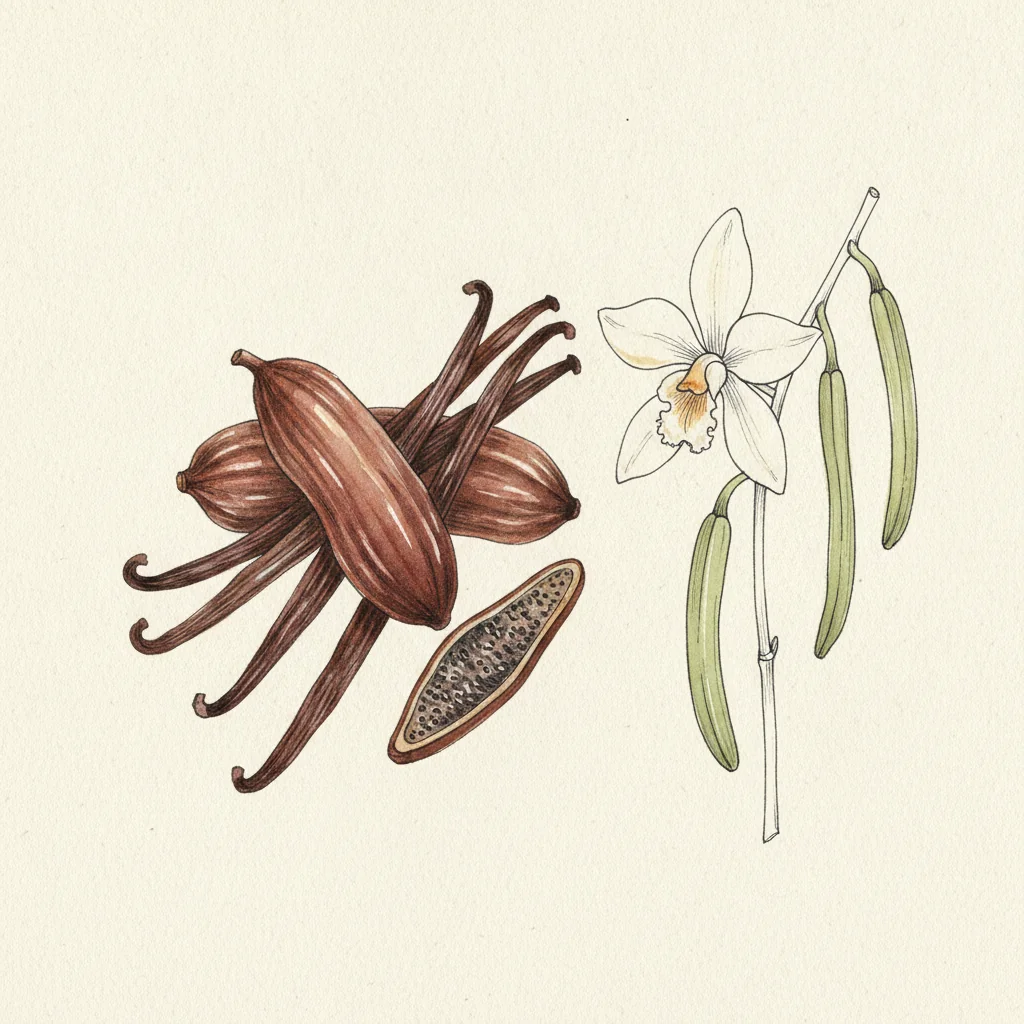
Tahitian vanilla — Vanilla tahitensis
Tahitian vanilla (about $4–$9 a bean) is grown on Taha'a and Raiatea in the Society Islands. It's a genetically distinct orchid — plumper, shorter pods, lower vanillin, but loaded with other aromatics (anisaldehyde, heliotropin) that no Bourbon bean carries. The shorter Tahitian cure deliberately protects those volatile florals.
The profile is almond blossom, anise, fresh prune, candied cherry, a whisper of coconut — airier and less sugary than Bourbon, with a floral trail that lingers after the sweetness fades. It costs two to three times what Madagascar does because yields are low and volumes are tiny. Don't bury it in a long bake.
Use it raw or barely warmed: panna cotta, fruit salad, whipped cream, lemon posset, rhubarb crumble, macarons, cured salmon, raw scallops, beurre blanc for white fish.
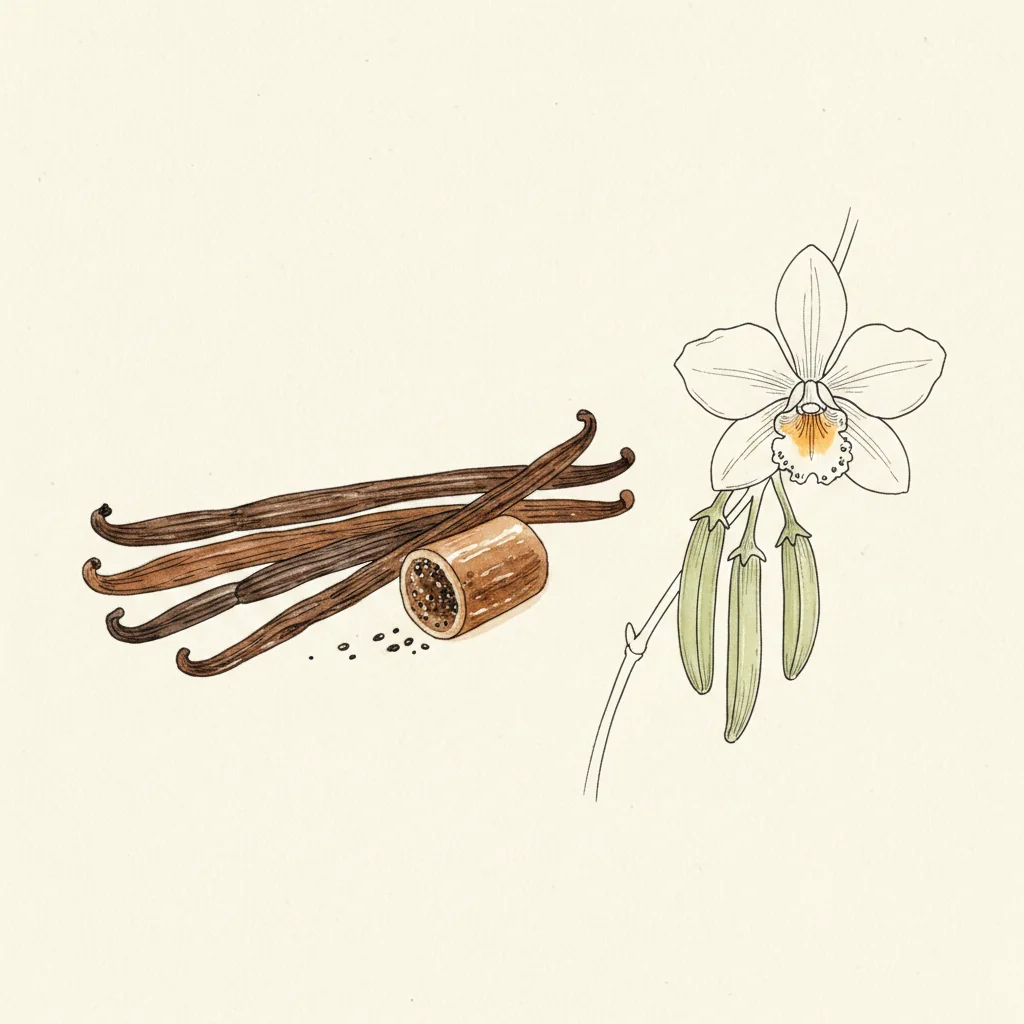
Papua New Guinea vanilla — Vanilla tahitensis
PNG vanilla (about $2–$4 a bean) is the same tahitensis species as Tahiti, grown in the Sepik, Madang, and Morobe highlands at around 300 m. It's what a lot of working pastry chefs reach for, and almost nobody talks about it.
The profile shifts woody and warm: milk chocolate, blond tobacco, dried fig, a little sandalwood and dark honey, finishing on toasted caramel rather than Tahiti's clean floral fade. It's broad, lightly resinous, and far more versatile in ganache and baked goods than the price suggests — the honest tahitensis alternative when you don't want to pay Tahitian money.
Use it for vanilla custard, banana bread, milk-chocolate ganache and caramels, rum-raisin infusions, yellow-fruit compotes (peach, apricot, mango), and ice cream that needs backbone.
Next door: the tonka bean
Tonka beans (Dipteryx odorata, from the Brazilian Amazon, about $45–$70 per 100g — but you use a shaving at a time) aren't vanilla. They play in the same register and then go somewhere vanilla can't: vanilla, bitter almond, cut hay, sweet tobacco, black cherry, with an almost hypnotic trail that outlasts vanilla itself.
A word on the law: tonka contains coumarin. In the EU, food limits cap it at 2 mg/kg — about a quarter of a grated bean per kilo of batter is plenty. In the US, tonka has been banned from food since 1954 by the FDA, which is why you'll see it celebrated in European pastry and treated as contraband here. Know the rule for your kitchen before you grate.
Where it sings: crème anglaise, chocolate tart, panna cotta, an old-fashioned, affogato, white-chocolate ganache, prune compotes, even celery-root purée and seared foie gras.
How to choose
"Grade A" is the bar, not a guarantee. A Grade A (or "Gourmet") bean should run past 6 inches — ideally 6 to 8 — with moisture above 30%: plump, supple, oily to the touch, no white frost. Below that grade ("Grade B," "extract grade"), the beans are drier and only worth it for long infusions, not for scraping seeds into a custard.
The touch test. A good bean wraps around your finger without cracking. If it leaves a faint oily film on your skin, that's exactly what you want.
The smell test. Crack the tube and the aroma should hit hard and read clearly. Bourbon = cocoa-caramel. Tahitian = floral-anise. PNG = woody-tobacco. A faint or generic smell means a tired bean.
Honest market prices (US, mid-2026): Madagascar Grade A about $2.50–$3.50 a bean; Tahitian $4–$9 a bean; PNG $2–$4 a bean; tonka $45–$70 per 100g (a 100g jar is a lifetime supply). Reliable merchants: Slofoodgroup and Native Vanilla in the US, plus Amazon US; Sous Chef and Steenbergs for UK readers. Be wary of $1 "vanilla flavoring" and of anyone who never dropped prices after the 2019 spike.
The fat test for baking. Fat-based infusions — cream, milk, butter — pull more out of Bourbon's oily structure, so go Madagascar. Fruit-forward or meringue desserts let the florals of Tahiti and PNG come through without dairy muting them.
How to use it
Split, scrape, steep. Run a knife tip down the bean to split it, then drag the back of the blade to scrape out the seeds (the "caviar"). Drop seeds and pod into the hot liquid — cream, milk, melted butter. Cover and steep 20 to 30 minutes off the heat. Strain if you want a glassy texture.
Standard dose. One Bourbon bean per 500 ml to 1 L of liquid. Tahitian is more intense and more fragile: half a bean per 500 ml, added late.
Match the bean to the job:
- Crème anglaise, crème brûlée, ice cream, rice pudding → Madagascar.
- Panna cotta, fruit gelées, macarons, yellow fruit → Tahitian.
- Cookies, scones, banana bread, cakes → Madagascar (heat-stable) or PNG.
- Savory — cured salmon, scallops, beurre blanc → Tahitian for the floral lift, Madagascar for the round.
Storage. Airtight glass tube, dark, room temperature. Never the fridge — cold triggers frosting (crystallized vanillin) and mold. A well-kept Grade A bean holds 18 to 24 months. Whole tonka beans are the exception: in a sealed jar they keep 5 to 10 years and actually concentrate, so always grate fresh.
Don't waste the spent pod. Once you've scraped it, dry it a day in the open air, then bury it in a jar of sugar or a bottle of rum. Homemade vanilla sugar beats the supermarket sachet, and you've thrown nothing away.
What to skip
Dollar-store "vanilla flavoring." That's synthetic vanillin — one note against the 250-plus aromatic molecules in a real bean. Fine for an emergency sheet cake; pointless for anything you care about.
Industrial vanilla powder. Usually cut with dextrose or sugar. Real 100%-bean ground vanilla is expensive for a reason. Anything cheap is diluted.
Vanilla in the fridge. Cold causes the frost (crystallized vanillin) people mistake for quality. It's oxidation. Room temperature, always.
Cooking Tahitian hard. Its florals (heliotrope, anise) vanish above 175°F / 80°C in a long bake. Steep it warm and off the heat, or add it raw at the finish.
Doubling vanilla and tonka. They cancel each other into a muddy nothing. Pick one as the lead and let it carry the dish.
The bean that cracks. Too dry. Still usable, ground into a long infusion, but never pay Grade A money for it.
FAQ
Madagascar or Tahitian vanilla for baking?
Madagascar for anything built on dairy: crème brûlée, ice cream, custard, rice pudding. The profile is round, cocoa-caramel, and stable through cooking. Tahitian for delicate and fruit-forward desserts: panna cotta, fruit salad, macarons, cold creams. Its profile is floral and anise-toned and needs to be added late or steeped gently off the heat. Both are worth the gap over imitation vanilla, but they don't substitute for each other.
What's the difference between Vanilla planifolia and Vanilla tahitensis?
They're two distinct orchid species. Vanilla planifolia — Bourbon, from Madagascar, Réunion, and the Comoros — has a shorter maturation and a vanillin-dominant profile, which gives the cocoa, caramel, and dried-fruit notes. Vanilla tahitensis — from Tahiti and Papua New Guinea — has a longer cycle, lower vanillin, but extra aromatics like anisaldehyde and heliotropin that produce its signature floral-anise character.
How do I pick a good vanilla bean?
Four checks: length past 6 inches (ideally 6 to 8), supple enough to wrap around your finger without cracking, oily to the touch rather than crystallized, and a sharp, clearly identifiable aroma when you open the tube. "Grade A" or "Gourmet" signals moisture above 30%. Skip dry, brittle beans and any covered in white crystals — that's frosting from poor (usually cold) storage, not quality.
How long does a vanilla bean keep?
About 18 to 24 months for a well-kept Grade A bean: airtight glass tube, room temperature, away from light, never the fridge. If you see white crystals (frost), it isn't dangerous but it signals oxidation — use that bean soon, in an infusion. You can extend its life by burying it in a jar of sugar or a bottle of rum. Whole tonka beans are different and keep 5 to 10 years.
Why is tonka banned in the US?
Tonka beans contain coumarin, and the FDA banned them from food in 1954, so they're not legal as a US food ingredient. The EU permits them in capped amounts (2 mg/kg in food), which is why European pastry uses tonka freely while US recipes treat it as contraband. If you're cooking in the US, that's the rule to know before you reach for the microplane.
Is PNG vanilla as good as Tahitian?
It's the same species (Vanilla tahitensis), so it shares the tahitensis backbone — but PNG runs woodier and more tobacco-toned, where Tahiti is brighter and more floral. It isn't a downgrade so much as a different, more rustic expression at roughly half the price. For ganache, caramels, and yellow-fruit desserts, many pastry chefs actively prefer it.
The bottom line
Three vanillas, three jobs. Madagascar Bourbon for milk-and-cream desserts. Tahitian for fruit and finishing, added late. PNG for a tahitensis profile without the Tahitian markup. Plus tonka for the chocolate variations, in shavings — and only where it's legal to cook with. A curious home baker's yearly outlay runs maybe $40 to $80 for a rotating trio of beans. Not sure which? Let the Oracle cross your dish against the profile.
The catch
Don't let "Grade A" or "Gourmet" close the sale — neither is a regulated label, and every seller stamps it their own way. The only thing that actually matters is residual moisture: a bean that wraps around your finger without cracking, leaves an oily film, and smells loud out of the tube. The stamp on the bag tells you nothing. If you can touch before you buy, do it. If you can't, buy from a merchant who photographs their beans lot by lot, and you've cut most of the risk.
Chef's note
The move that doubles your vanilla: steep it off the heat. Bring the cream or milk to about 185–190°F, drop in the split, scraped bean, kill the flame, cover, and wait 30 minutes. The volatile florals — especially in Tahitian — are gone within minutes above 190°F. Boil the bean in the cream for ten minutes like your grandmother's recipe says and all you've got left is residual vanillin. Off the heat, covered, half an hour: twice the aroma for the same bean.
Tasting note
- notes:
cocoa-caramel (Madagascar) · floral-anise (Tahitian) · tobacco-fig (PNG) - value: roughly $2.50 to $9 a bean depending on origin and grade, with tonka a one-time $45–$70 jar that lasts years. A rotating trio runs $40–$80 a year — the cheapest real upgrade in the baking cupboard. Worth it, every time.
Methodology: these picks follow our methodology. Purchase links are marked sponsored and earn us a commission at no extra cost to you — see our affiliate policy.
Products cited in this guide
-
Spice · Vanilla
Madagascar Bourbon Vanilla
Northeast coast, SAVA region (Sambava, Antalaha, Vohemar, Andapa), Madagascar
-
Spice · Vanilla
Tahitian Vanilla
Taha'a and Raiatea, Society Islands, French Polynesia
-
Spice · Vanilla
Papua New Guinea Vanilla
Sepik, Madang and Morobe provinces, Papua New Guinea