
Pillar guide
Smoked Salts: Cold Smoke, Real Wood, No Liquid Smoke
The honest guide to smoked finishing salts. Maldon Smoked, Danish Viking salt, Hawaiian black lava and red Alaea: real cold smoke vs liquid-smoke flavoring, market prices, and the one rule that decides whether you wasted your money.
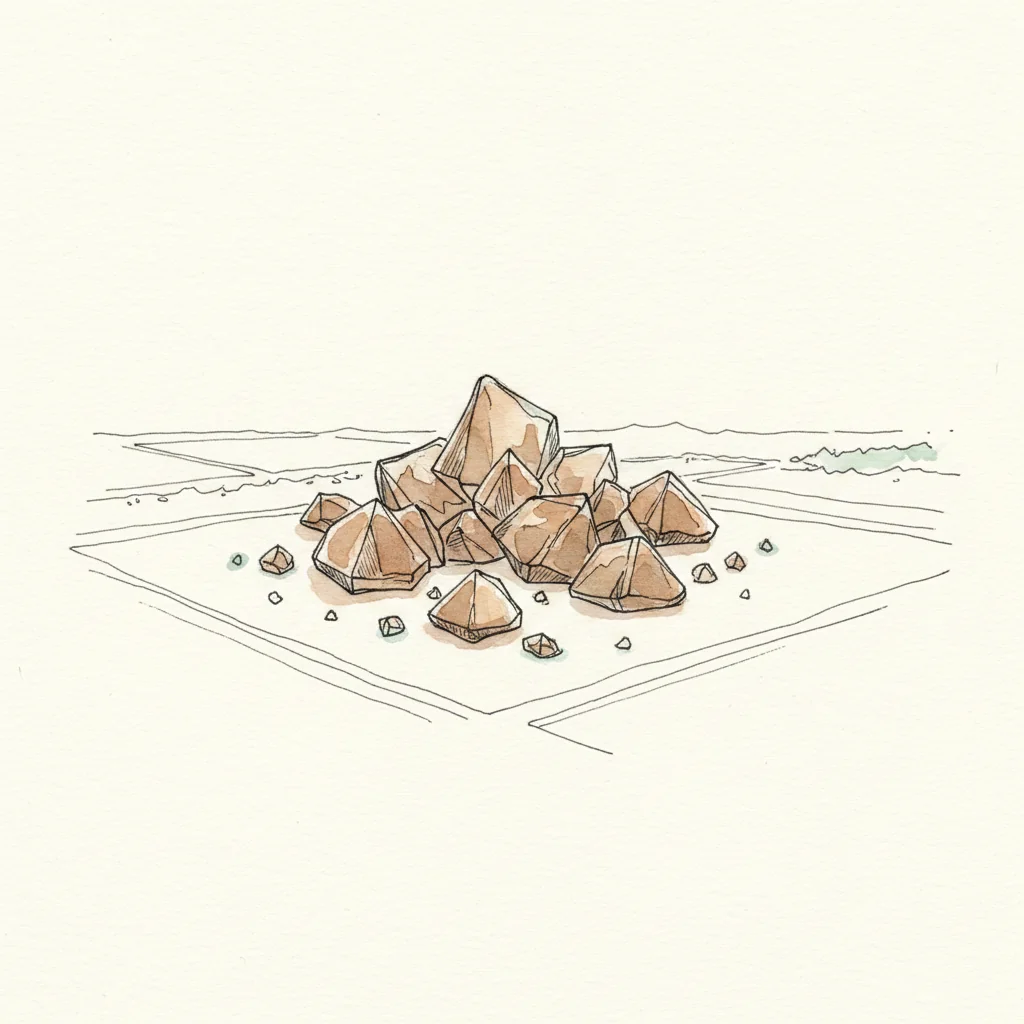
Here's the verdict before anything else: a smoked salt will not put smoke into your food. It can't. Heat burns off the aromatic smoke compounds in about a minute, so a smoked salt is a finishing salt, full stop — you scatter it raw, at the very end, off the heat, and that's the only way it earns its price. Buy real cold-smoked salt over actual wood, not "smoke flavoring" sprayed onto cheap grains. The two best picks are Maldon Smoked, the oak-smoked Essex flake at around $9 a box, and Danish Viking smoked salt, beech-and-oak smoked, around $11 for a small jar. The two Hawaiian "lava" salts — black Hiwa Kai and red Alaea — aren't smoked at all, but they get filed here constantly, so we'll set that record straight too.
In this guide
- What "smoked salt" actually means
- The salts worth knowing
- How to choose one
- How to use it (the one rule)
- What to avoid
- Frequently asked questions
What "smoked salt" actually means
There are two ways to put smoke on salt, and only one of them is worth your money.
Cold smoking — the real thing. Sea salt sits in a smokehouse and absorbs wood smoke at low temperature over days. Maldon holds its pyramid flakes in cold English oak smoke. The Danish Viking salt revives a method kept on the island of Læsø, in the Kattegat strait between Denmark and Sweden, where islanders boiled seawater dry over wood fires from the 12th to the 17th century until they ran out of trees. The modern version holds the crystals in cold smoke — mostly beech, sometimes oak, alder, or fruitwood — for one to seven days. The smoke penetrates the crystal without changing it chemically and leaves a clean campfire depth with the sea brine still readable underneath.
Liquid-smoke flavoring — the imposter. Cheap "smoked salt" is coarse grains dusted or sprayed with liquid-smoke seasoning. It reads acrid and one-note, and it's mostly the reason smoked salt has a bad reputation. The tell is on the label: if the ingredients list says "natural smoke flavoring" instead of naming a wood, you're paying for chemistry, not a smokehouse.
That distinction is the whole game. A genuine cold-smoked salt makes a dish sing without hours in a smoker. A flavored one tastes like a campfire someone put out with a fire extinguisher.
The salts worth knowing
Maldon Smoked (Essex, England)
The Maldon Smoked flake is the plain 1882 house salt — those hand-skimmed pyramid crystals — then cold-smoked over English oak. It carries oak smoke, campfire, and a savory depth, with a faint sweetness of wood and the clean sea brine still underneath. The crystals shatter exactly like regular Maldon and the smoke lingers after the salinity fades. Market price runs about $7.50 to $11 for a 4.4 oz box, median around $9. This is the safe first smoked salt: forgiving, widely stocked, and unmistakably real smoke. It's the grain for brisket bark, a loaded baked potato, and deviled eggs.
Danish Viking smoked salt (Læsø, Denmark)
The Danish smoked salt is the connoisseur's pick — amber to almost coppery crystals that dissolve slowly, releasing salinity first and then a smoke that builds in layers. The notes run beech-and-oak smoke, salted bacon, and roasted wood, with a burnt-caramel sweetness on a very long finish that outlasts the salt itself. It's more intense and more complex than Maldon Smoked, which makes it both the better salt and the easier one to overdo. Expect $8 to $17 for a small jar (roughly 45 to 100 g), median around $11. One honesty note: most salt sold under the "Danish" or "Viking" name today comes from Danish smokehouses cold-smoking North-European sea salt to traditional recipes, not literally from the Læsø heritage works. Quality varies from genuine multi-wood smoke to thin, lightly smoked grains — so taste before you commit. Reach for it on clam chowder, smoked-butter popcorn, and roast pork.
Hawaiian black lava salt — Hiwa Kai (Molokai)
Here's the first myth to kill: the black in Hiwa Kai is activated coconut-shell charcoal, not lava and not a volcanic mineral, despite the name. Pacific sea salt is solar-evaporated on Molokai, then the charcoal is folded in during crystallization to coat the grains glossy black. The charcoal is inert and nearly odorless, so its job is mostly visual, with a soft velvety trace on the tongue; the salt underneath is round, clean, faintly smoky Pacific sea salt. The salinity reads round and clean with a whisper of smoke — but it is not a smoked salt in the cold-smoke sense. You buy it for contrast: jet-black crystals on pale deviled eggs, seared rare tuna, crudo, or French fries. Market price runs about $5 to $11 per 100 g, median around $8.
Hawaiian red Alaea salt (Kauai)
The red Alaea salt is Pacific sea salt cut during crystallization with alaea, an iron-rich baked volcanic clay that turns the crystals burnt-orange to deep copper. Like the black salt, it isn't smoked — it's a colored, lightly mineral finishing salt. The flavor is gentle: a round marine saltiness, an iron-mineral edge from the clay (think the blush of pink Himalayan, but earthier), and a faint toasted-nut finish. It's the soul of Hawaiian cooking — the salt for poke and kalua pork — and still carries ceremonial weight on the islands. Market price is about $8 to $12 for a 4 oz jar, median around $10. It crunches first, then melts. Try it on a poke bowl or grilled pineapple.
How to choose one
Read the label for a named wood. Real cold-smoked salt names its wood — oak, beech, alder, hickory, applewood. If the ingredients say "natural smoke flavoring," put it down. That single line separates the smokehouse from the spray booth.
Match intensity to your cooking. Maldon Smoked is the moderate, forgiving entry point — start here if you've never used one. Danish Viking is stronger and more layered; it rewards a careful hand and punishes a heavy one. Taste a single crystal before you scatter, because smoked salts vary wildly batch to batch.
Don't confuse color with smoke. The black Hiwa Kai and red Alaea are colored salts, not smoked ones. If what you want is genuine wood-smoke flavor, neither will give it to you. If what you want is drama on a pale plate, they're exactly right — buy them for the look and the soft crunch, not for a smoke note that isn't there.
Watch for counterfeits on the Hawaiian salts. A lot of cheap product sold as "Hawaiian black salt" is sea salt from elsewhere dyed with charcoal, and much of the "Alaea" on shelves is colored outside Hawaii entirely. There's no protected designation, so authenticity hinges on the producer: look for a genuine Molokai or Kauai source.
Honest market prices (June 2026): Maldon Smoked $7.50–$11 / 4.4 oz box · Danish Viking $8–$17 / small jar · Hawaiian black lava $5–$11 / 100 g · Hawaiian red Alaea $8–$12 / 4 oz jar. None of these is expensive per use — a jar lasts months of finishing.
How to use it (the one rule)
The one rule: never cook with it. Heat drives off the aromatic smoke compounds in about a minute. Put smoked salt in a rub before the smoker and you've paid for smoke that evaporates before the bark sets. Use it raw, at the very end, off the heat — that's not a preference, it's physics.
The move for barbecue. Pull the pork or slice the brisket, then hit it with a pinch of smoked salt right before it goes in the bun — a few flakes per portion, tossed through, not packed on. If the meat already has bark or char, go light: you're accenting the smoke, not doubling it.
Dose by the crystal. A few flakes per portion. The Danish salt's smoke builds fast and layers on itself, so under-salt and add more rather than the reverse. With Maldon Smoked you have more room, but the principle holds — you want some bites with a crystal and some without.
Where it shines. Seared salmon and cured salmon, scrambled eggs turned Nordic in a few crystals, mashed potatoes, roasted tomatoes, popcorn, and — yes — dark-chocolate and caramel desserts, where a little smoke against the sweetness is genuinely good. For the colored Hawaiian salts, think pale surfaces: white tuna, scallops, eggs, hummus, panna cotta.
Storage. Airtight, opaque jar, dry, away from humidity. The smoke aroma softens over many months, so buy small and use within a year. The Hawaiian colored salts are the opposite — the charcoal and clay are stable and the color holds for years.
What to avoid
Liquid-smoke salt. The single most common mistake. It's acrid, one-note, and it's why people think they dislike smoked salt. Read the label and dodge anything that just says "smoke flavoring."
Cooking with it. Worth repeating because it's the expensive error: a smoked salt in the braise, the boil, or the pre-sear rub is money set on fire. The smoke is gone in a minute. Finishing only.
Doubling smoke on an already-smoked dish. If you smoked the brisket for hours, a heavy hand of smoked salt on top reads muddy, not deep. Taste a shred first and go light.
Treating Hiwa Kai or Alaea as smoked salts. They're colored salts. Reaching for the black lava salt when you wanted wood smoke is a category error — you'll get a faint smoke whisper and a dramatic color, not a campfire.
The "detox" charcoal claim. The activated charcoal in Hiwa Kai is nutritionally inert at these doses and has no proven detox effect. Buy the black salt for contrast on a pale plate, which is the only honest reason to own it.
Frequently asked questions
Does smoked salt actually add smoke flavor to cooked food?
Only if you add it raw at the end. Heat burns off the aromatic smoke compounds in about a minute, so smoked salt is a finishing salt, full stop. Scatter it off the heat, right before serving — cook with it and you've paid for smoke that's already gone.
What's the difference between real smoked salt and liquid-smoke salt?
Real smoked salt sits in cold wood smoke for days and names its wood on the label (oak, beech, hickory). Liquid-smoke salt is cheap grains sprayed with "natural smoke flavoring," and it tastes acrid and one-dimensional. The named wood is the tell — no wood named, no smokehouse involved.
Maldon Smoked or Danish Viking — which should I buy first?
Buy Maldon Smoked first. It's the more forgiving oak-smoked pyramid flake, around $9 a box, hard to overdo. The Danish Viking salt is stronger, more layered, and more complex — the better salt once you know how to dose smoke, but easier to overdo. Many serious kitchens keep both.
Is Hawaiian black lava salt actually volcanic?
No. The black is activated coconut-shell charcoal blended into Pacific sea salt, not lava and not a volcanic mineral, despite the name. It isn't a smoked salt either — the salinity is round and clean with only a whisper of smoke. You buy it for the visual contrast on pale dishes, not for a wood-smoke flavor.
What is red Alaea salt used for?
Alaea is sea salt cut with iron-rich Hawaiian volcanic clay, giving it a copper color and a soft mineral edge. It's the traditional salt of poke and kalua pork, and it works as a finish on seared salmon, beef carpaccio, grilled pineapple, and a colored cocktail rim. It's a colored finishing salt, not a smoked one.
How long does smoked salt keep?
The salt itself never spoils — it's a mineral, not organic. But the smoke aroma fades over 12 to 24 months in an airtight jar, so buy a small amount and use it within a year. The Hawaiian colored salts keep their color for years; only the smoked ones lose intensity.
In short
Two real smoked salts worth your money: Maldon Smoked (oak, forgiving, ~$9 a box) as the starter, and Danish Viking (beech-and-oak, intense, ~$11 a jar) as the upgrade. Both are finishing salts — raw, at the very end, off the heat, or you've wasted them. The two Hawaiian "lava" salts, black Hiwa Kai and red Alaea, aren't smoked at all; buy them for color and crunch on a pale plate. Read the label for a named wood, taste one crystal first, and never let any of them touch the heat. If you're not sure which grain a dish wants, the Oracle crosses your plate against the profile and points you straight at the right one.
Methodology: these recommendations follow our methodology. Purchase links are marked sponsored and earn us a commission at no extra cost to you — see our affiliations.
Products cited in this guide
-
Salt · Smoked sea salt
Maldon Smoked Sea Salt
Maldon, Essex, Blackwater estuary, England
-
Salt · Smoked sea salt
Danish Smoked Salt
Læsø, an island in the Kattegat strait (historic salt-boiling site), Denmark
-
Salt · Seasoned salt
Hawaiian Black Lava Salt (Hiwa Kai)
Molokai, Hawaiian archipelago (Pacific solar-evaporated sea salt), United States