
Comparison
Shichimi togarashi vs gochugaru: which to choose?
These aren't interchangeable. Shichimi togarashi is a finishing dust — chili plus citrus peel, sesame and nori, sprinkled raw over a finished bowl. Gochugaru is a workhorse cooking chili you bloom into kimchi, marinades and chili oil. Want a last-second lift on udon? Shichimi, about $6. Building heat into a braise? Gochugaru, about $15 a pound.
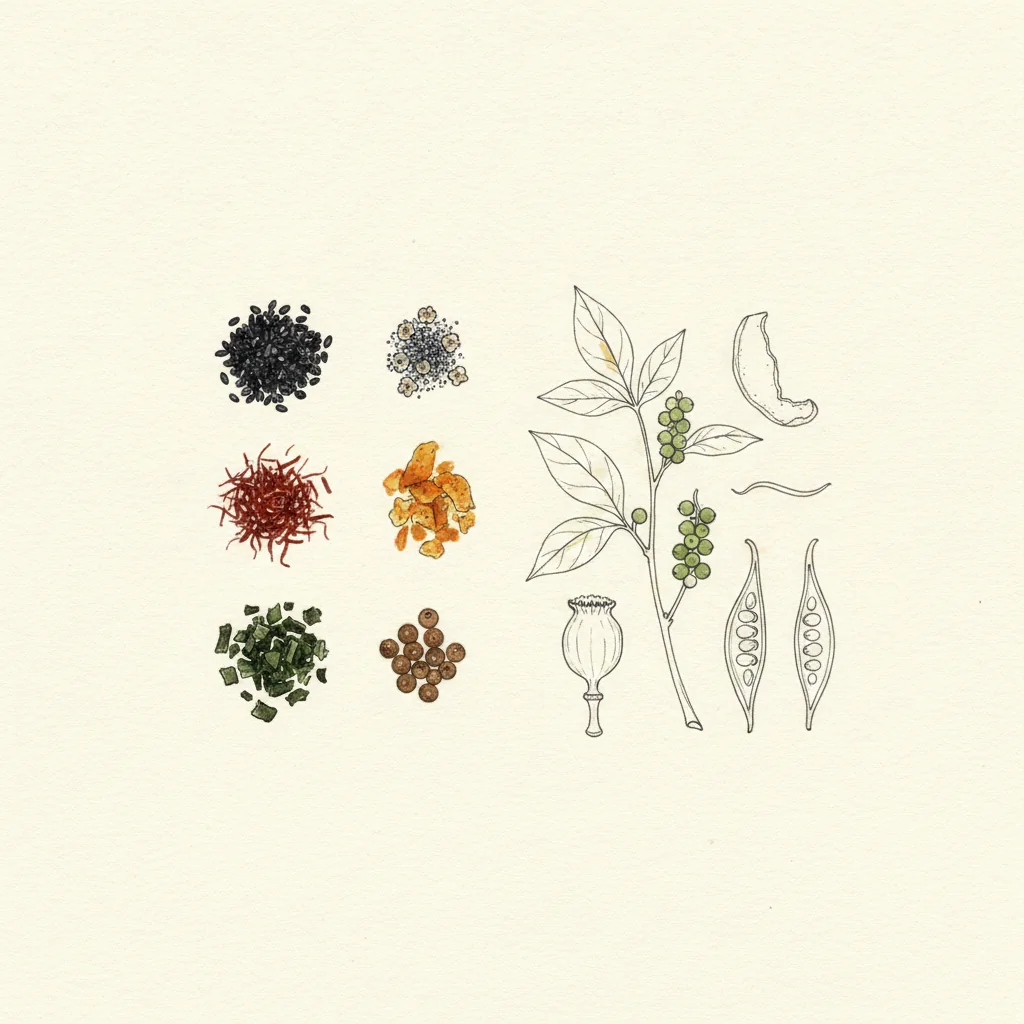
Spice · Blend
Shichimi Togarashi
Born in Edo (now Tokyo) at the Yagenbori apothecary; chili itself grown in Nagano and nationwide, blended by houses across the country, Japan
toasted citrus peel · nutty sesame · dry chili heat
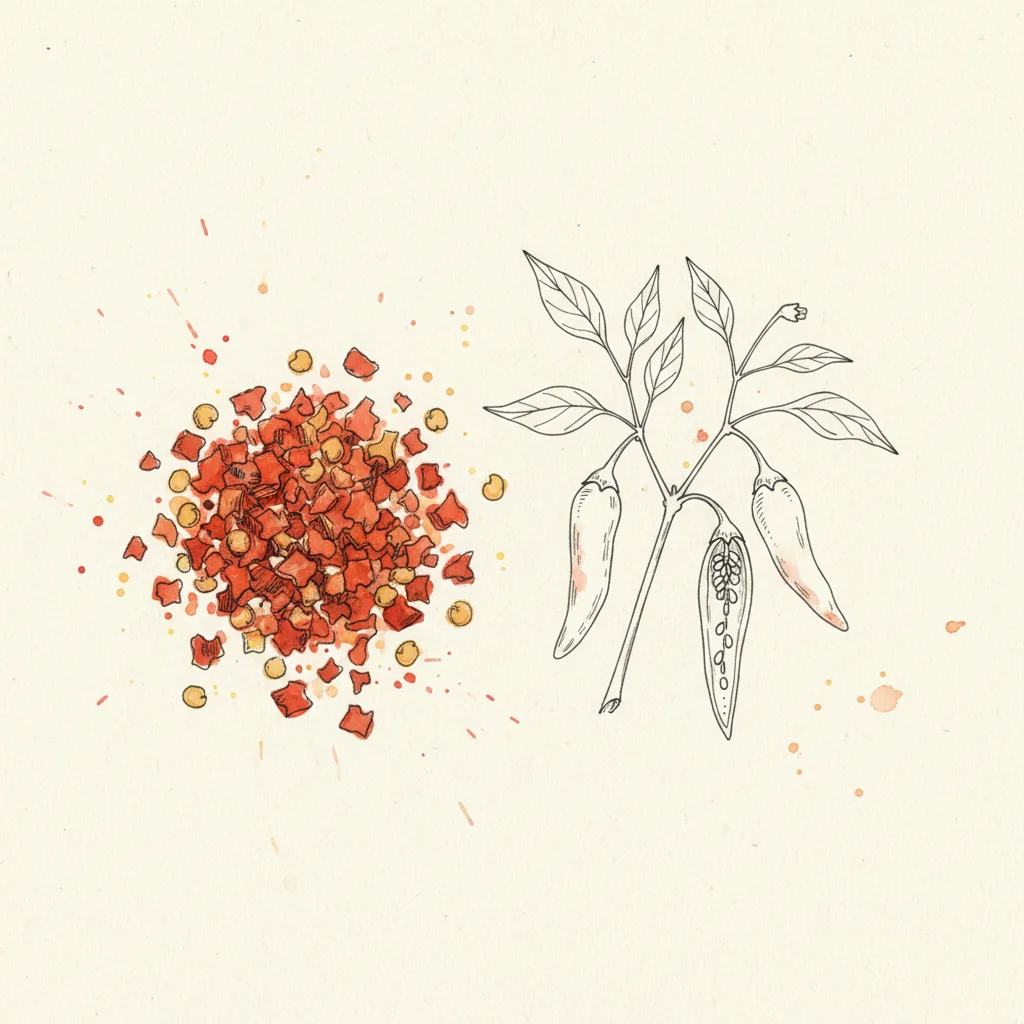
Spice · Chili flakes
Gochugaru
Yeongyang (Gyeongsang North) and Goesan (Chungcheong North), South Korea
ripe red fruit · baked apple · sun-dried tomato
Our verdict
Shichimi to finish at the table, gochugaru to build heat into the cooking.
At a glance
| Criterion | Shichimi Togarashi | Gochugaru |
|---|---|---|
| Origin | Japan — born at the Yagenbori apothecary in Edo (Tokyo) | South Korea — Yeongyang and Goesan |
| Type | Composed seven-spice blend | Single-ingredient sun-dried chili flakes (Capsicum annuum) |
| Intensity | 5/10 — moderate, the heat is one note among several | 5/10 — clean fruit-forward warmth, not searing |
| Main notes | Toasted citrus peel, nutty sesame, dry chili heat | Ripe red fruit, baked apple, sun-dried tomato |
| Best use | Finishing dust on udon, gyudon, yakitori, grilled salmon | Kimchi, bibimbap, tteokbokki, marinades, chili oil |
| Median price | ~$6 / 15 g bottle | ~$15 / 1 lb bag |
| Value | A pinch transforms a bowl; cheap per use | Bulk staple, unbeatable per gram if you cook Korean |
When to choose Shichimi Togarashi
Reach for shichimi togarashi when the cooking is done and the bowl needs one last layer. This is a finishing dust, full stop — you shower it raw over hot udon, a gyudon beef bowl, yakitori or grilled salmon at the table, about a quarter teaspoon, and the citrus peel and sesame bloom on contact with the steam. Never bloom it in fat the way you would a cooking blend: the orange peel and nori go bitter and flat the moment they hit hot oil, and you've thrown away the part you were paying for. The whole appeal is the complexity in a single shake — heat, yes, but also the bright sansho tingle, the toasted-sesame fat, the briny nori. That's why it works on plain rice, miso soup, even buttered popcorn or a fried egg, where a straight chili flake would just read as heat. Keep a bottle on the table, not in the pantry, and treat it like a seasoning you finish with rather than cook into. At roughly $6 for a 15 g bottle it lasts months of weeknight bowls. One honest caveat: blends vary wildly between houses, and the supermarket versions skew heavy on chili and light on the citrus and nori that make it interesting — if yours tastes like plain red-pepper dust, you bought a dull one.
When to choose Gochugaru
Reach for gochugaru when the heat needs to be inside the dish, not on top of it. This is a cooking chili: you mix it to a paste with water and fish sauce for napa-cabbage kimchi, stir it into a bulgogi marinade, fold it into tteokbokki sauce or bloom it slowly for homemade chili oil. The flavor is fruit-forward — ripe red fruit, baked apple, a sun-dried-tomato sweetness — with a warmth that builds rather than burns, which is exactly why Korean cooking leans on it by the spoonful instead of the pinch. Buy it coarse for kimchi and texture, fine if you want it to melt into a sauce, and check that it's actually sun-dried Korean chili rather than a generic flake dyed red. Budget about two teaspoons per two pounds of cabbage for kimchi, a teaspoon for a marinade that serves four. At roughly $15 a pound it's a bulk staple, and the per-gram cost is unbeatable if you cook Korean food often — a bag lasts and the color stays vivid in a sealed jar away from light. What it is not is a finishing dust: sprinkled raw at the table it tastes flat and dusty, because it's built to be hydrated and cooked. If you want a last-second lift, that's shichimi's job, not this.
Where to buy?
Shichimi Togarashi
Links checked on
| Merchant | Price | Action |
|---|---|---|
| Amazon US | — | Amazon US |
| Sous Chef UK | — | Sous Chef UK |
Prices may vary depending on current promotions on the merchant site.
Gochugaru
Links checked on
| Merchant | Price | Action |
|---|---|---|
| Amazon US | — | Amazon US |
| Sous Chef UK | — | Sous Chef UK |
Prices may vary depending on current promotions on the merchant site.
Frequently asked questions
- Can I swap gochugaru for shichimi togarashi?
- Not really. Gochugaru is a cooking chili you hydrate and bloom; shichimi is a finishing dust full of citrus peel, sesame and nori that goes bitter if you cook it. They solve different problems — heat-in versus complexity-on-top.
- Which is hotter?
- Both sit around 5/10 and neither is searing. Gochugaru's heat is fruitier and builds as you add more; shichimi's chili is dialed back so the citrus and sesame come through. If you want real burn, neither is your chili.
- Which is better value?
- Different math. Shichimi is cheap per use — a pinch finishes a bowl, about $6 a bottle for months. Gochugaru is a bulk staple at roughly $15 a pound, unbeatable per gram if you cook Korean food regularly.
- Can shichimi go in kimchi?
- No. Kimchi needs the volume, color and clean fruit of gochugaru. Shichimi's nori and citrus peel would muddy the ferment and the dose you'd need would blow the budget. Use the right chili for the job.
The best pairings
With Shichimi Togarashi
With Gochugaru
Comparison prepared according to our methodology. Sponsored purchase links — see our affiliations.