
Dish × condiment pairing
Which pepper goes in an authentic Cornish pasty?
Season : all-year · Occasion : lunch, picnic, weekend
White pepper, not black. A genuine Cornish pasty is seasoned with white pepper so no dark specks show against the swede and potato, the way Cornish bakers have always done it. Grind it generously into the raw filling before you crimp, then bake. Penja white pepper is the grain worth using.
In detail
An authentic Cornish pasty is seasoned with white pepper, not black, a tradition rooted in how the filling looks: white pepper leaves no dark specks against the pale swede and potato. The classic filling is skirt beef, swede, potato and onion, layered raw, seasoned with salt and a generous grind of white pepper, then sealed in the crimped pastry and baked so everything cooks inside the crust. Pepper goes into the raw filling before crimping, never at the table, because the long bake needs the warmth carried from the start. For a real upgrade over the dusty supermarket tin, use Penja white pepper from Cameroon's volcanic Penja Valley, a PGI grain since 2013. Its round warming heat and clean menthol lift cut the richness of the beef and swede. A 2.5 oz jar runs about £14 from Sous Chef.
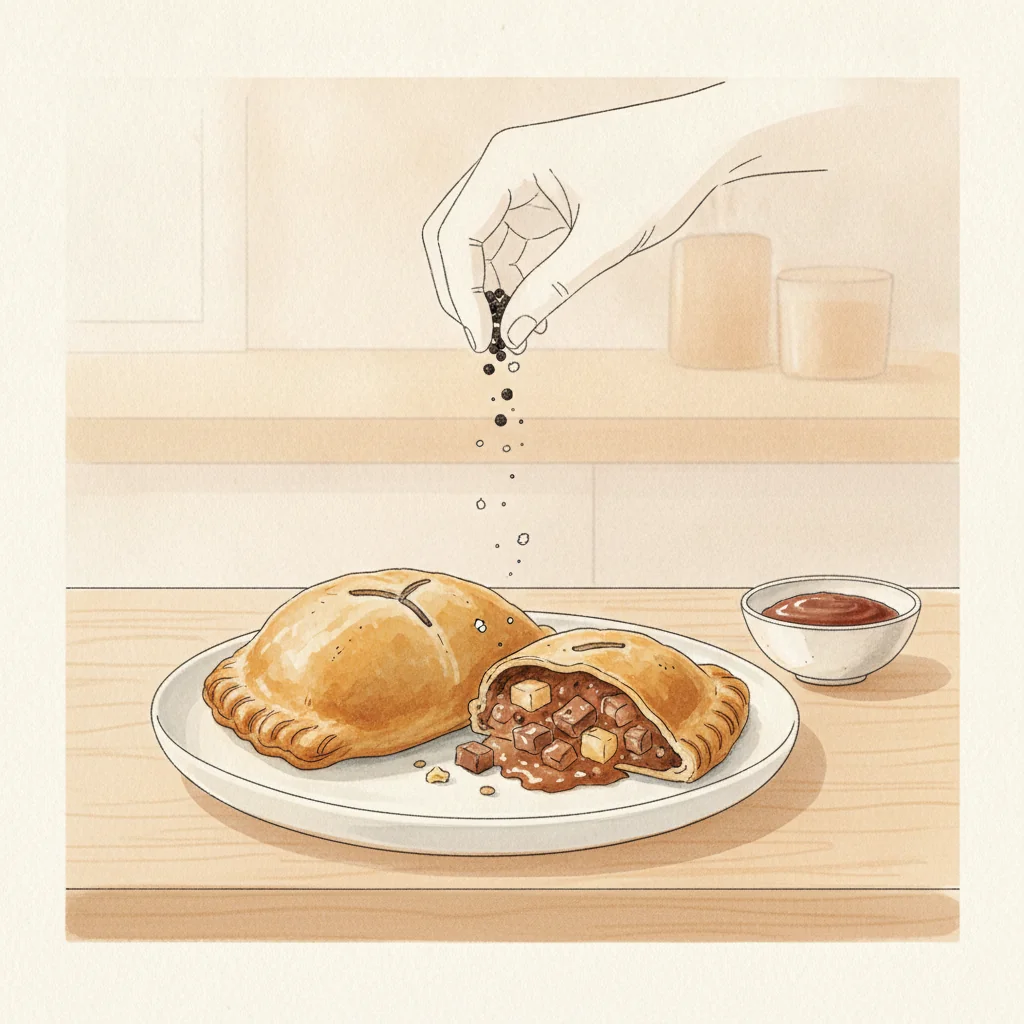
Our recommendation
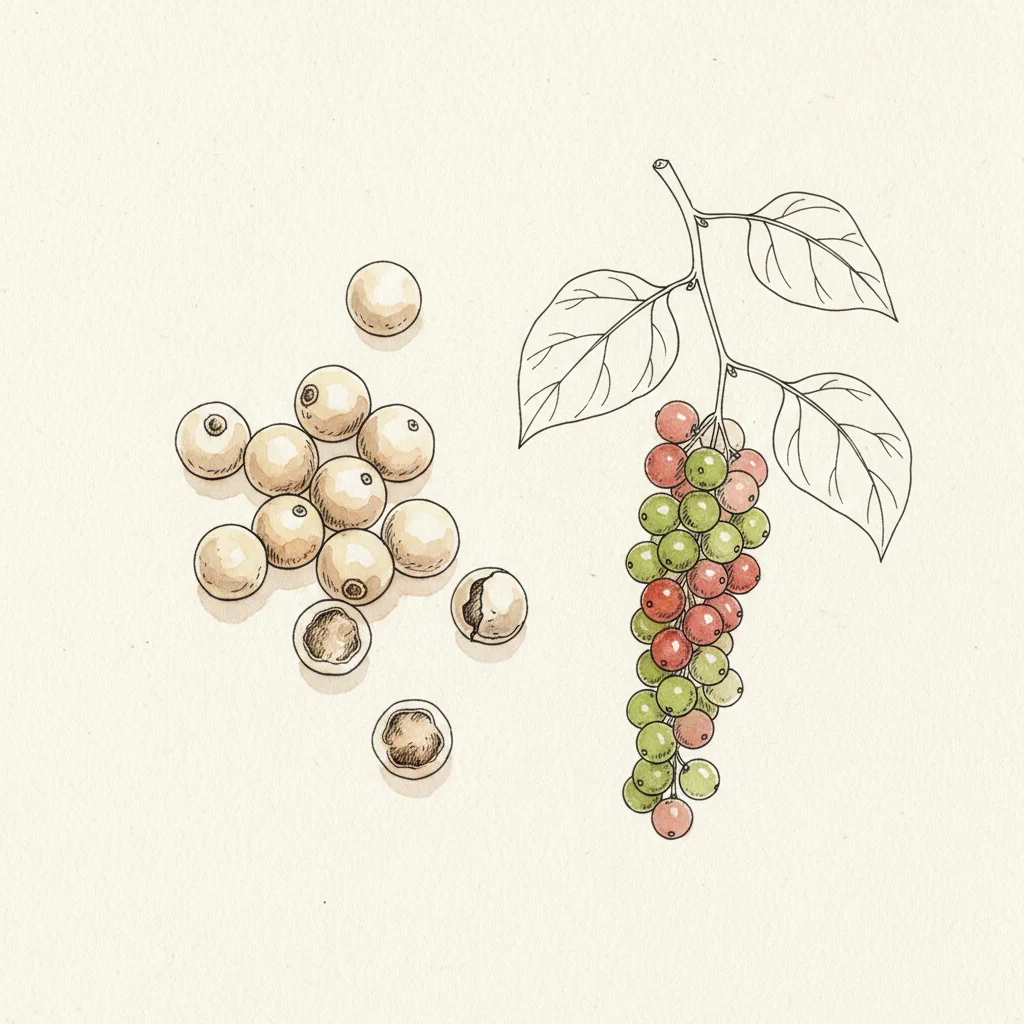
Pepper · White pepper
Penja White Pepper
Penja Valley, Littoral region, Cameroon (PGI)
musky animal warmth · fresh menthol · damp forest floor
A pasty needs white pepper to stay true to type, and most cooks reach for the dusty supermarket tin. Penja, Cameroon's PGI grain since 2013, brings a round warming heat and a clean menthol lift that cuts the richness of swede, potato and skirt beef without a black fleck in sight. Grind it into the raw filling, not at the table, so the warmth cooks through the bake.
Intensity 7/10
Where to buy it
Links checked on
| Merchant | Price | Action |
|---|---|---|
| Amazon US | — | Amazon US |
| La Boite | — | La Boite |
| Sous Chef UK | — | Sous Chef UK |
Prices may vary depending on current promotions on the merchant site.
Affiliate links — La Pincée may earn a commission on some sales, at no extra cost to you. Read more.
The catch
Don't reach for black pepper just because it's what's in the mill. A real Cornish pasty is seasoned with white pepper, and not for flavour alone: black pepper freckles the pale swede and potato with dark specks, and a proper Cornish baker won't have it. White pepper seasons clean, invisible against the filling, exactly as the pasty has always been made.
Chef's note
Season the filling raw, layer by layer, before you crimp. Lay down sliced potato, then swede, then chopped skirt beef and onion, and grind Penja white pepper over each layer with a good pinch of Cornish sea salt as you go. One or two firm turns of the mill per pasty. The long bake softens the heat, so be braver than feels right, then seal and crimp.
Tasting note
round warmth · clean menthol · damp forest floor · about £14 for a 2.5 oz jar from Sous Chef, and it grinds far above the supermarket tin. Worth it for a grain you'll also reach for on white fish and beurre blanc.
These three sections appear on every one of our pairing pages — our methodology.
Alternatives to explore
-
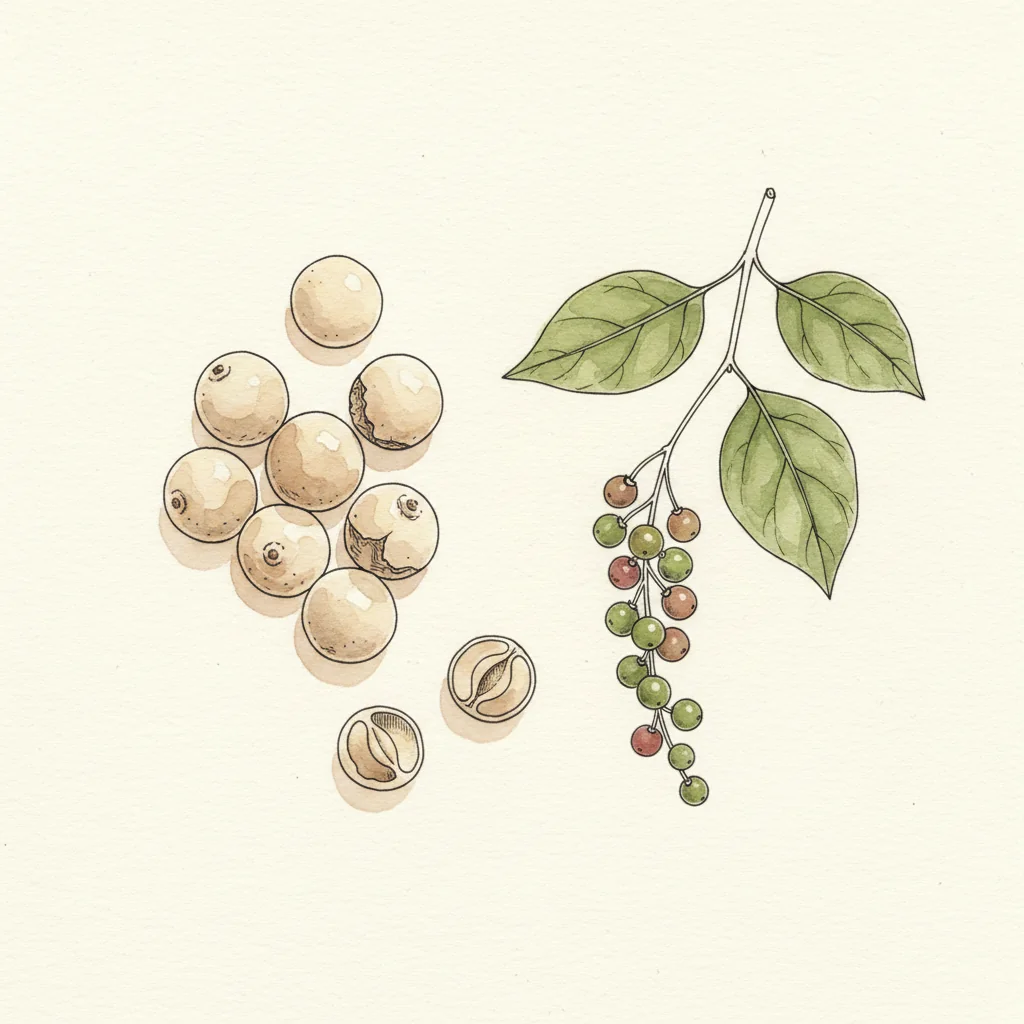
Pepper · White pepper
Kampot White Pepper
Kampot and Kep provinces, Cambodia (IGP/PGI)
Intensity 6/10
Kampot white is brighter and more floral, with less of the musky depth. A fine swap if you want a lighter pepper through the filling, though it costs more per gram.
-
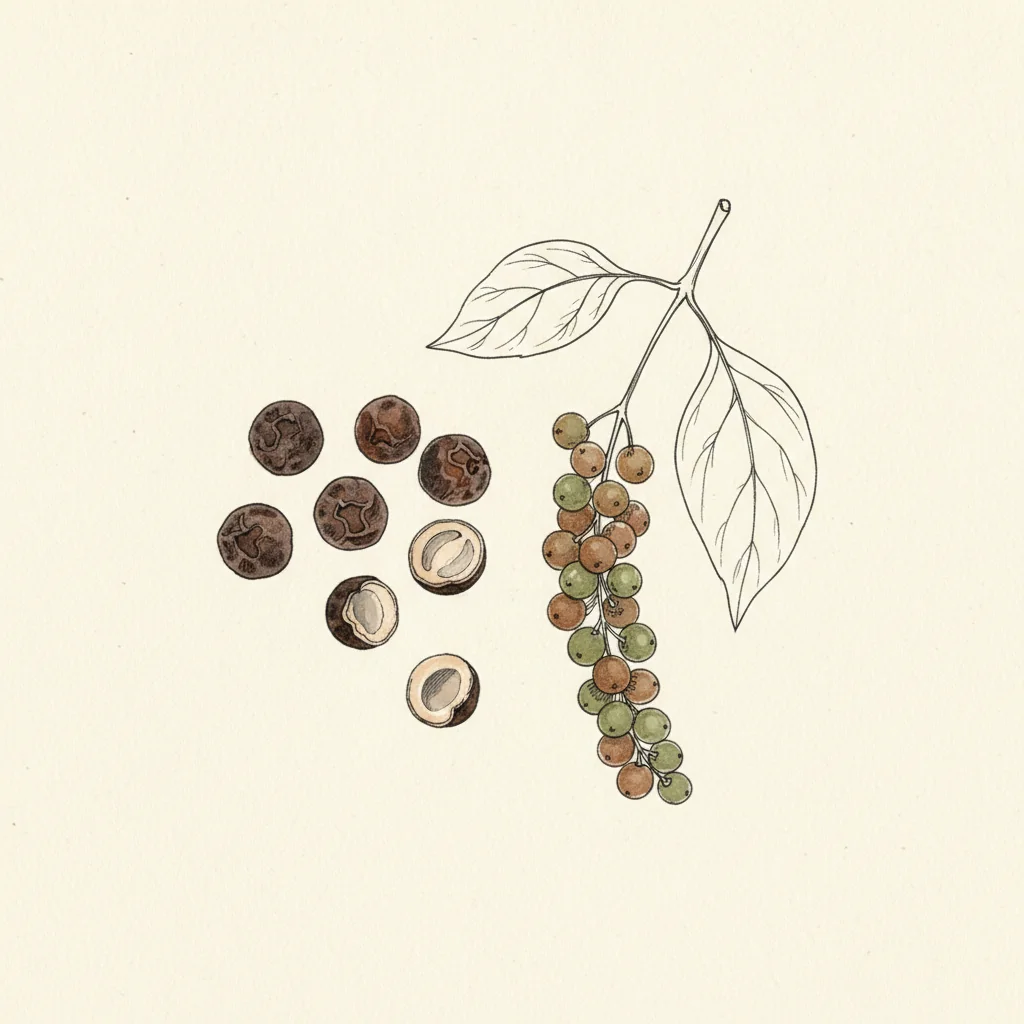
Pepper · Black pepper
Tellicherry Black Pepper
Malabar Coast, Kannur district (Kerala), India
Intensity 7/10
If you don't mind dark specks, Tellicherry black brings bold fruity warmth with more bite. Authenticity says white, but black tastes louder against the beef.
Complementary ingredients
- Cornish Sea Salt — The salt for the raw filling, seasoned generously before crimping
Frequently asked questions
- Is Cornish pasty meant to have white or black pepper?
- White pepper. The traditional Cornish pasty uses white pepper so the seasoning doesn't show as dark specks against the pale swede and potato. Black pepper tastes fine but isn't true to type.
- When do you add the pepper to a Cornish pasty?
- Into the raw filling, before you crimp and bake. The pepper needs to season the swede, potato and skirt beef from the start so the warmth carries through the long bake, not sit on top at the end.
- How much pepper does a Cornish pasty need?
- More than you'd think, because the long bake softens it. Grind it generously over the layered filling, then add salt, before sealing the pastry. Penja white pepper at one or two firm turns of the mill per pasty.
This pairing was validated according to our methodology. Purchase links are marked sponsored and may earn a commission — details on our Affiliations page.