Pillar guide
Single-Origin Spices: The Diaspora & Burlap Approach
Seven single-origin spices worth buying once you taste the difference: Saigon cinnamon, Vietnamese star anise, Kerala green cardamom, Pragati turmeric, black lime, nigella seeds and sumac. Origins, real prices, and how to actually use them.
The fastest upgrade in your kitchen isn't a new knife or a fancier salt. It's throwing out the dusty jar of pre-ground "cinnamon" you've had since 2021 and buying one fresh, single-origin spice that still has its oils. Most supermarket spice is anonymous: blended from a dozen farms, ground to powder, then stored for a year or more until the volatile compounds that carry flavor have mostly evaporated. Single-origin sellers like Burlap & Barrel and Diaspora Co do the opposite — they name the farm, mill close to harvest, and pay growers directly. You taste the difference immediately.
Seven spices are worth buying this way today: Saigon cinnamon for baking, Vietnamese star anise for broth, Kerala green cardamom for chai and biryani, Pragati turmeric for curries, black lime for Persian stews, nigella seeds for flatbread, and sumac for everything you'd otherwise hit with a lemon. None of them costs more than about $13, and most will outlast the cheap stuff three to one because you use a third as much.
On this page
- Why single-origin actually matters
- The seven spices worth buying
- What goes with what
- Whole vs ground vs pre-milled
- Mistakes to avoid
- FAQ
Why single-origin actually matters
Flavor in a spice lives in volatile aromatic oils, and those oils start leaving the moment the spice is ground. Whole spices hold their compounds for years; ground spices lose most of their punch in six to twelve months. That's the whole mechanism. A jar of pre-ground cardamom on a supermarket shelf has often been milled, shipped, and stored long enough to lose half its cineole before you open it — which is why it smells like a faint memory of the pod.
Single-origin matters for two separate reasons, and it's worth keeping them apart. The first is freshness: a seller that mills to order and ships fast gives you a spice with its oils intact. The second is traceability — knowing the spice came from one farm or one valley, picked at one time, of one variety. That's what lets a company like Diaspora Co sell a turmeric tested at 5.2% curcumin instead of the 1 to 3% in commodity powder, or Burlap & Barrel sell a cinnamon you can trace to the highlands around Huế.
The catch: single-origin is not automatically better — it's better when it means fresher. A beautifully sourced spice that's sat in a warehouse for two years is just expensive dust. The provenance story is marketing; the mill date and the smell are the proof. Open the jar, crush a little between your fingers, and if it doesn't slap you with aroma, the origin on the label is worth nothing. Trust your nose over the backstory every time.
The seven spices worth buying
Saigon cinnamon — the one for baking
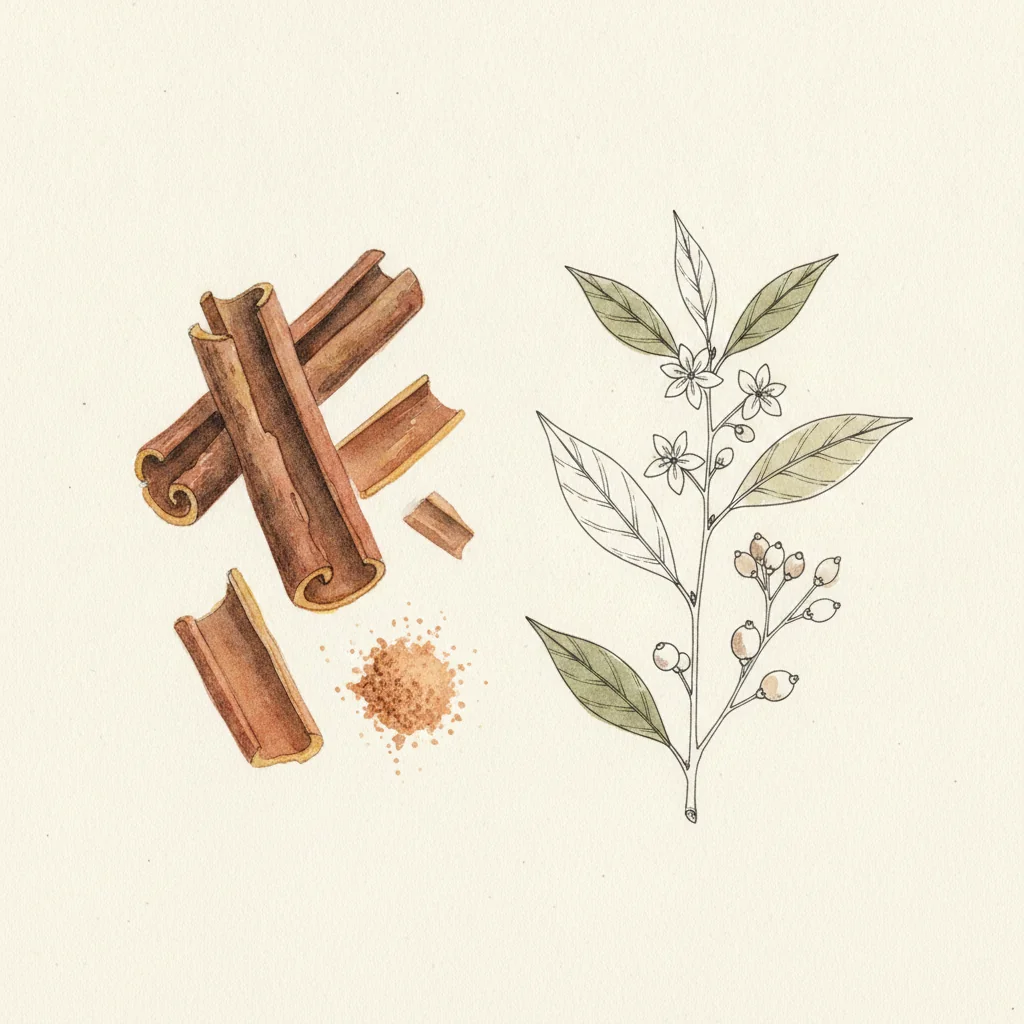
Saigon cinnamon (Cinnamomum loureiroi) isn't "true" cinnamon at all. It's a cassia, and that's the point: it carries the highest essential-oil content of any cinnamon on the shelf, which is why it tastes like hot cinnamon candy where mild Ceylon goes quiet. Grown in the highland forests around Huế and Quảng Nam in central Vietnam, the single-origin lots from Burlap & Barrel run about $11 for a 1.8 oz jar.
Use it where heat and time would erase a gentler cinnamon: cinnamon rolls, snickerdoodles, apple and pumpkin pie, mulled cider. Scale back about a third versus generic supermarket cinnamon — a teaspoon of this hits like a tablespoon of the cheap stuff, and the coumarin in cassia means restraint is prudence, not just taste. Splurge-worthy if you bake; for a basic weeknight apple pie, supermarket Saigon is fine.
Star anise — the broth backbone
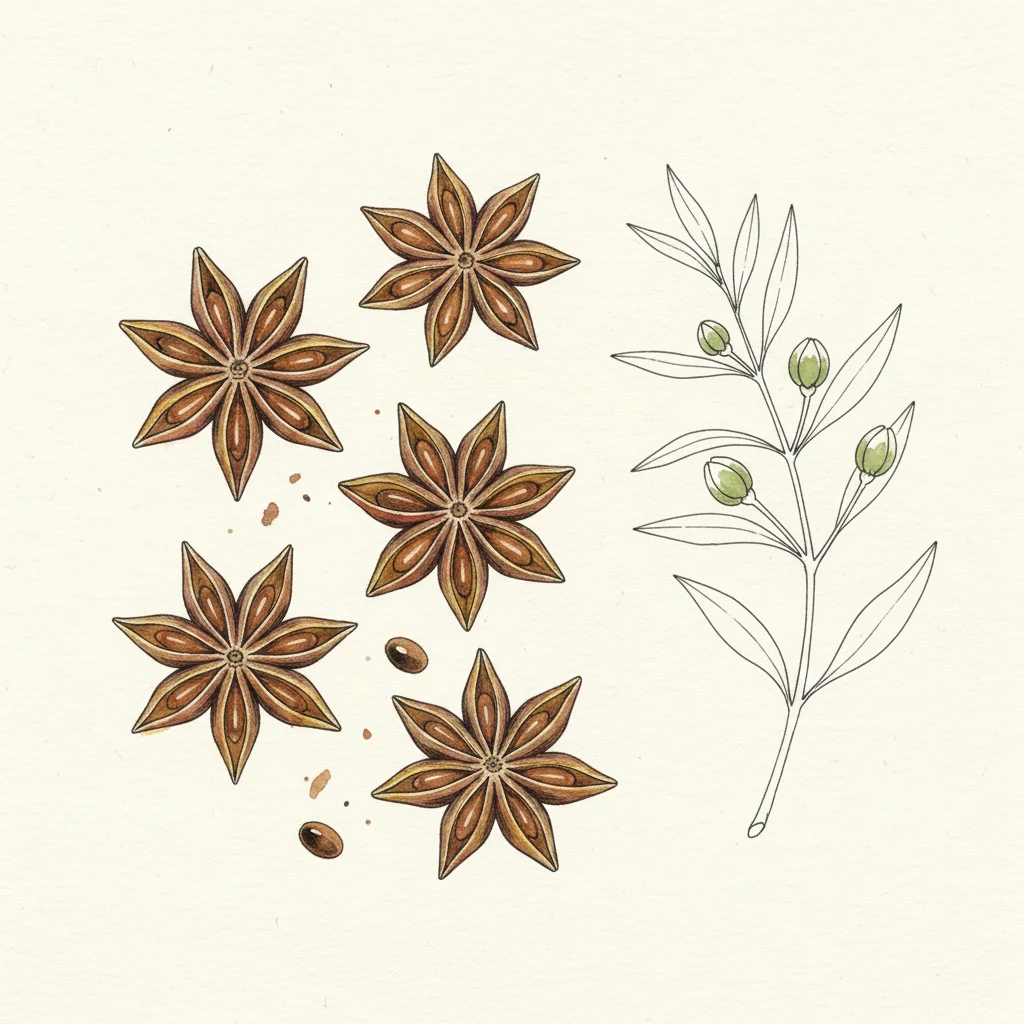
Vietnamese star anise (Illicium verum) is the eight-pointed dried fruit of a small evergreen, packed with anethole — the same molecule that scents fennel and anise seed, but at a higher, more heat-stable concentration. That stability is the whole reason it's a long-simmer spice and never a finishing sprinkle: it gives up its flavor slowly and holds through an hour in the pot. The best-formed, most fragrant stars come from Lang Son on the Chinese border. About $10 to $13 for a 100 g bag of whole stars, which lasts a year.
It's the backbone of pho broth and Chinese five-spice, and it's quietly brilliant in poached pears, mulled wine, and red-braised pork belly. Chef's note: one to two whole stars per 2 liters of broth, added at the start of the simmer. Overdo it and the licorice turns soapy and cold — this is a spice that punishes a heavy hand.
Green cardamom — buy the pods, grind to order
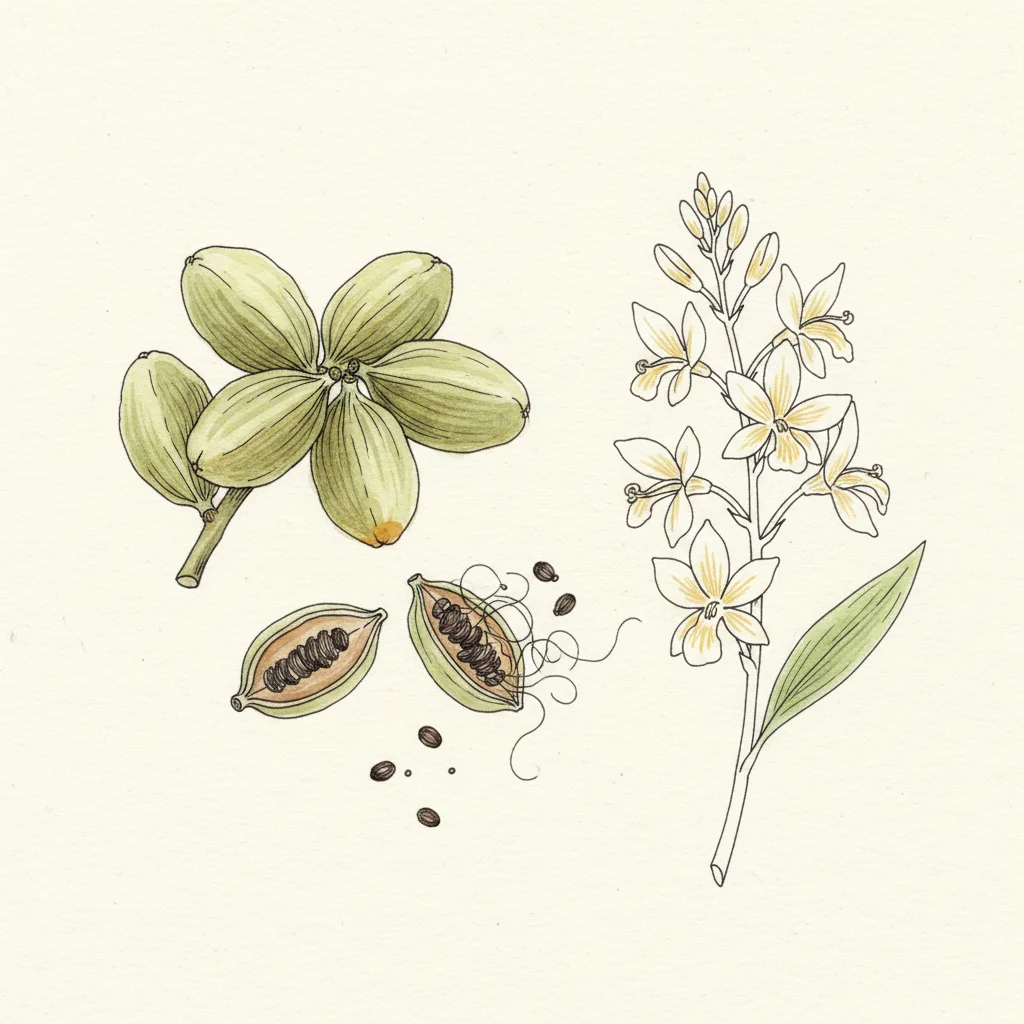
Kerala green cardamom (Elettaria cardamomum) grows in the shaded understory of India's Western Ghats at 800 to 1,500 meters. The good stuff is picked pale green and air-dried, never bleached with sulfur like the bargain pods. Each pod holds 15 to 20 black seeds loaded with cineole — that's the cool, eucalyptus-and-lemon brightness that makes cardamom unmistakable. A jar runs about $10 for a few ounces.
It carries Indian chai and garam masala, Arabic coffee, biryani, and Scandinavian Christmas baking. The catch: pre-ground cardamom is a waste of money. It loses half its punch within six months, because cineole is volatile and there's nothing protecting it once the pod is cracked and milled. Buy whole pods, crush them at the start of cooking, or grind the seeds to order. The two minutes it takes is the difference between vivid and flat.
Pragati turmeric — the curcumin tell
Pragati turmeric (Curcuma longa) is a single-origin heirloom variety grown by the Kasaraneni family near Vijayawada in Andhra Pradesh, milled fresh and tested at 5.2% curcumin — against the 1 to 3% of commodity powder. You taste it as a bright orange-peel lift sitting over the usual earth, where supermarket turmeric is mostly dull yellow color and faint bitterness. About $10 for a 48 g tin from Diaspora Co.
Bloom it early in hot fat so the raw bitterness cooks off, then build your dal, curry, or rice base on top. Half a teaspoon for a curry that serves four; a quarter teaspoon for golden milk. Skip turmeric as a raw finisher — uncooked, the bitterness has no time to mellow, and the deep yellow overwhelms anything delicate.
Black lime — Persian souring power
Black lime, or loomi, is a fresh lime boiled in brine and sun-dried until it turns hollow, black inside, and intensely sour. It ferments internally as it dries, which is where the savory, almost leathery funk comes from — a tang fresh lime simply can't touch. It's the souring engine of Persian and Iraqi cooking. The Burlap & Barrel single-origin ground jar (grown and dried in Alta Verapaz, Guatemala) runs about $10 for a 2.8 oz jar; whole limes are cheaper if you want to drop them in a stew yourself.
Pierce a whole lime and add it at the start of a long braise — ghormeh sabzi, gheimeh, lamb shanks — or stir the powder in near the end. The catch: this is a cooked-in souring agent, not a fresh-lime substitute. Use it on delicate fish and the funk bulldozes everything; use it raw on a salad expecting fresh-lime zip and you get bitterness instead. One whole lime per pot for four to six, or a quarter teaspoon of powder per portion. It builds fast, so go light.
Nigella seeds — the most mislabeled spice you own
Nigella seeds (Nigella sativa) are sold almost everywhere as "black cumin," and the name is simply a lie: nigella is in the buttercup family and has no relation to cumin or caraway. The small, matte-black, three-sided seeds taste of toasted onion, hazelnut, and a mild pepper warmth with a whisper of oregano. You already know them from the tops of naan and pita. Egypt's Nile Valley grows the most aromatic lots, and a jar runs about $7.
Scatter them raw on dough before baking, or use them as a finishing crunch on labneh, roasted squash, or a tomato-cucumber salad. Chef's note: toast them dry for about ten seconds first to wake the nutty note, then a rounded teaspoon over one flatbread or a salad for four. Don't pair them with an overload of fresh dill — the two muddy each other.
Sumac — sour without the wet
Sumac is the dried, crushed berry of Rhus coriaria, ground to a coarse, wine-red powder, and it does one thing better than anything else in your rack: it makes food sour without making it wet. The best lots come off the hills around Aleppo and the Syrian coast, where cooks have reached for it instead of lemon for two thousand years. About $9 for a 4 oz bag.
It's a finishing spice, full stop — dust it off the heat onto fattoush, hummus, grilled lamb skewers, raw red onions, or ripe tomatoes. The freshness tell is color: look for deep burgundy, not brown. Brown sumac has oxidized and lost its tartness. Don't dry-roast it for long, either — the heat dulls both the color and the sour grip you bought it for. One to two teaspoons over a dish for four, scattered at the table.
What goes with what
A quick map of where each spice earns its place, and the dish it owns. For a deeper dive into how spices behave with proteins and sides, the full pairings library breaks each one down dish by dish.
- Sweet baking, anything cinnamon-forward: Saigon cinnamon. Cinnamon rolls, apple pie, chai.
- Long broths and braises: star anise. Pho, five-spice pork belly, mulled wine.
- Aromatic rice, chai, and Nordic baking: green cardamom. Biryani, cardamom buns, Arabic coffee.
- Curries, dals, and golden milk: Pragati turmeric. Bloom it in fat first.
- Persian and Iraqi stews: black lime. Ghormeh sabzi, gheimeh, braised lamb.
- Flatbread and fresh-cheese plates: nigella seeds. Naan, labneh, roasted squash.
- Salads, dips, and grilled meat finishes: sumac. Fattoush, hummus, lamb skewers.
If you want a single starter trio, buy sumac, green cardamom, and star anise. Between them you cover a finishing sour, a warm aromatic, and a deep braising note — three flavor moves that no amount of salt and pepper can fake. The browse-everything route lives in the wider pairings library.
Whole vs ground vs pre-milled
The single most useful rule in spice buying: buy whole when you can, grind to order, and only buy pre-ground when whole isn't practical.
- Buy whole and grind to order: green cardamom (pods), star anise (whole stars), nigella (use whole — they're a seed, not a powder spice), whole black limes. These hold their oils for years and lose them fast once milled.
- Pre-ground is the sensible default: turmeric and sumac. Turmeric is a fibrous rhizome that's miserable to grind at home and is sold ground for good reason; sumac is a crushed berry and comes that way. For both, freshness of the milling is what matters — buy from a seller that mills to order and stores cool.
- Either works: Saigon cinnamon. Ground is the convenient choice for baking; a whole quill is better for steeping in a syrup or braise, where you'll fish it out.
For anything you grind yourself, a cheap dedicated coffee grinder or a microplane beats a mortar and pestle on consistency. Whatever the form, store it away from heat, light, and the steam of the stovetop — the cabinet above the oven is the worst spot in the kitchen.
Mistakes to avoid
Trusting the origin label over your nose. A farm name is a story; aroma is the proof. If a freshly opened jar doesn't hit you, the provenance is meaningless — see why single-origin actually matters.
Buying ground cardamom. It's the clearest case of pre-ground waste. The cineole is gone in months. Pods, every time.
Treating black lime like fresh lime. It's a fermented, cooked-in souring agent, not a squeeze of citrus. Used raw or on delicate fish, it tastes off, not bright.
Dry-roasting sumac. The heat dulls the color and flattens the tartness — the two things you paid for. Finish only, off the heat.
Dosing Saigon cinnamon like supermarket cinnamon. It's a hotter, oilier cassia. Scale back a third, both for flavor and for the coumarin.
Storing spices above the stove. Heat and steam are exactly what strip the oils. Cool, dark, sealed.
FAQ
Is single-origin spice actually worth the money?
When it means fresher, yes. A single-origin spice that's milled to order and shipped fast has its aromatic oils intact, so you use a third as much and it lasts longer — often making it cheaper per dish than supermarket powder. When "single-origin" just means a nice backstory on a jar that's sat in a warehouse, it's overpriced dust. Judge by smell, not by the label.
What's the difference between Burlap & Barrel and Diaspora Co?
Both are direct-trade, single-origin spice companies that name their farms and pay growers above commodity rates. Burlap & Barrel sources broadly across the world (their Saigon cinnamon, black lime, and more), while Diaspora Co focuses on Indian spices traced to specific family farms (their Pragati turmeric is the flagship). Either is a real upgrade over anonymous supermarket spice.
Why is my turmeric so much more bitter than restaurant curry?
Because it's raw. Turmeric needs to bloom in hot fat or simmer in a base for its bitterness to cook off and its earthy warmth to come forward. Restaurant curries always cook it in early. If you stir Pragati turmeric into something at the end, you taste only the bitter edge.
Are nigella seeds the same as black cumin?
No. The name "black cumin" is a persistent mislabel. Nigella is Nigella sativa, a buttercup-family plant, with no botanical relation to true cumin (Cuminum cyminum) or caraway. The seeds taste of toasted onion and hazelnut, nothing like cumin's warm earthiness.
How long do these spices keep?
Whole spices — star anise, cardamom pods, whole black limes, nigella — hold well for two years or more if stored cool, dark, and sealed. Ground spices like turmeric and sumac are best inside a year; sumac in particular tells you when it's past it by turning from burgundy to brown. Buy quantities you'll actually use in that window.
Do I really need to grind cardamom myself?
For the full flavor, yes. Ground cardamom loses about half its punch within six months because the volatile cineole escapes once the pod is cracked. Crushing green cardamom pods at the start of cooking, or grinding the seeds to order, takes two minutes and roughly doubles the aroma you get on the plate.