
Top 10 · La Pincée’s pick
Best salts for desserts
Salt on a chocolate or caramel dessert isn't a gimmick: it stretches the sweetness and cuts the cloying edge. These are the flake and fleur-de-sel crystals that lift pastry the most.
-
 #1
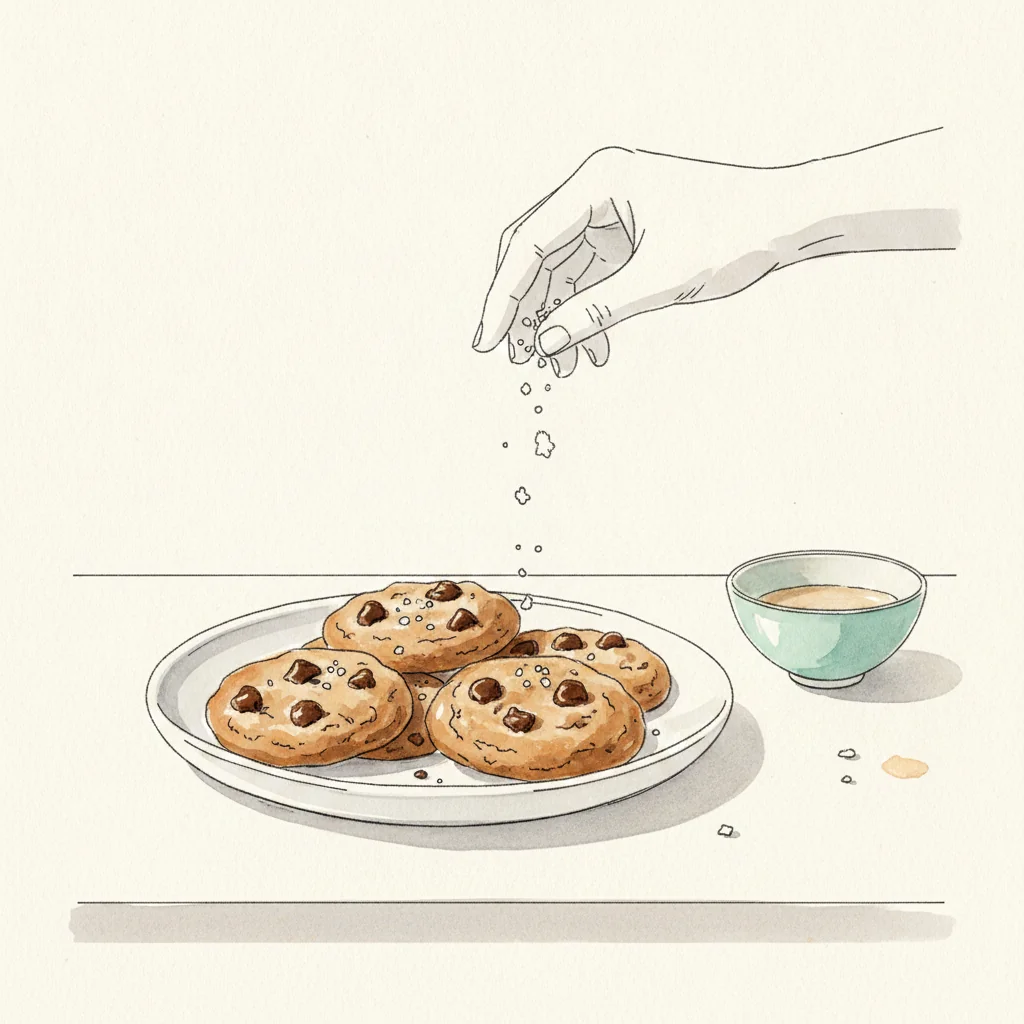
#1Maldon Sea Salt on Chocolate-chip cookies
A flaky salt like Maldon, pressed onto the dough just before baking or onto the cookies the moment they leave the oven. The crystals stay intact and give little bursts of salinity against the sweet. Fine table salt dissolves in and just makes the whole cookie taste salty.
Read the full pairing →
- #2
Jacobsen Pure Flake Salt on Focaccia
Jacobsen Pure Flake. Scatter it across the dimpled, oiled dough just before it bakes, so the broad flakes set into the crust and stay crisp through the heat. Its thin Oregon flake gives the bright, glassy crunch focaccia is famous for. Don't mix it into the dough, where it just dissolves and you lose the crackle.
Read the full pairing →
- #3
Noirmoutier Sea Salt on Artisan bread
4.3/5 · intensity 6/10Noirmoutier sea salt. Dissolve it in the dough water so it disperses evenly, since salt controls fermentation and crust as much as flavor. Its clean, frank salinity seasons the crumb without bitterness. There is no point in a flaky finishing salt here; it dissolves into the dough and the crunch is lost.
Read the full pairing →
- #4
Persian Blue Salt on Chocolate truffles
3.8/5 · intensity 7/10Persian blue salt. One of the rarest salts on earth, its pale-blue sylvinite crystals look extraordinary pressed into dark ganache, and the round salinity with a quiet umami close lifts chocolate without a harsh spike. Press a single small crystal into each truffle as it sets, off any heat, so the blue and the crystal survive.
Read the full pairing →
- #5
Fleur de Sel de Guérande on Salted caramel
Fleur de sel de Guérande, the original. Stir a little into the warm caramel for round background salinity, then sprinkle a few crystals on top before it sets for the crunch. Its slow-melting, faintly violet salinity is gentler than Maldon's sharp shatter, which suits caramel's soft sweetness.
Read the full pairing →
- #6
Jacobsen Pure Flake Salt on Salted brownies
Jacobsen Pure Flake. Scatter a few thin flakes across the batter just before baking, or onto the warm tray fresh from the oven, so they sit proud and crunchy against the fudge. The bright, clean brine cuts the dark-chocolate richness without tasting bitter. Don't beat salt into the batter, where it only mutes the sweetness evenly.
Read the full pairing →
- #7
Cornish Sea Salt on Savoury scones
Cornish Sea Salt. Crush a little fine flake into the dry flour to season the crumb, then scatter a few crystals over the egg-washed tops before baking so they set into the crust. The brisk Atlantic brine lifts cheese-and-chive scones cleanly. Don't rely only on the top: an unsalted crumb tastes flat however good the finish.
Read the full pairing →
- #8
Fleur de Sel de Guérande on French salted caramel
Fleur de sel de Guérande. Salted-butter caramel is a French invention, and Guérande is the salt it was built on. Its moist crystals melt slowly into the soft caramel, giving bursts of salinity rather than an even saltiness. Stir most in and scatter a pinch on top so each bite finds a crystal.
Read the full pairing →
- #9
Fleur de Sel de Guérande on Dark chocolate squares
Fleur de sel de Guérande. Salt cuts dark chocolate's bitterness and lifts its fruit, and fleur de sel does it gently, with moist crystals that pop softly against the snap. Press a few crystals into melted or tempered chocolate before it sets, or scatter them over squares just before serving.
Read the full pairing →
- #10
Fleur de Sel de Guérande on Caramel popcorn
Fleur de sel de Guérande. Salted caramel popcorn needs salt that stays as distinct bursts, not an even cure. Guérande's moist, soft-crunching crystals melt slowly, so each one lands as a salty pop against the sweet. Scatter it over the warm, just-coated popcorn, never stirred into the hot caramel.
Read the full pairing →
How we rank
This ranking blends my tasting score (every pairing tasted at least twice, blind, on different days, 1–5 scale) with the pairing intensity rated out of 10. The more intense the pairing and the better-rated the product, the higher it climbs. The weighting is 60% product score / 40% intensity. Full method →