Pillar guide
Rare Black Peppers Worth the Grinder: Tellicherry, Kampot, Aranya, Voatsiperifery
The reference guide to rare black peppers worth buying whole. Tellicherry, Kampot PGI, Aranya single-estate, wild Voatsiperifery, Zanzibar, Kampot red, green peppercorns: origins, real prices, when to grind them, and the fakes to dodge. Named grain, honest price, real merchant.
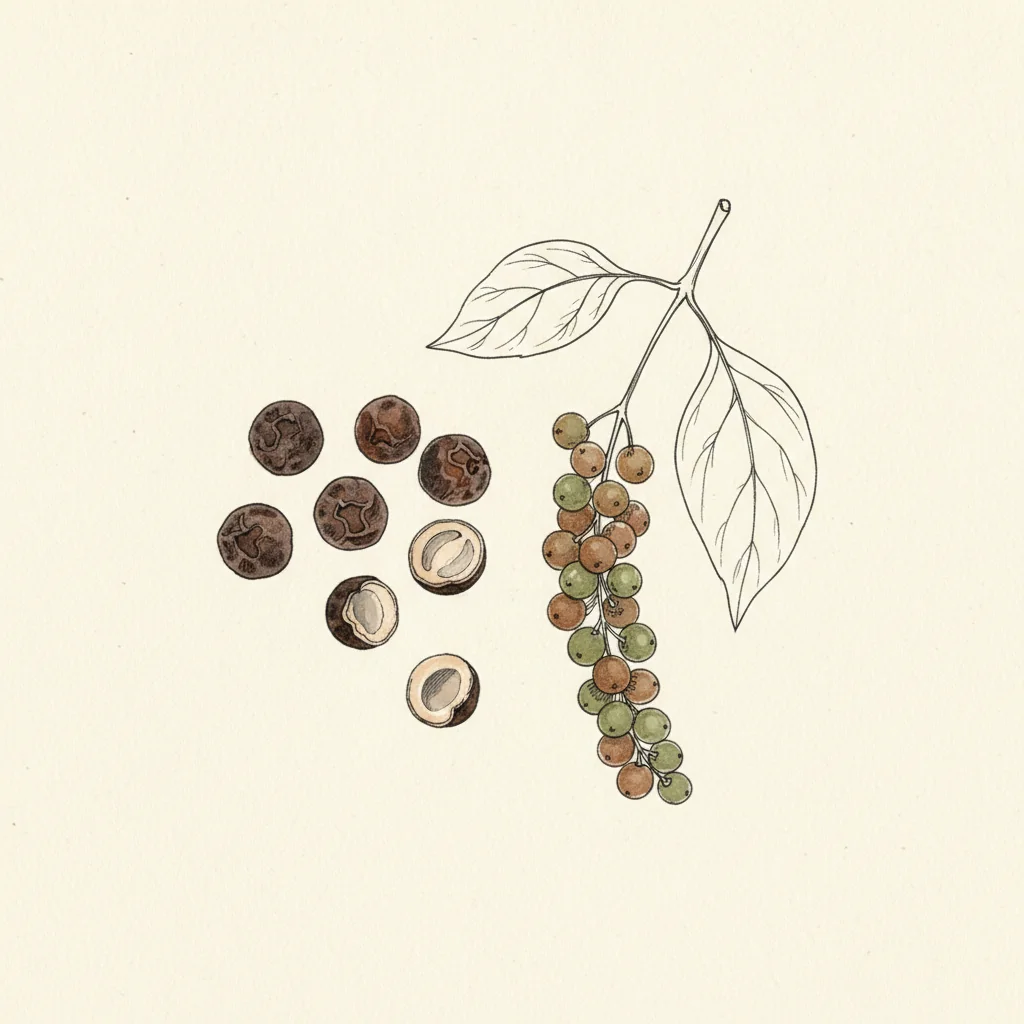
There is no single "best black pepper," but there is a short list that earns the space on your counter. Start with three and you cover most of what black pepper can do: Tellicherry from India's Malabar Coast for the everyday workhorse, Kampot black PGI from Cambodia for clean eucalyptus lift, and one signature grain — either single-estate Aranya or wild Voatsiperifery — for the plate where pepper is the point. Everything else here is a specific tool for a specific job. The thing all seven share: you buy them whole, you grind them at the last second, and you don't cook the expensive ones into a braise.
In this guide
- What "rare pepper" actually means
- The grains worth buying
- How to choose
- How to use them
- What to skip
- FAQ
What "rare pepper" actually means
Commercial black pepper is a commodity. The world's supply pools out of five countries — Vietnam, Brazil, Indonesia, India, Sri Lanka — and most of it is blended by region, picked green, and sold by the ton. It works. It's also interchangeable. The peppers on this page are the opposite: they're defined by a place, a grade, or a single farm, and that's exactly what you're paying for.
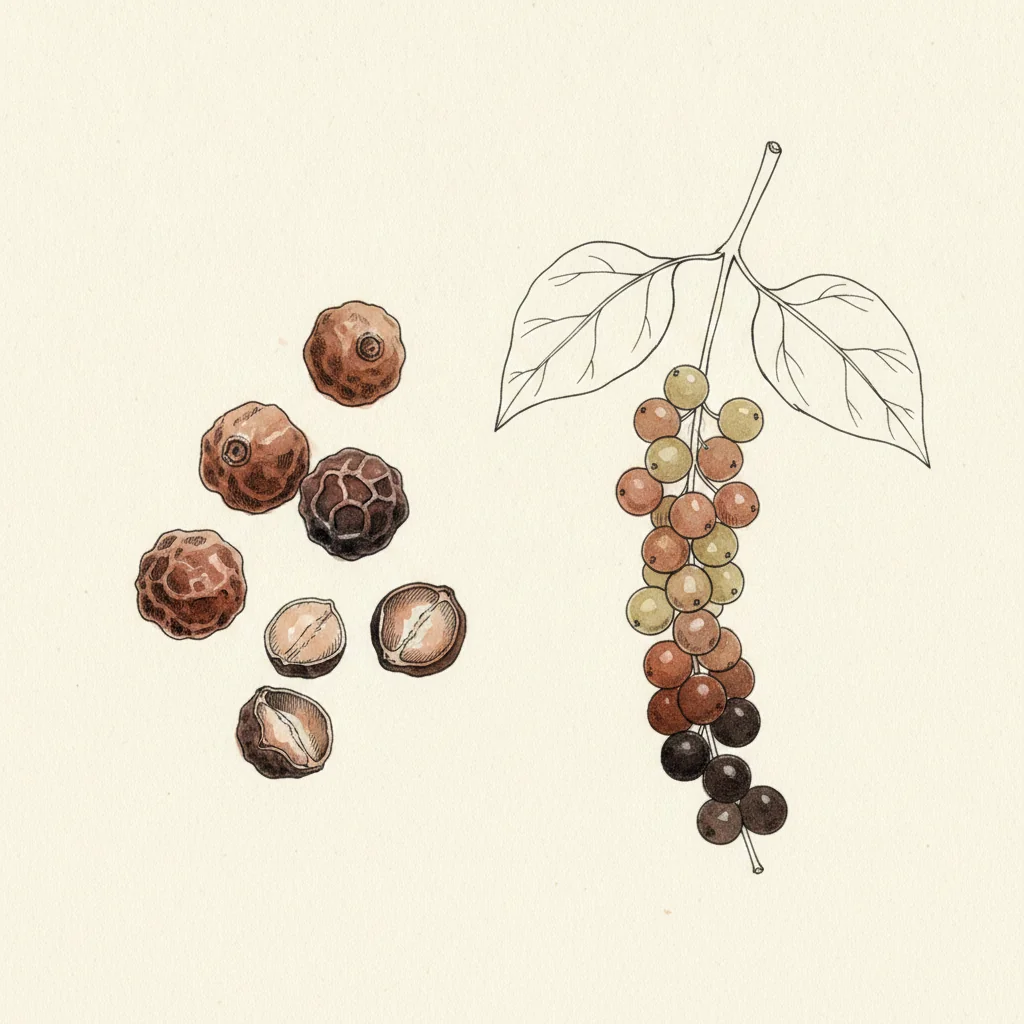
Three things separate a rare pepper from the supermarket grind. Ripeness: the best berries are left on the vine past green, sometimes to deep red, then sun-dried within days so the volatile oils never fade. Aranya and Kampot red live or die on this. Provenance: Kampot carries a PGI (Protected Geographical Indication, the EU registered it in 2016), which is the one verifiable traceability signal in the pepper world. Grade: Tellicherry isn't a place anymore — TGSEB, "Tellicherry Garbled Special Extra Bold," means only berries over 4.25 mm make the cut, the biggest and ripest off the Malabar Coast.
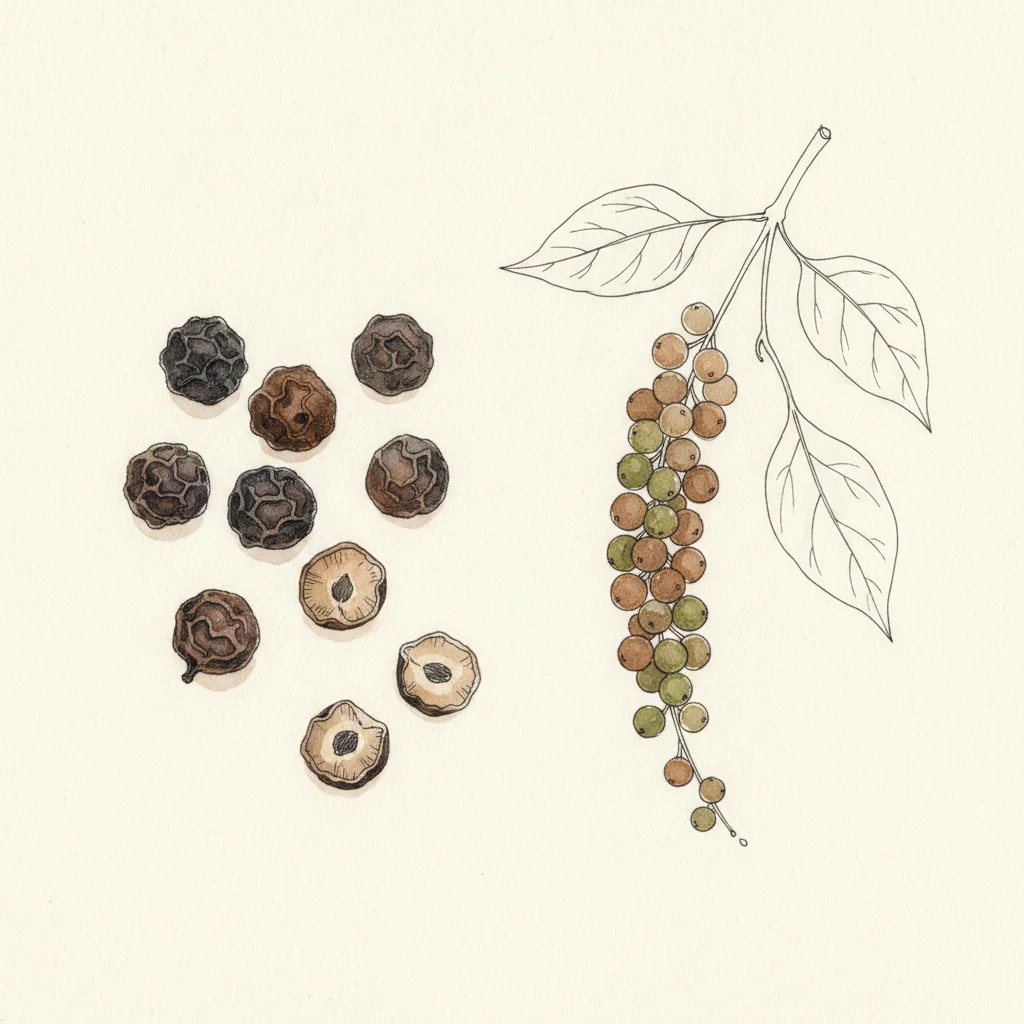
And then there's the outlier. Voatsiperifery is botanically a different species — Piper borbonense, not Piper nigrum — a forest vine still harvested entirely wild in Madagascar's east-coast rainforest. You spot the real thing by the tiny stem left on each berry. It's the closest pepper still gets to foraging.
The grains worth buying
Tellicherry — the workhorse
Tellicherry black pepper is the one to buy if you buy only one. It's a grade, not an origin: TGSEB selects the largest, ripest berries off the Malabar Coast in Kerala, where vines have climbed the same hills for three thousand years. Crack a few and the nose is dark cocoa, worn leather, candied citrus, with a raisin note behind it. The heat is broad and slow — it fills the mouth without ever scorching — which is why every Western spice blend was built on it. It's the rare pepper that also takes late cooking: dependable on seared ribeye, steak au poivre, cacio e pepe, and BBQ brisket rubs. A jar runs about $10 for half a pound — the cheapest serious upgrade in the kitchen.
Kampot black PGI — the clean, fresh one
Kampot black pepper is the volume heart of Cambodia's PGI, and it doesn't smell like other pepper. Picked tender and green, briefly blanched, then sun-dried three or four days on mats, it gives a matte black grain that opens with eucalyptus, green citrus and dried white flowers — none of the cocoa heaviness of African or Indian berries. The heat lands clean and direct, trailed by an airy menthol coolness. That freshness makes it the grain for bold-but-delicate plates: roast beef, prime rib, pepper-crusted tuna, pepper crab, soft scrambled eggs. Grind it at the very end. A 50g tube runs about $12.
Aranya — the single-estate splurge
Aranya is not a grade and not a region. It's one farm: the Parameswaran family estate in India's Western Ghats, where berries are left to ripen deep red on the vine, far past the green stage most pepper is picked at, then hand-harvested and sun-dried within days. The result reads more like fruit than spice — ripe fig, red wine, bright citrus, with a heat that blooms across the palate instead of stabbing. It's a finishing pepper, full stop: crack it over pan-seared scallops, seared steak, fresh strawberries, or steep it in a masala chai. A jar runs around $14, and pre-ground supermarket pepper is a different food entirely.
Voatsiperifery — the wild one
Voatsiperifery (Piper borbonense) is woody and citrus-floral with a soft, resinous heat and a finish that holds for the better part of a minute. Because it's a wild forest vine, supply is thin and the price reflects it — around $11 for 20 grams. It's also one of the few peppers with the backbone for a singular profile rather than a clean one. Reach for it on game and venison, seared duck breast, grilled lobster, and dark chocolate mousse. Crush two or three berries coarse in a mortar and add them off the heat at the very end. A splurge, but a singular one.
Zanzibar — the lemon pepper that isn't a gimmick
Most black pepper gives you heat and wood. Zanzibar gives you lemon. Grown on Pemba Island off Tanzania, these small vine-ripened berries crack open with bright citrus, cacao and a forward tropical heat that lands on the front of the tongue rather than spreading slow. It's the grain to reach for when you want the mill to lift a dish, not weigh it down: Pho broth, grilled white fish, roast chicken with a lemony pan sauce, ripe tomatoes and burrata. It even holds up cooked into slow-braised short ribs, though the citrus is brightest fresh. Burlap & Barrel's grinder jar runs about $9.99 for 2 oz.
Kampot red — the rare, fruity finish
Kampot red is the prize cut of Cambodia's peppers, roughly five percent of the harvest: berries left on the vine until deep red, then sun-dried whole with the ripe skin on. That skin caramelizes faintly and releases notes you do not expect from a peppercorn — strawberry, raspberry, acacia honey, soft mint. The piperine is restrained enough that you can crack a whole grain between your teeth without it fighting back, which is exactly how to use it. This is a raw, finishing pepper for grilled prawns, fresh goat cheese, raw scallops, seared foie gras, and even a Thai green curry finished off the heat. A 50g jar runs about $15.
Green peppercorns — the same berry, picked young
Green peppercorns are the same fruit as black — unripe Piper nigrum berries — picked early and packed in brine instead of sun-dried. The brine locks in moisture and a juicy, grassy bite: cut grass, green bell pepper, celery stalk, a briny snap, with none of the dark cocoa burn of black pepper. Buy them in brine, not freeze-dried, which loses most of the aromatics. This is the berry behind every proper cream peppercorn pan sauce, and it's just as good in pâté and terrines, coq au vin, and smoked salmon. A 100g jar runs about $10.
How to choose
The grade or the label. For provenance, the PGI is the only verifiable signal in pepper — and only Kampot carries one. For everything else, you're trusting the merchant, so buy from people who name the farm, the grade, or the harvest year. Tellicherry should say TGSEB; Aranya should name the estate; Voatsiperifery should still have the little stems on the berries.
Berry size. For Tellicherry or any black Piper nigrum, aim for grains around 4.25 mm or larger. A big, round berry is a ripe one, dense with the essential oils that carry flavor. The small, dusty gray-black grains in a supermarket grinder are green harvests dried flat — thin profile, fast bitterness, nothing behind the heat.
The feel. A good peppercorn stays faintly oily to the touch. If the grain is bone-dry and brittle, the volatile oils have already left. Store it in an opaque, airtight jar away from light and heat, and it holds for about 18 months. Glass, never plastic, and never on the shelf above the stove.
Market prices (June 2026). Here are the honest ranges:
- Tellicherry TGSEB: ~$10 for half a pound
- Kampot black PGI: ~$12 for 50g
- Kampot red PGI: ~$15 for 50g (the priciest of the group)
- Aranya single-estate: ~$14 a jar
- Voatsiperifery: ~$11 for 20g
- Zanzibar: ~$9.99 for 2 oz
- Green peppercorns in brine: ~$10 for 100g
Above those, you're paying merchant margin. Far below them, especially for "Kampot" without a PGI certificate, you're buying repackaged commodity pepper or end-of-stock.
Whole or pre-ground? Always whole, ground to order. Pre-ground pepper loses most of its volatile oils within weeks of milling — "Kampot ground" that's sat on a shelf for three months is dead pepper. A mortar and pestle actually beats a mill for the wild, resinous grains like Voatsiperifery: the uneven crush releases the aromatics better.
How to use them
Timing is the whole game. No fresh, top-note pepper survives hard heat for long. The fruity and floral grains — Aranya, Kampot black and red, Voatsiperifery, Zanzibar — are finishing peppers. Grind them at the very end or raw over the plate. Cook them into a long braise and the fruit cooks out, leaving you paying rare-pepper money for plain heat. The one workhorse exception is Tellicherry: its broad, dependable heat takes late cooking and rubs without falling apart.
Dose. For a quality grain, two or three turns of a coarse mill per plate is plenty. Chef's rule: you should meet the pepper on the finish, not the first bite. Set your mill coarse — fine pepper from a great berry is a waste.
Proven pairings.
- Seared steak and ribeye + Tellicherry or steak au poivre.
- Roast beef and prime rib + Kampot black, cracked at the end — see prime rib.
- Scallops and shellfish + Aranya or Kampot red on grilled prawns.
- Game, venison and duck + Voatsiperifery crushed in a mortar off the heat — see duck breast.
- Cream sauces and terrines + green peppercorns, lightly crushed.
- Dark chocolate + Voatsiperifery — wood and resin, not the worn-out Timut trick.
Match the profile to the plate. Citrus-led grains (Zanzibar, Kampot black) lift white fish, chicken and pasta. Fruity-sweet grains (Kampot red, Aranya) carry raw fish, soft cheese and red fruit. Woody-resinous (Voatsiperifery) belongs on game and chocolate. Cocoa-and-leather (Tellicherry) is your red-meat and braise backbone. Grassy (green peppercorns) is for cream sauces and pâté.
What to skip
Pre-ground pepper, any name. The oils oxidize within weeks of milling. A tin of pre-ground "rare" pepper is mostly faded dust, regardless of what's printed on the label.
"Kampot" without a PGI certificate. Plenty of merchants sell Vietnamese or out-of-zone pepper as "Kampot." Ask for the PGI registration number, or walk. If a site offers Kampot, Tellicherry and Voatsiperifery at a few dollars a box each, the math doesn't work.
The fruity peppers in a braise. Kampot red, Aranya and Voatsiperifery lose their best notes to long, hot cooking. Use them raw or at the finish. If you need pepper in the pot, that's Tellicherry's job.
White pepper on red meat. White pepper is built for pale flesh and cream sauces; on a ribeye or a tartare it reads flat. Save it for the béchamel and reach for a black grain on the steak.
Freeze-dried green peppercorns when the recipe wants brine. The freeze-dried berries lose the juicy, grassy snap that's the entire reason to use green peppercorns in the first place. Buy them in brine.
Storing pepper above the stove. The heat slowly cooks the berries on the shelf. Cool cupboard, opaque glass jars, away from light and steam.
FAQ
What's the best black pepper to buy?
There's no single best. For an everyday grain that does almost everything and takes cooking, buy Tellicherry TGSEB — about $10 for half a pound. For a clean, fresh lift on fish and roasts, add Kampot black PGI. For a finishing pepper that tastes like fruit, splurge on single-estate Aranya or wild Voatsiperifery. The best pepper is the one that matches the plate.
How can I tell if a peppercorn is good quality?
Four signals: a round, full berry over about 4.25 mm; a surface that's faintly oily, not bone-dry; a bright, complex smell the moment you open the jar; and an even color with no dusty crumb at the bottom. A valid PGI number covers Kampot. For the rest, check the merchant's traceability — the farm name, the grade, the harvest year.
Why is Kampot pepper so expensive?
Kampot is hand-harvested on the quartz hill slopes of Kampot and Kep provinces, sun-dried on mats, and PGI-protected with a limited annual yield. Kampot red is rarer still — only about five percent of the harvest is left to ripen deep red on the vine. Low volume plus hand work is the whole reason a 50g jar runs $12 to $15. Anything claiming "Kampot" at a few dollars isn't.
Is Voatsiperifery really a pepper?
Botanically it's a relative, not the same plant. Voatsiperifery is Piper borbonense, a wild forest vine from Madagascar, while standard black pepper is Piper nigrum. It still has piperine and real heat, but it's woodier and more resinous — and unlike most pepper, it's harvested entirely wild, which is why it costs about $11 for just 20 grams.
Mill or mortar and pestle?
Both have a place. A mill gives an even crack, ideal for the round Piper nigrum grains — Tellicherry, Kampot, Zanzibar. A mortar gives uneven shards that release more aromatics from the wild, resinous berries like Voatsiperifery. Set the mill coarse either way — fine grinds waste a great berry.
Can I cook with these or are they all for finishing?
Mostly finishing. The fruity and floral grains — Aranya, Kampot black and red, Voatsiperifery, Zanzibar — lose their best notes to hard heat, so grind them at the end or raw over the plate. Tellicherry is the exception: its broad, dependable heat survives late cooking and rubs, which is why it's the one to cook into a brisket or a braise.
The takeaway
Seven grains, seven jobs. You don't need all of them. Start with a coherent trio: an everyday workhorse that also cooks (Tellicherry), a clean finishing pepper (Kampot black or Zanzibar), and one signature grain (Aranya or Voatsiperifery). Add green peppercorns the day you make a cream sauce, and Kampot red when you want fruit on a raw plate. Whole, ground fresh, off the heat — that's the whole method. When you're not sure which grain a dish wants, ask the Oracle — it crosses plate against profile and gives you the match without the fog.
The catch
Here's the part no shop will print: most "rare pepper" sold online is repackaged commodity pepper. The genuine PGI and single-estate market is a rounding error of world production. A site offering Kampot, Tellicherry and Voatsiperifery at a few dollars a box each isn't selling you a deal — it's selling you Vietnamese commodity berries in a nicer jar, and you've paid rare-pepper money for nothing. Accept that $12 for 50 grams is simply what an honest grain costs, and buy from people who name the farm.
Chef's note
One move changes everything with the round black grains: crack them coarse, not fine, and meet them on the finish. Set your mill to its widest setting and give a plate two or three turns at the table, off the heat. Fine pepper from a great berry — Tellicherry, Kampot, Aranya — buries the cocoa, fig and citrus you paid for under a flat dust of heat. For Voatsiperifery, skip the mill entirely: crush two or three berries in a mortar so the shards land uneven, and the resin reads far louder.
Tasting note
- notes:
dark cocoa · eucalyptus lift · ripe fig · pine resin · grassy snap - value: a working set of three honest grains runs about $30 to $40 and turns over in 12 to 18 months. The cheapest real upgrade in the kitchen is a $10 jar of Tellicherry; the splurge worth making is a $14 single-estate finishing pepper. Worth it — pre-ground supermarket pepper is a different food.
Methodology: these recommendations follow our method. Purchase links are marked sponsored and earn us a commission at no extra cost to you — see our affiliate policy.