
Pillar guide
The World's Great Spice Blends, Decoded: Ras el Hanout, Za'atar, Furikake & More
Seven legendary spice blends, demystified. What's really in each one, how to spot a fake, what it costs, and the one move that doubles its flavor: bloom it, or don't.
Here's the verdict up front: you should buy your spice blends, not build them — and the single move that separates a flat blend from a great one is knowing whether to bloom it in fat or sprinkle it raw. Get that wrong and you've wasted your money. Cook ground chili and clove into the oil at the start of a stew and they sing; do the same to a finishing blend like furikake and you've turned $9 of nori bitter. This guide covers seven blends worth your shelf space — ras el hanout, baharat, berbere, dukkah, za'atar, shichimi togarashi and furikake — and tells you which to bloom, which to finish, what each one honestly costs, and how to dodge the supermarket fakes.
In this guide
- Why you should buy blends, not make them
- The seven blends, decoded
- Bloom it or finish it: the one rule that matters
- How to spot a fake
- Which blend for which dish
- Frequently asked questions
Why you should buy blends, not make them
The romance of grinding your own ras el hanout dies the second you do the math. A serious blend runs 15 to 30 spices. To build one at home you'd buy 15 to 30 whole spices of decent quality — call it $80 to $120 in jars — use two percent of each, and watch the rest oxidize on the shelf. A jar of artisan ras el hanout costs about $11 for 50 grams and you've paid for someone's calibrated palate, not a cupboard of stale singles.
The balance is a trade. A Moroccan attar (the spice merchant) doses each component against this year's harvest — weak coriander gets covered by a more generous cumin. You don't have that information at your counter. Buying from a real house in Fès, Beirut or Kumamoto is buying that internal scale.
Blends need to rest. Grind cardamom, cassia and clove together and the released oils marry over 7 to 15 days in a sealed jar — a synergy you don't get grinding to order. A reputable house ships a rested batch. A blend you slammed together this morning has an aggressive, unbalanced nose.
There's one honest exception, and we'll get to it in the FAQ. For everything else, the merchant wins.
The seven blends, decoded
Ras el hanout (Morocco)
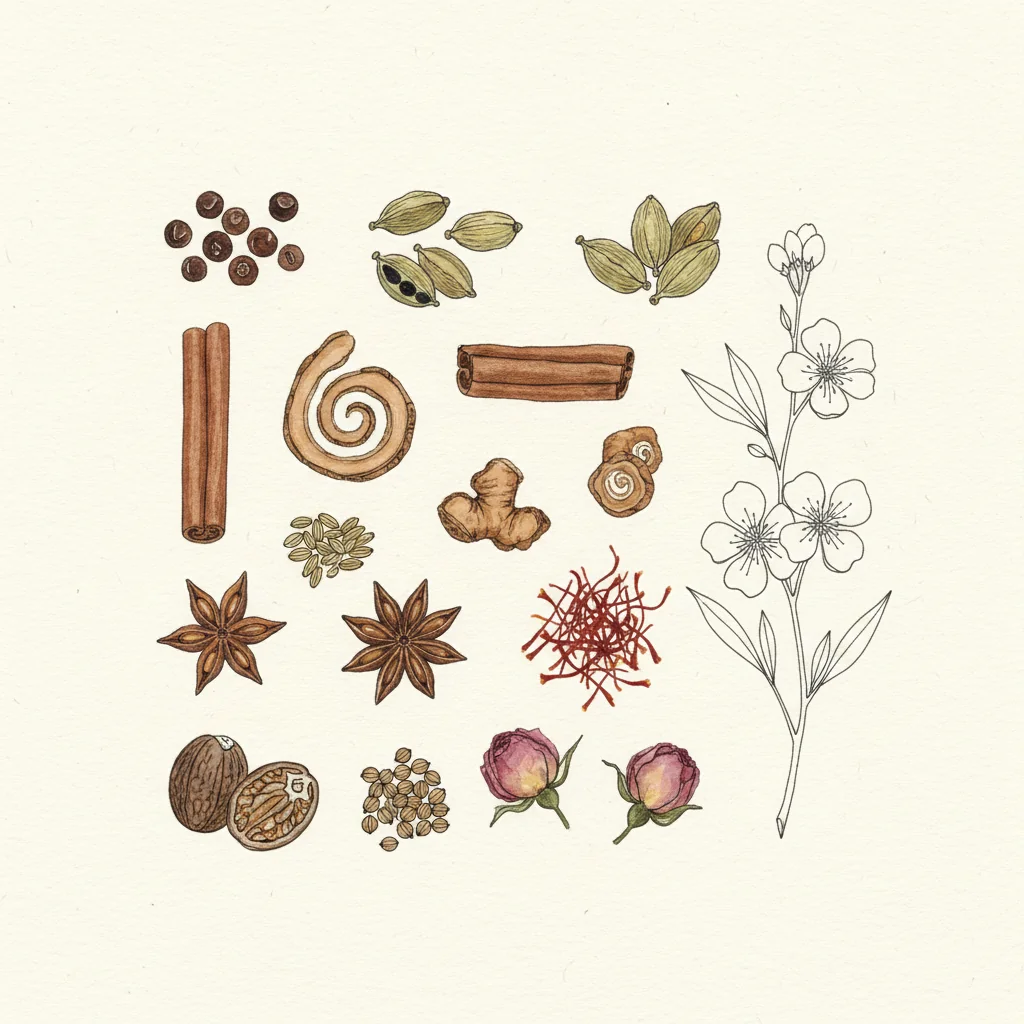
Ras el hanout means head of the shop — the best blend a Moroccan merchant can build from his own stock. There is no single recipe: 15 to 30 spices, swung toward dried rose in Fès, warmer ginger and cubeb in Marrakech, more cardamom in Tétouan. It's a signature, not a spice. The profile is warm baking spice, dried rose and spiced wood, with no single dominant heat — it builds slowly. Bloom it early in fat for lamb tagine with prunes, royal couscous, kefta meatballs or honey-roasted carrots. About $11 for a 50 to 60 g jar; serious houses run to $22. Skip anything uniformly yellow-orange — that's turmeric masking a thin recipe.
Baharat (Levant & Gulf)
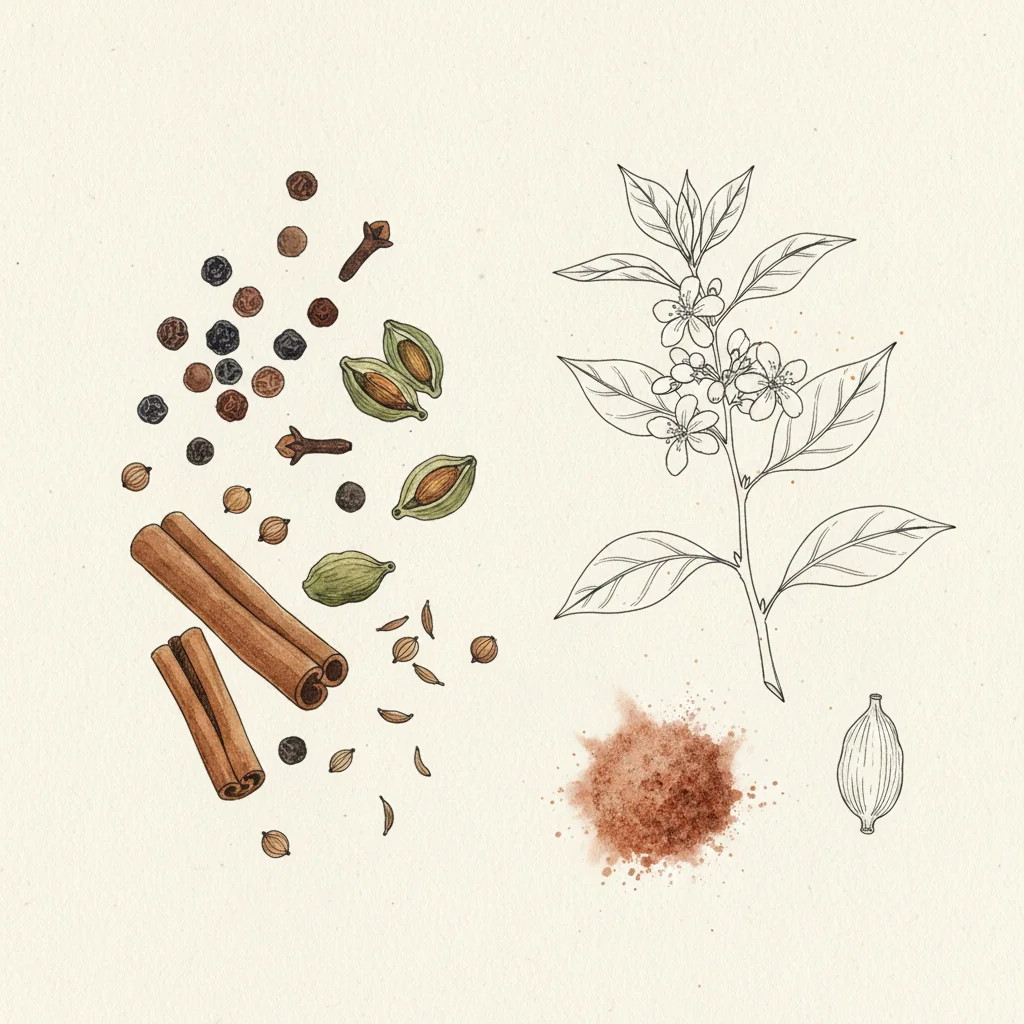
Baharat is simply Arabic for spices — the all-purpose warm backbone that does across the Arab world what garam masala does in India. No fixed recipe, but the core runs black pepper, allspice, cumin, coriander, cassia, clove, cardamom and paprika. Gulf versions lean on dried lime; Turkish ones push mint and chili. It's peppery up front with a sweet, allspice-and-clove warmth behind. Rub it onto meat or bloom it in the fat at the start — never dust it raw on the finished plate. Built for lamb and beef kofta, shawarma rubs, kibbeh, freekeh pilaf and roast chicken. Around $7 for a 50 to 75 g jar, $4 to $12 depending on the house.
Berbere (Ethiopia & Eritrea)
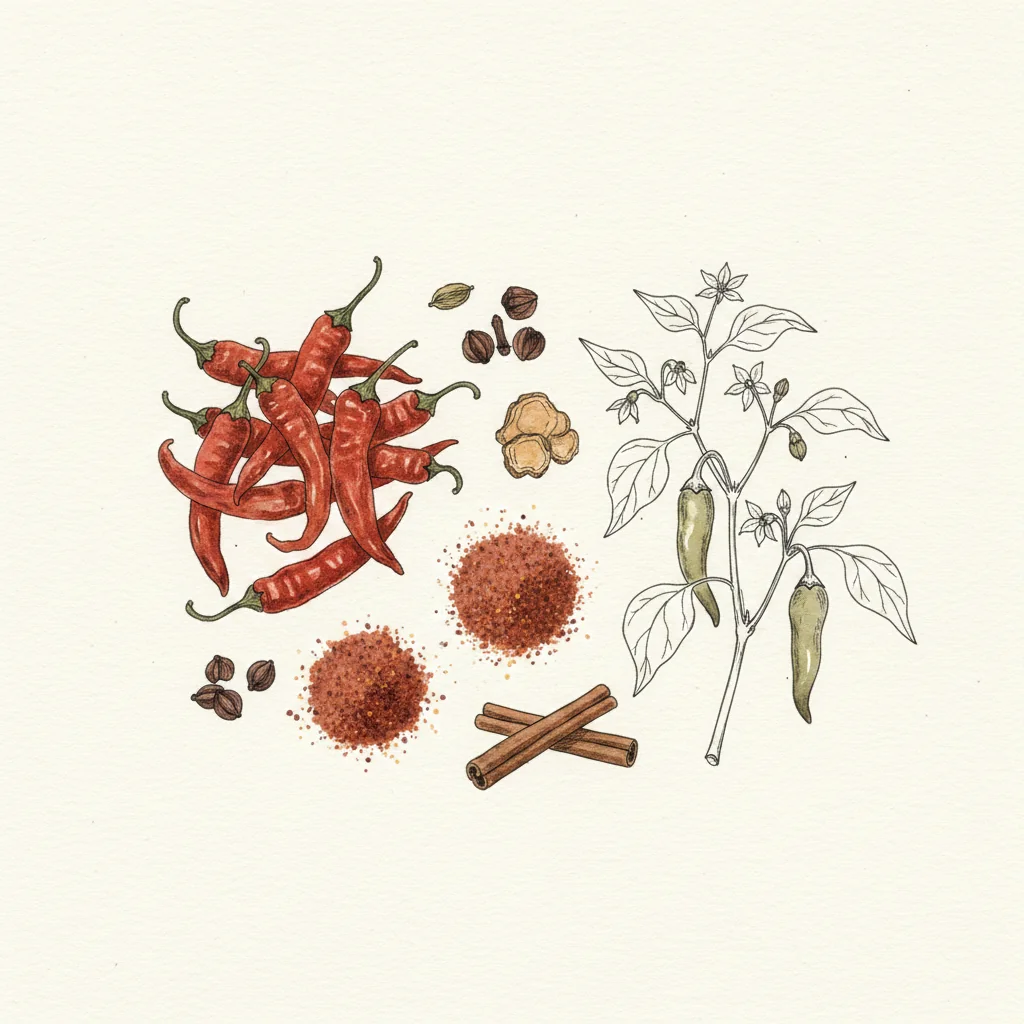
Berbere is the brick-red backbone of Ethiopian and Eritrean cooking, built on fermented, sun-dried chiles and over a dozen warm spices — fenugreek, korarima, ginger, ajwain. This is the hottest blend here (intensity 8 of 10), but it's heat with depth, never just fire: the chile arrives wrapped in sweet, fenugreek-laced warmth. Bloom it early in oil or niter kibbeh at the base of a stew — doro wat, misir wot, beef tibs — or use it as a rub for grilled chicken and short ribs. Never sprinkle it raw. A good 4 oz bag runs about $9 to $12. When the red dulls to brown, it's done; buy small.
Dukkah (Egypt)
Dukkah breaks the pattern: it's not a spice, it's a texture. Egypt's toasted nut-and-seed condiment — hazelnut or almond, sesame, coriander and cumin, coarsely crushed with salt and pepper. You eat it dry, dipping oiled bread straight into it, or scatter it over soft eggs, labneh and roasted vegetables at the last second. Never cook it in — the whole point is the crumbly crunch. Because it's mostly nuts, the oils turn rancid in 3 to 6 months of opening, far faster than a ground spice fades. Smell for fresh toasted nut. About $9 for a 2 oz jar, $6 to $14 by quality.
Za'atar (Lebanon, Syria, Palestine)
Za'atar is the daily spice of the Levant — wild thyme (Origanum syriacum), tart sumac, toasted sesame and salt. Not one finishing blend among many: it's breakfast on a grilled man'oushe and the dust over a bowl of labneh. Herbal and lightly tart, with the nutty grip of sesame. Finish food with it dry, or loosen it with olive oil into a paste and brush it on dough before baking. A good 2 oz jar runs about $9 to $10. The catch is the thyme — cheap blends swap real Origanum syriacum for ordinary thyme and the flavor falls flat.
Shichimi togarashi (Japan)
Shichimi togarashi means seven flavors: Japanese chili, sanshō pepper, roasted orange peel, black and white sesame, nori, hemp and poppy seed. First sold as a digestive remedy at the Yagenbori apothecary in 17th-century Edo, it's still a table condiment, not a cooking spice. A bright citrus-and-chili lift up front, then a faint sanshō tingle. Sprinkle it raw at the very end — on udon, gyudon, yakitori, miso soup, grilled salmon. Cook it and the citrus and nori vanish. The S&B Nanami bottle runs about $5 and is the easy starter; good bottles top out around $12.
Furikake (Japan)
Furikake is the dry rice seasoning of nori flakes, toasted white and black sesame, shaved bonito (katsuobushi) and salt. The mass-market version was born in 1959, when Marumiya in Kumamoto bagged the first commercial blend, Noritama. Briny and umami the moment it hits warm rice, with the crackle of sesame and no heat at all. A finishing sprinkle, full stop: heat turns the nori bitter and flattens the bonito. Shower it over plain rice, onigiri, grilled salmon, scrambled eggs or buttered popcorn. A basic Japanese bottle is around $6; the Oregon-made Jacobsen blend runs about $12 for a 1.73 oz jar.
Bloom it or finish it: the one rule that matters
This is the move no supermarket label prints, and it's the whole reason a blend works or doesn't. Spice blends split into two camps, and treating one like the other wastes your money.
Bloom these in fat, early: ras el hanout, baharat, berbere. Their flavor lives in fat-soluble oils locked inside ground seeds, bark and chiles. Drop the blend into hot oil or niter kibbeh for 15 to 30 seconds before the onions or meat go in, and you release compounds that would otherwise stay trapped and taste raw. Bloom berbere at the base of a stew; rub baharat into kofta before it sears.
Finish these raw, off the heat: dukkah, za'atar, shichimi togarashi, furikake. Their magic is volatile and fragile — citrus peel, nori, fresh sesame, the crunch of crushed nuts. Heat destroys all four. Za'atar's sumac scorches in seconds; furikake's bonito flattens; dukkah's nuts go from crunchy to soggy. Sprinkle at the table, on the plated dish, and not a moment sooner.
Get the camp wrong and you've either eaten raw-tasting ground spice or paid finishing-blend money for flavor that evaporated before it reached the fork.
How to spot a fake
We earn from affiliate links, not from selling these jars, which is exactly why we can tell you when the cheap one is a swindle.
Read the color. Serious ras el hanout is a deep ocher-brown with reddish notes and visible fragments — rose buds, whole seeds. Uniform yellow-orange means turmeric dyeing a thin recipe. Good za'atar is green-and-red: you see golden sesame, dark-red sumac, gray-green thyme. Flat green is dyed oregano. Berbere should read brick-red; once it dulls to brown the chile is spent.
Smell for three. Open a good blend and you should pick out at least three distinct spices on the first sniff. A single flat, masking note means a cheap base doing all the talking.
Check the grind. Artisan blends are irregular, with some spices visible whole. A fine, uniform powder means everything went through the mill without regard for structure — and fine powder oxidizes faster.
Hunt the grind date, not the expiry. A ground blend loses 30 to 40 percent of its aroma in six months. Buy the freshest jar, in the smallest size you'll actually use.
Watch the thyme and the nuts. For za'atar, demand real Origanum syriacum, not generic thyme. For dukkah, buy small and refrigerate in heat — rancid nuts taste of cardboard.
Which blend for which dish
| Dish | Blend | The move |
|---|---|---|
| Lamb tagine with prunes | Ras el hanout | Bloom in oil, then add lamb; about 1 tsp per pound |
| Royal couscous | Ras el hanout | Into the broth, not onto the grain |
| Lamb or beef kofta | Baharat | Worked into the raw mince before searing |
| Roast chicken or turkey | Baharat | Rubbed under the skin with oil |
| Doro wat (chicken stew) | Berbere | Bloomed in niter kibbeh at the base |
| Roasted sweet potato | Berbere | Tossed in oil, roasted hot |
| Warm flatbread + olive oil | Dukkah | Dip the oiled bread straight in, raw |
| Soft-boiled eggs, labneh | Dukkah | Scattered on at the last second |
| Man'oushe flatbread | Za'atar | Loosened with olive oil, brushed before baking |
| Hummus, sliced tomatoes | Za'atar | Dusted on at the end |
| Udon, soba, gyudon | Shichimi togarashi | Sprinkled raw at the table |
| Yakitori, miso soup | Shichimi togarashi | A pinch off the heat |
| Plain white rice, onigiri | Furikake | Showered over warm rice, never cooked |
| Buttered popcorn, fried eggs | Furikake | Finishing sprinkle, off the heat |
When you're stuck between two blends for a dish, ask the Oracle — it knows the blend-by-dish pairings cold. Browse the full spice category for the individual jars.
Frequently asked questions
Should I ever make my own spice blend?
Once, maybe: dukkah. It's the honest exception. Toast whole hazelnuts, sesame, coriander and cumin, then crush them coarse with salt and pepper — five minutes, no resting required, and freshness is the entire point. Everything else (ras el hanout, baharat, berbere, za'atar, the Japanese blends) needs a calibrated recipe and 7 to 15 days of marrying that you won't replicate at home. Buy those.
How long does a spice blend keep?
Ground bloom-blends — ras el hanout, baharat, berbere — hold about 12 months in an airtight, opaque jar away from heat. Za'atar and shichimi go 9 to 12 months before the sumac, citrus and nori fade. Furikake keeps 6 months once opened, 12 sealed. Dukkah is the sprinter: 3 to 6 months before the nut oils turn rancid. The high notes — citrus, flowers, fresh nut — always leave first.
Is ras el hanout spicy?
No. A traditional ras el hanout is aromatically warm — ginger, pepper, sometimes cubeb — but not capsaicin-hot. The "spicy ras el hanout" jars on supermarket shelves add chili, which is a commercial tweak, not tradition. For Moroccan heat, reach for harissa on the side.
What's the difference between furikake and shichimi togarashi?
They're not interchangeable. Furikake is a salty, umami rice seasoning built on nori and bonito, with no heat. Shichimi togarashi is a chili-based table condiment with citrus and sanshō tingle. One seasons a bowl of rice; the other lifts a bowl of udon. Confusing them is the most common mistake people make with Japanese blends.
Why does my blend taste flat even though it's not old?
Two likely culprits. Either you bought a fine, dyed supermarket powder doing one flat note, or you used a bloom-blend raw — or a finishing blend cooked. Re-read the one rule: ras el hanout, baharat and berbere want fat and early heat; dukkah, za'atar, shichimi and furikake want to stay raw and go on last.
The bottom line
Seven blends, two camps. Bloom ras el hanout, baharat and berbere in fat at the start. Finish dukkah, za'atar, shichimi togarashi and furikake raw, off the heat, at the very last second. Buy artisan, check the grind date, store airtight and opaque, and replace before the color dulls. Make your own dukkah if you must — buy the other six. When in doubt about a blend-and-dish match, the Oracle has the answer.
Methodology: these recommendations follow our methodology. Purchase links are marked sponsored and earn us a commission at no extra cost to you — see our affiliate policy.
Products cited in this guide
-
Spice · Blend
Ras el Hanout
Made across the country, with signature recipes in Fès, Marrakech and Tétouan, Morocco
-
Spice · Blend
Baharat
Made across the Arab world, with distinct house recipes in Lebanon, Syria, Turkey and the Gulf states, Levant & Gulf
-
Spice · Blend
Berbere
Ethiopian highlands, household and regional recipes from Addis Ababa to Tigray, Ethiopia / Eritrea