Pillar guide
White, Long and Tailed Peppers: Beyond the Black Grind
The honest guide to the peppers that aren't black: Penja and Kampot white, Java long pepper, tailed cubeb, and grains of paradise. Botany, real prices, exactly when each one beats your peppermill — and when it doesn't.
Black pepper is the right tool maybe ninety percent of the time. This guide is about the other ten — the grains that do something black pepper physically can't. If you only buy two, make them Penja white pepper for cream sauces and pale food where black flecks look like dirt, and grains of paradise for the warm-and-cool freshness that black pepper has never had. The rest — Kampot white, Java long pepper, and tailed cubeb — earn their jar when you know the one job each was built for. Here's exactly what those jobs are, what they cost, and where the supermarket grinder is honestly fine.
On this page
- White pepper isn't a flavor downgrade
- The two whites worth buying
- Long pepper: the catkin that out-warms black
- Cubeb: the pepper with a tail
- Grains of paradise: not a pepper at all
- How to buy and store
- Frequently asked questions
White pepper isn't a flavor downgrade
The cheap stuff gave white pepper its bad name. Mass-market white pepper is black pepper's ripe berry left to rot off its skin in stagnant water — that's where the gym-sock, barnyard funk comes from. People taste that, decide white pepper is the inferior cousin, and never look back.
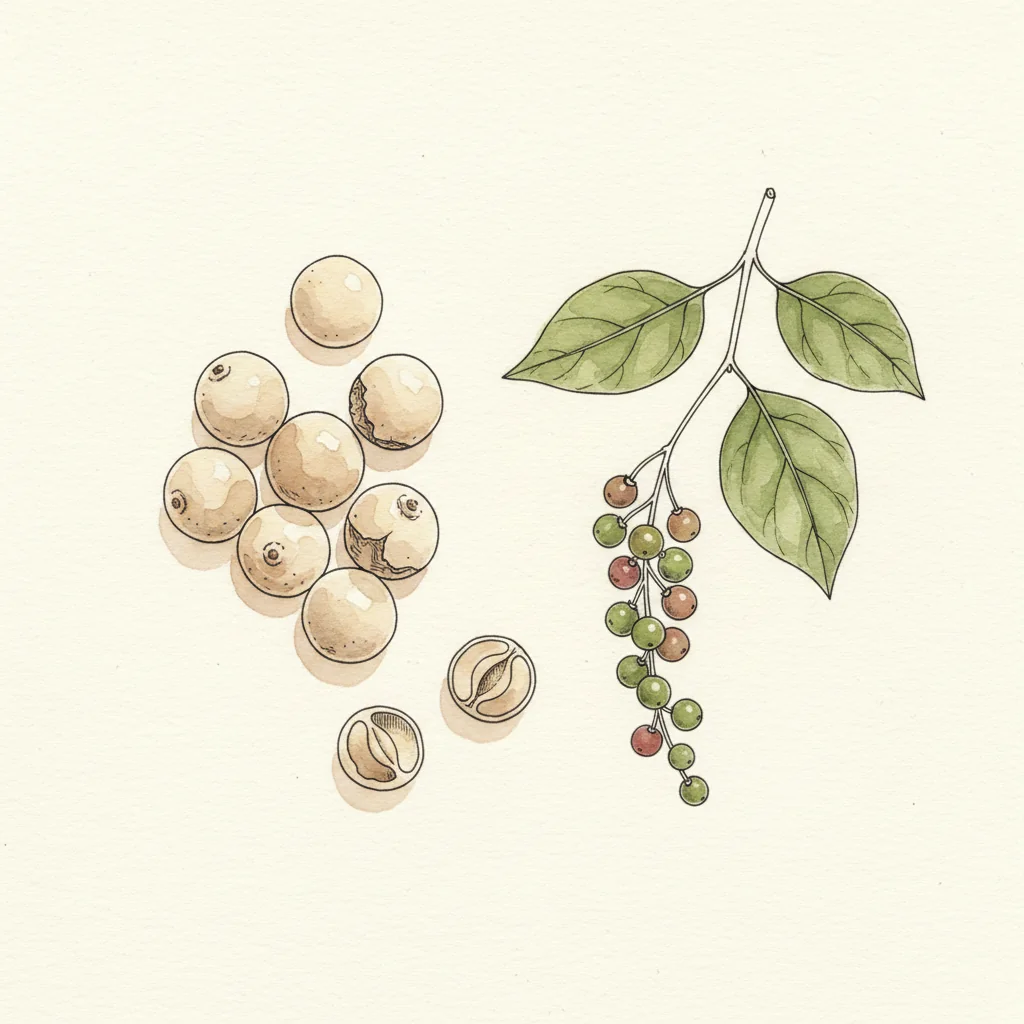
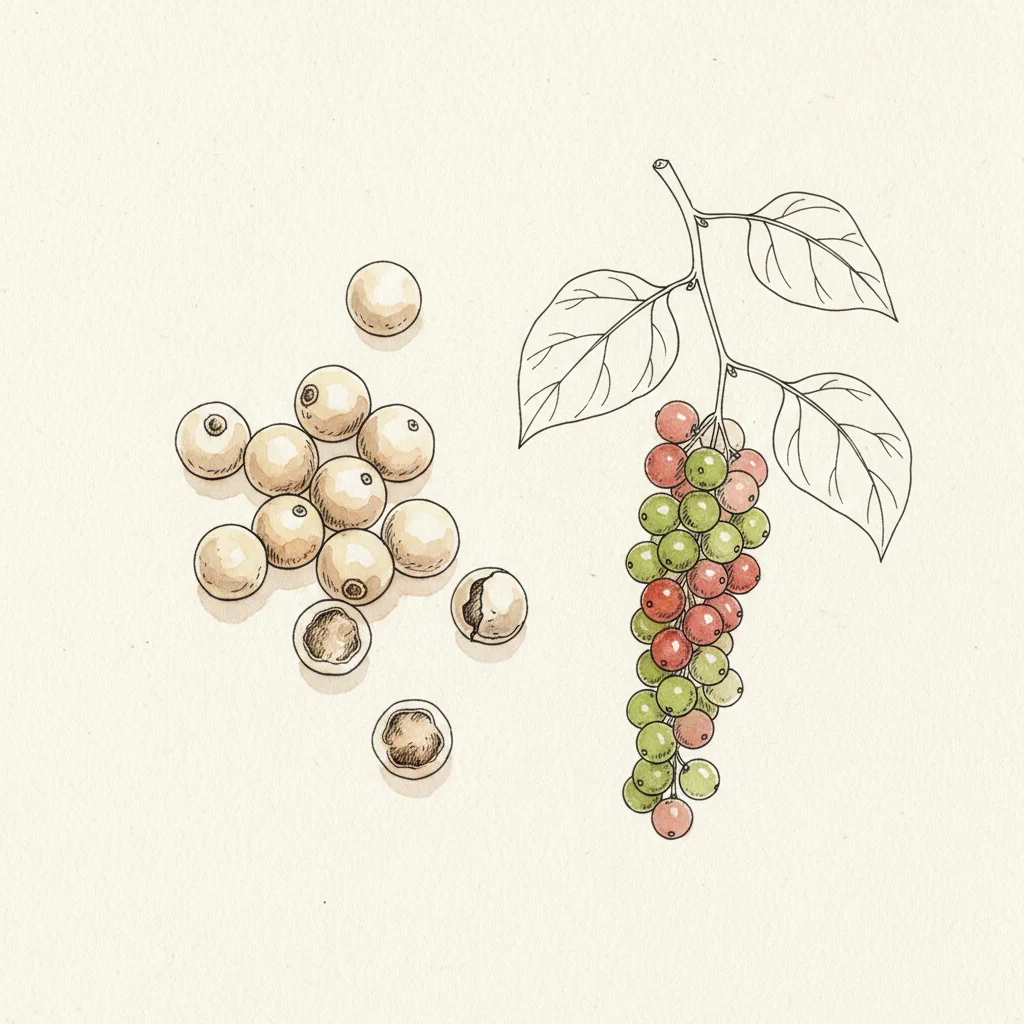
They're tasting bad processing, not the grain. White pepper and black pepper are the same plant, Piper nigrum — the difference is the berry's ripeness and what happens to the skin. For white pepper the ripe red berries are soaked, the outer skin rubbed off, and the pale inner core dried. Do that in clean spring water with sun-drying and the result is something black pepper can't be: a clean, round heat with no dark fleck and no rough edge. Two peppers from one vine, two different jobs.
So why reach for white at all? Two reasons, one of them entirely about looks. First, color: in a béchamel, a vichyssoise, mashed potatoes, or a beurre blanc, black specks read as grit. White pepper disappears into pale food. Second, flavor register: the good whites land in a different aromatic place — menthol and forest floor for Cameroon, lemongrass and jasmine for Cambodia — that suits delicate fish and cream where black pepper's woody bite would stomp on the dish.
The two whites worth buying
There are only two white peppers worth paying up for, and they do different things. Buy on the dish, not the prestige.
Penja white — the menthol one
Penja white pepper grows at the foot of Mount Kupé in Cameroon's volcanic Penja Valley, on silica-rich soil, and it's been PGI-protected since 2013 — the first pepper PGI in sub-Saharan Africa, which is a real provenance fact, not a marketing line. The nose is musky, almost animal, with a clean menthol lift; the heat is round and spreading rather than biting, slow to arrive and slow to leave, with a cooling tail. A 2.5 oz jar runs about $16.
This is your grain for white fish, seared scallops, béchamel and cream sauces, and a New England clam chowder where you want warmth without a single dark fleck. Grind it fresh, one or two turns per plate, right before serving.
The catch: Don't cook Penja white into a long braise or a slow-simmered stock — the menthol and the volatile aromatics you paid $16 for cook off in minutes, and you're left with a vague warmth a ten-cent grinder would have matched. It's a finishing pepper. Hit the plate at the end, off direct heat, or you've bought a luxury grain and boiled away the only part that justified the price.
Kampot white — the floral one
Kampot white pepper is the rarest of the three IGP Kampot peppers from Cambodia's Kampot and Kep provinces, and the most refined. Same processing logic — ripe red berries soaked, skins rubbed off, ivory cores sun-dried — but the result is pure lemongrass and jasmine with a green-almond edge, and a heat that builds gently and stays clean on the swallow. None of the funk of cheap white. About $15 for a 50 g jar.
Reach for it on pan-seared white fish, poached chicken, warm oysters, a celery-root or creamy cauliflower soup, and — the move that converts people — soft scrambled eggs, where the jasmine top notes have nothing to fight. Two or three grinds at the very end.
The catch: Kampot white's whole value is in floral top notes that the slightest competition buries. Put it next to smoked anything, rare red meat, or a loud spice mix and you've spent splurge money to taste nothing but a faint warmth. If the dish is bold, use black pepper and save this for the quiet plates. When the food is delicate, it does what no robust pepper can — that's the only time it's worth it.
Penja or Kampot? Both are finishing whites for pale, delicate food. Penja brings menthol and a rounder, warmer heat — better with cream, scallops, chowder. Kampot brings lemongrass-jasmine and a lighter touch — better with eggs, oysters, poached chicken. If you cook a lot of cream sauces, start with Penja. If you lean toward fish and eggs, start with Kampot.
Long pepper: the catkin that out-warms black
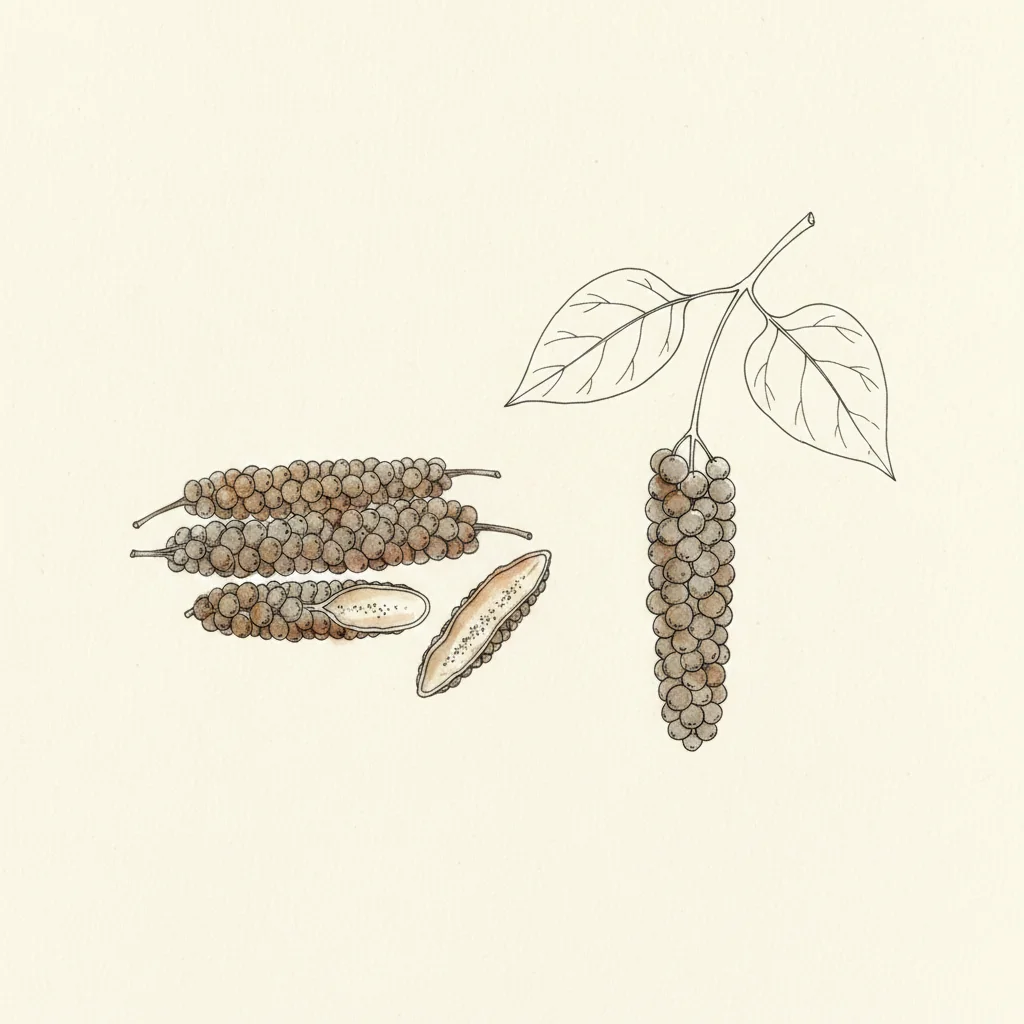
Long pepper doesn't look like a peppercorn. It's a small grey-brown catkin — Piper retrofractum, the Java variety, known across South Asia as pippali — and it was the dominant "pepper" in Greek and Roman kitchens before round black pepper undercut it on price and won the market by the Middle Ages. The flavor explains why it was prized: cocoa, warm cinnamon and gingerbread spice up front, then a heat that arrives late and climbs higher and broader than black pepper, with a faint numbing edge.
That late-blooming, heat-loving profile is the point. Long pepper is one of the few peppers built to be cooked, not finished. Drop a whole catkin into a braise of short ribs or a beef stew and fish it out before service — it infuses like a bay leaf, giving warmth and sweet spice that black pepper can't sustain over a long simmer. It's equally at home in mulled wine, spiced syrups, and dark fruit desserts — braised figs, poached pears, caramel, dark chocolate. A microplane grates a third of a catkin's worth of warm spice straight onto the plate.
The catch: Long pepper bulldozes anything delicate. On white fish or a clean cream sauce it's an act of vandalism — the cocoa-cinnamon weight flattens everything subtle. And don't use it where you actually want a sharp, clean peppery bite: the heat blooms slow and rounds off, so for a crisp finishing crack you still want black pepper. Wrong dish, wasted grain.
Cubeb: the pepper with a tail
Cubeb (Piper cubeba, from the Java highlands and Sumatra) is a tailed pepper — each dried berry keeps a thin little stalk. That tail is also your fraud check: cubeb is regularly cut with or swapped for cheaper black pepper, and the stalk is how you confirm you got the real thing. The flavor is unmistakable and nothing like Piper nigrum: eucalyptus, soft camphor and fresh nutmeg over a cool, almost medicinal resinous finish that lingers like menthol. This is the pepper that powered medieval European and Moroccan cooking before it fell out of fashion. About $9 for 50 g, and a few berries go a long way.
Its home is warm, spiced, slow-cooked food: lamb tagine, braised game, duck marinades, mulled wine, winter pâtés, and homemade ras el hanout. Steep one or two whole berries, or grind a little late in the cook. On a Moroccan tagine the camphor cuts through the fat and dried fruit; on white chocolate it does something genuinely strange and good, the cool resin against the sweet fat.
The catch: Cubeb's camphor edge is divisive and powerful — overdo it and the dish tastes like cough drops. Use a few berries, not a spoonful, and keep it off raw fish, fresh-fruit desserts, and anything already heavily spiced, where it either disappears or turns medicinal. It's a seasoning to deploy with intent, not a daily grinder.
Grains of paradise: not a pepper at all
Grains of paradise is the ringer in this guide — botanically it's Aframomum melegueta, a cousin of cardamom and ginger from the Gulf of Guinea coast of Ghana, not a Piper at all. The reddish-brown seeds give a warm pepperiness laced with fresh ginger, green cardamom and citrus peel, with a cool menthol lift and none of black pepper's hard bite. Like cubeb and long pepper, it ruled medieval European kitchens — traders used it to stretch costly black pepper — then nearly vanished. It's back now in craft brewing and serious marinades. A jar runs about $10.
The warm-and-cool freshness is what no peppercorn delivers. It's brilliant cracked into fish marinades, roast lamb, jerk chicken, glazed carrots, and ras el hanout, and it's a classic in saison and craft beer — and in a gin cocktail, where the citrus-cardamom note plays straight into the botanicals. About half a teaspoon, cracked, per dish for four.
The catch: Grains of paradise reads "warm and bright," so people treat it as a black-pepper substitute and get let down — it has almost no sharp heat, so it won't give you the bite you reach for on a steak. Use it where freshness and aromatic lift are the goal, not where you want pepper's burn. Buried under a heavy reduction or a wall of other spice, its delicate ginger-citrus top vanishes and your $10 jar tastes of nothing.
How to buy and store
Whole, always. Pre-ground specialty pepper is a waste — the volatile aromatics you're paying for fade within weeks of grinding, and these grains cost too much to throw half of away. Buy whole peppercorns, catkins, tailed berries and seeds, and crack them to order: a mill for the whites, a microplane for long pepper, a mortar for cubeb and grains of paradise.
A few honest notes on value. The two whites are the splurges here — about $15–16 a jar — and they're worth it only on pale, delicate food where black pepper can't go; on a steak or a tomato sauce, the supermarket grinder wins and you should use it. Cubeb ($9) and grains of paradise ($10) are cheaper, last a long time because you use so little, and reward a cook who already keeps black pepper handy and wants a second register. Store everything the way you'd store coffee: airtight, away from light and heat, never above the stove. Whole, they hold for a couple of years; ground, count in weeks.
For the workhorse black peppers — Tellicherry, Kampot black — and the citrus peppers like Timut, see the companion guides; this page is strictly about the grains that aren't a black grind.
Frequently asked questions
Is white pepper just black pepper without the skin?
Essentially, yes — same plant, Piper nigrum. The difference is ripeness and processing: white pepper is the ripe red berry soaked until the outer skin can be rubbed off, leaving the pale inner core, which is then dried. The flavor changes with the skin gone, and cheap white pepper's notorious funk comes from rotting the skin off in stagnant water, not from the pepper itself. Clean spring-water processing — as with Penja and Kampot white — gives a clean, round heat with no funk.
When should I use white pepper instead of black?
Two cases. Looks: in pale food — béchamel, vichyssoise, mashed potatoes, beurre blanc — black specks read as grit, and white disappears. Flavor: on delicate fish, scallops, eggs and cream, the good whites bring menthol (Penja) or lemongrass-jasmine (Kampot) that suit the dish where black pepper's woody bite would dominate. On bold food — steak, tomato sauce, braises — stay with black.
What's the difference between long pepper and cubeb?
Both are unusual Piper species with a numbing edge, but they taste nothing alike and do opposite jobs. Long pepper is a catkin — cocoa, cinnamon, gingerbread, a heat that climbs — and it's built to be cooked into braises, mulled wine and dark desserts. Cubeb is a tailed berry — eucalyptus, camphor, nutmeg, cool and resinous — best in tagines, game, and a little white chocolate, used sparingly because the camphor can tip medicinal.
Are grains of paradise actually pepper?
No. Grains of paradise (Aframomum melegueta) is in the ginger-and-cardamom family, not the pepper genus. It gives a warm pepperiness with fresh ginger, green cardamom and citrus, but almost no sharp heat — so it's an aromatic lift for marinades, lamb, jerk chicken and craft beer, not a substitute for black pepper's bite.
Which specialty pepper should I buy first?
If you cook a lot of cream sauces and pale dishes, start with Penja white ($16) — it's the most useful of the five. If you want a fresh aromatic note for marinades and roasts, start with grains of paradise ($10), which is cheaper and lasts. Add long pepper once you're braising regularly, and cubeb when you cook tagines. Buy all of them whole and crack to order.