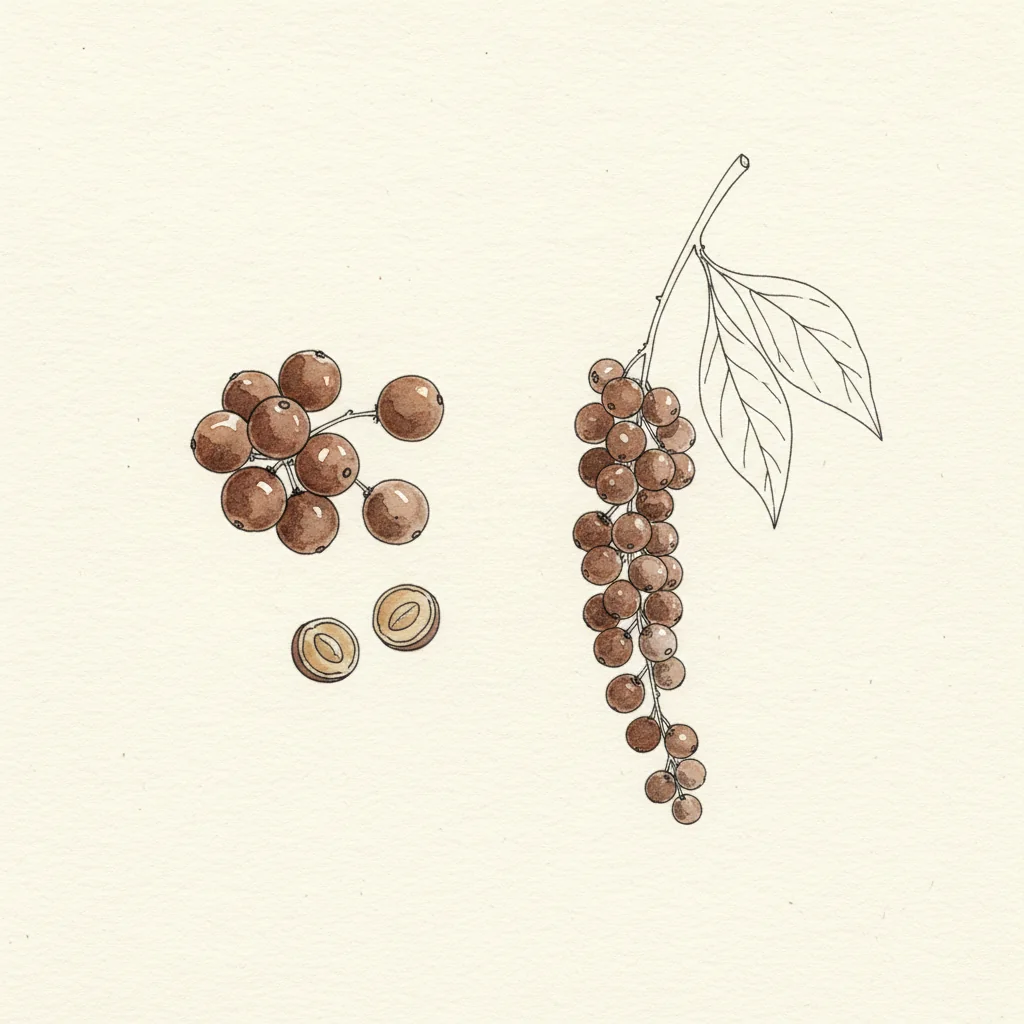
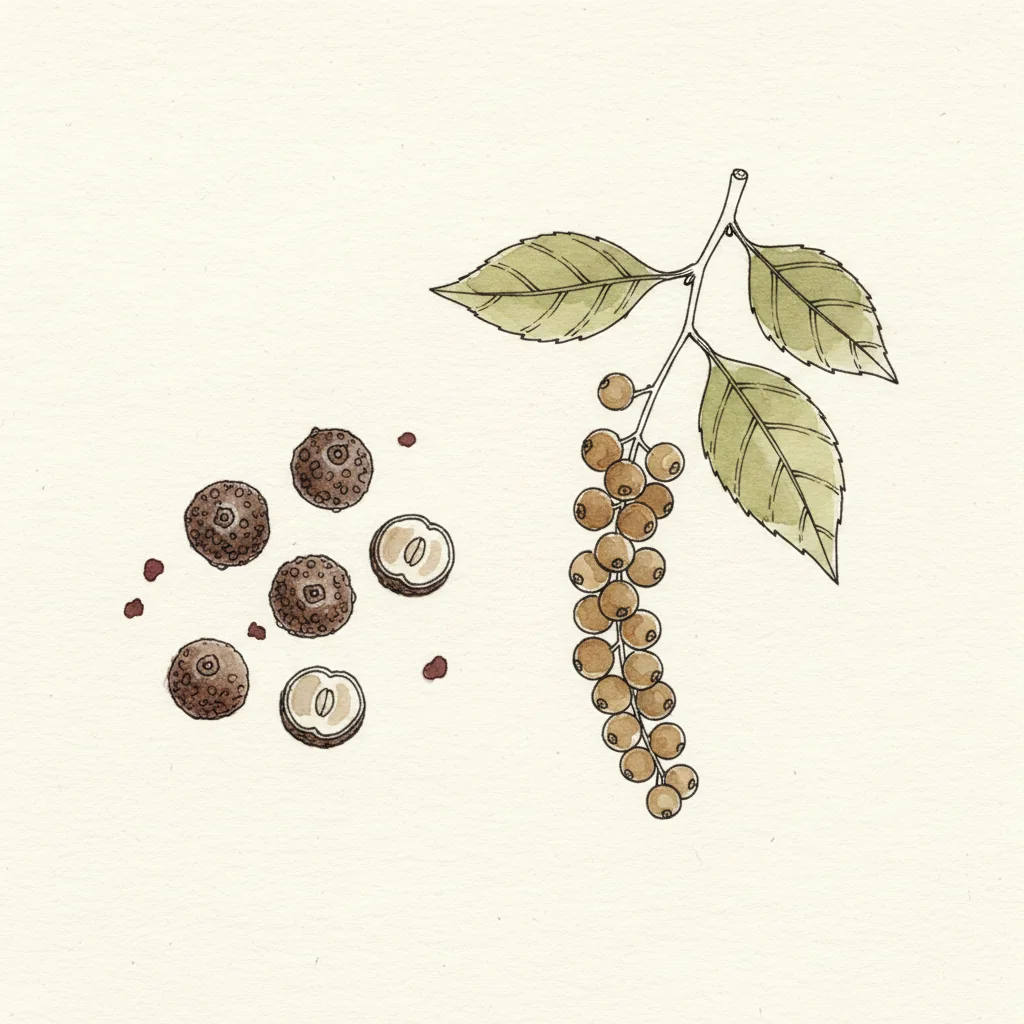
Pillar guide
Citrus Peppers: Sichuan, Timut, Sansho and the Tingle
The straight guide to the citrus-pepper family — Sichuan, Timut, Sansho, grains of paradise, Tasmanian pepperberry, pink peppercorns. What the tingle is, which grain to buy, real prices, and the cliches to skip. The chef tells you plainly what to buy, and why.
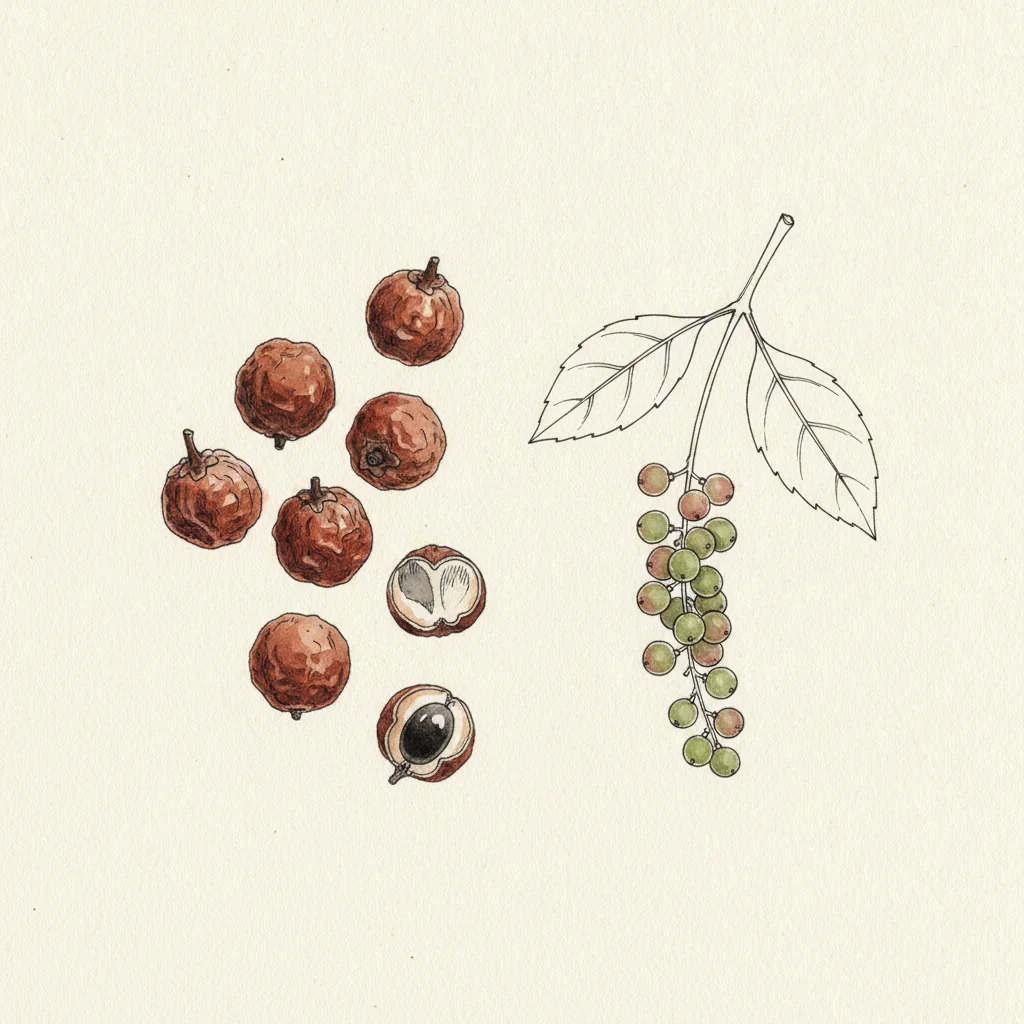
Most of the "peppers" in this guide aren't pepper at all. Sichuan, Timut and Sansho are dried citrus-cousin husks from the Zanthoxylum family — no piperine, no heat, just a bright fizzing tingle on the lips called sanshool. If you buy one thing first, make it Sichuan peppercorns (~$11 for a 4 oz bag): it's the most useful, the most forgiving, and the one that teaches you what the ma tingle actually does. Timut is the grapefruit bomb for raw fish and dessert; Sansho is the quiet, precise Japanese one. The other three here — grains of paradise, Tasmanian pepperberry, pink peppercorns — round out the "false peppers" that earn their jar for specific jobs. Here's exactly which, and when the cheap option wins.
In this guide
- What "citrus pepper" actually means
- The grains worth knowing
- How to choose
- How to use
- What to skip
- FAQ
What "citrus pepper" actually means
Call it a pepper and you'll get a fight from a botanist. True black pepper is Piper nigrum, and its bite comes from piperine. The grains in this guide come from three unrelated plants, and not one of them contains piperine.
Sichuan, Timut and Sansho are all Zanthoxylum — the prickly-ash genus, a branch of the citrus family (Rutaceae). What they share is sanshool, a fatty-acid amide that doesn't taste hot. It vibrates. It triggers the touch receptors in your lips at roughly 50 cycles a second, which your brain reads as a buzzing, electric tingle — the Chinese call it ma, the numb half of ma la (numbing-and-spicy). That fizz is the whole point, and heat destroys it. The citrus aromatics that ride on top — grapefruit, lime, yuzu — are the second reason these grains exist.
The other three are not even Zanthoxylum. Grains of paradise (Aframomum melegueta) is a ginger cousin from the Gulf of Guinea coast in Ghana — warm ginger and green cardamom, a real but gentle pepperiness. Tasmanian pepperberry (Tasmannia lanceolata) is a rainforest berry from Tasmania that does have a delayed, building heat — and stains everything purple. Pink peppercorns (Schinus terebinthifolius) are the dried fruit of a Brazilian pepper tree gone wild on Réunion — sweet, resinous, zero heat. Three different plants, one shelf, all sold as "pepper" because cooks needed a word.
The grains worth knowing
Sichuan peppercorns — the workhorse tingle
Sichuan peppercorns are the dried red husks of Zanthoxylum simulans, the best of them from Hanyuan and Maowen counties at altitude. The aroma is pink grapefruit, lime zest and fresh coriander; the sensation is the full ma buzz — a fizzing, battery-on-the-tongue numbness that hums for minutes. This is the one to learn on: it's cheap, widely sold, and the backbone of mapo tofu, dan dan noodles, kung pao and home chili oil. It also does quiet, brilliant work on seared scallops.
The one move that matters: toast the husks 60 to 90 seconds in a dry pan until they smell fragrant, then crush in a mortar and discard any black seeds — the seeds are gritty and bitter, the husk holds the flavor. About $11 for a 4 oz bag, and a bag lasts months.
Timut pepper — the grapefruit bomb
Timut (Zanthoxylum armatum) grows in the eastern hill districts of Nepal and smells like someone cut a grapefruit open across the room — passion fruit and yuzu behind it. The tingle is far gentler than Sichuan's, so the citrus carries the dish instead of the numbness. That makes it the raw-application grain: scatter it crushed over raw oysters, crudo, fish tartare, ceviche, or a lime sorbet. Around $10 for a 1 oz jar. Use it raw, off the heat — the volatile aroma is the product, and a braise boils it straight off.
Sansho — the precise one
Sansho (Zanthoxylum piperitum, from Arima in Wakayama) is the Japanese soul of the family: a cool, almost minty tingle that lands fast and fades faster than Sichuan, with a finer nose — yuzu zest, green shiso, spearmint. It's the traditional dust over grilled eel (unagi), and it sings on miso-glazed cod, white-fish sashimi, tempura and udon. Roughly $8 for a small 12 g bottle. Buy it ground and fresh; sansho fades fast in the jar, and stale sansho tastes of nothing.
Grains of paradise — the warm cousin
Grains of paradise (Aframomum melegueta) come from the Gulf of Guinea coast and sit closer to cardamom and ginger than to pepper. The reddish-brown seeds give a warm, faintly camphor pepperiness with citrus peel and a cool menthol edge, and no real bite. They're a backbone spice in West African cooking — try them in West African rice — and a quiet hero in ras el hanout, saison brewing, glazed carrots and mussels in cream. About $10.50 for a 1–2.6 oz jar. Crack about half a teaspoon per dish; whole, they keep their oils for a year.
Tasmanian pepperberry — the heavyweight
Tasmanian pepperberry (Tasmannia lanceolata) is the outlier — it actually brings heat, but on a delay. You taste wild blueberry, black licorice and violet up front, then a few seconds later the heat floods in and lingers far past black pepper. It also bleeds deep purple-black, which is half the appeal and half the warning. Use it on game — a venison stew — seared duck, blue cheese, dark-chocolate ganache or roasted beets. Around $14 a jar, and one or two berries crushed is plenty: the intensity runs several times that of black pepper, so go light or you'll bulldoze the plate.
Pink peppercorns — the sweet decoy
Pink peppercorns (Schinus terebinthifolius) close out the family with no heat at all. They're sweet on the attack — juniper, pine resin, anise — with a light resinous astringency on the finish, grown in the western highlands of Réunion. Crush a pinch raw over salmon gravlax, smoked-salmon canapés, fish carpaccio, fresh goat cheese, a citrus vinaigrette or a fruit salad. About $7.50 for a 1.2 oz jar. They're decorative as much as flavorful, and that's fine — just buy them on their own, never trapped in a pre-ground five-peppercorn blend where they go stale and mute.
How to choose
Buy whole, crush to order. Every grain here lives on volatile aromatics, and a Zanthoxylum husk loses most of its citrus top notes within weeks of grinding. Pre-ground Sichuan is the saddest jar in the spice aisle. The one fair exception is sansho, which is traditionally sold and used as a fine powder — so buy it in small amounts and turn it over fast.
Check the husk, not the seed. Good Sichuan and Timut is mostly open rose-colored husks with few black seeds. The seeds carry no sanshool and a lot of grit; a bag that's mostly black seed is padded-out and weak. Tilt the bag — you want color and split husks, not dusty pellets.
Smell for the citrus. Open the jar. Fresh Sichuan and Timut should hit you with grapefruit and lime before you taste a thing. If all you get is a vague woody smell, the oils have flown and you're buying numbness with no flavor to ride on. Sansho should read green and minty; if it smells of nothing, it's dead.
Real prices (mid-2026). Honest ranges, so you know when you're overpaying:
- Sichuan peppercorns: ~$8–15 (4 oz bag)
- Timut pepper: ~$8–12 (1 oz jar)
- Sansho: ~$6–15 (12 g bottle)
- Grains of paradise: ~$8–14 (small jar)
- Tasmanian pepperberry: ~$11–18 (1.4–2 oz jar)
- Pink peppercorns: ~$6–10 (1.2 oz jar)
Below the floor it's old stock or padding; well above the ceiling is merchant margin, not quality.
Note on the Sichuan ban. US imports were restricted for years over a citrus disease (canker) until heat-treatment rules opened the door again. The upshot: legal Sichuan sold in the States is heat-treated, which knocks the tingle down a notch from what you'd get in Chengdu. It's still excellent — just don't expect your tongue to go fully numb from a US-bought bag.
How to use
Finish, don't cook. This is the whole rulebook for the Zanthoxylum three. Heat boils off the citrus aromatics in about a minute and dulls the tingle. Add Sichuan, Timut and Sansho at the very end, off the heat, or scatter them raw over the plated dish. Cook them into a braise and you've paid finishing money for nothing.
Toast Sichuan, only Sichuan. Sichuan husks gain depth from 60–90 seconds in a dry pan until they crackle and smell fragrant; then crush. Sansho and Timut are too delicate — toasting just burns off the bright top notes you bought them for. Grains of paradise can take a light toast in a rub; pink peppercorns never go near heat.
Mortar over mill. A pepper mill is built for round Piper nigrum. These husks and berries crush better — and release more aroma — under a pestle, where the uneven crush splits the oil cells. For grains of paradise and Tasmanian pepperberry, crack rather than powder so the flavor releases on the bite.
Match the grain to the job.
- Raw fish, oysters, ceviche, dessert citrus → Timut, used raw.
- Stir-fries, chili oil, seared shellfish → Sichuan, toasted and crushed.
- Grilled eel, sashimi, tempura, udon → Sansho, dusted at the pass.
- West African rice, rubs, brewing, spiced cakes → grains of paradise.
- Game, duck, blue cheese, dark chocolate → Tasmanian pepperberry, one berry at a time.
- Gravlax, carpaccio, goat cheese, vinaigrettes → pink peppercorns, raw.
What to skip
Timut on dark chocolate — the tired pairing. It works, and that's exactly the problem: every pastry chef has done it since 2020 and the surprise is gone. The grapefruit-on-ganache trick is fine, but if you want a citrus tingle on chocolate that nobody sees coming, reach for sansho instead — finer, less recognizable, and it doesn't shout "I read a food blog in 2020."
Sichuan on rare red meat or game. The bright citrus jars against blood. The tingle reads as a gimmick next to a seared duck breast or a venison stew, where you actually want the dark, building heat of Tasmanian pepperberry. Keep Sichuan for tofu, noodles, chicken and shellfish.
Pre-ground anything. Ground Sichuan is mostly woody dust within a month; the citrus that justifies the grain is the first thing to evaporate. Sansho is the lone fair exception, and only if you buy small and use it fast.
The five-peppercorn blend. It's where pink peppercorns go to die — bulked out with cheap Piper nigrum and pre-cracked so everything's stale by the time it reaches you. Buy each grain on its own. A blend can't be good at any one job.
Doubling the numbness. Don't pile Sichuan onto a dish that's already loaded with chili and Sichuan paste — you stack the freeze, kill your own palate, and lose every flavor underneath. The tingle is a seasoning, not a contest.
Tasmanian pepperberry on pale food. It bleeds violet-black. Beautiful on duck, a disaster in a cream sauce or over white fish, where it both stains the plate and bulldozes the flavor. Save it for dark, robust dishes that can take the color and the punch.
FAQ
What is the tingle from Sichuan and Timut peppers?
It's not heat — it's sanshool, a fatty-acid amide unique to the Zanthoxylum genus. Sanshool stimulates the touch receptors in your lips at roughly 50 vibrations per second, which your brain interprets as a buzzing, electric, slightly numbing tingle. The Chinese name it ma, the numbing half of ma la. It carries no actual spice; the chili in a Sichuan dish brings the heat, the peppercorn brings the fizz.
Are Sichuan peppercorns actually pepper?
No. They're the dried husk of Zanthoxylum simulans, a member of the citrus family, and contain no piperine — the compound that makes true black pepper hot. They got the name "pepper" because cooks needed a word for a pungent seasoning. Botanically they're closer to a lime than to a peppercorn.
Why were Sichuan peppercorns banned in the US?
For years the USDA restricted imports because the husks could carry citrus canker, a bacterial disease that threatens citrus crops. The ban eased once a heat-treatment protocol was approved, so Sichuan sold legally in the States today is heat-treated. That treatment mutes the tingle slightly compared with what you'd taste in Sichuan province, but the flavor is still excellent.
What's the difference between Sichuan, Timut and Sansho?
All three are Zanthoxylum and all three tingle, but the balance differs. Sichuan has the strongest ma buzz and a grapefruit-coriander aroma — the workhorse. Timut is gentler on the tingle and far louder on the citrus, all grapefruit and passion fruit, best used raw. Sansho has the most refined, minty-yuzu nose and the shortest, softest tingle — the precise one, traditional on grilled eel and sashimi.
Are pink peppercorns safe to eat?
Yes, in normal culinary amounts. Pink peppercorns are Schinus terebinthifolius, in the same plant family as cashews and mangoes, so people with a serious cashew or mango allergy should be cautious. For everyone else, a pinch crushed over a plate is harmless — they carry no heat and no piperine, just sweet juniper-and-resin aromatics.
Which citrus pepper should I buy first?
Sichuan. It's the cheapest, the most widely sold, and the most versatile — chili oil, stir-fries, noodles, seared shellfish — and it's the clearest way to learn what the tingle does. Add Timut next for raw fish and dessert, then Sansho if you cook Japanese. Grains of paradise, Tasmanian pepperberry and pink peppercorns are specialists: buy them when a specific dish calls.
The bottom line
Six grains, one shelf, and almost none of them are pepper. Start with one Sichuan bag (~$11) and learn the tingle; add Timut for anything raw and bright, and Sansho if Japanese food is in your rotation. The other three earn their jars on specific jobs — grains of paradise for West African and brewing, Tasmanian pepperberry for game and chocolate, pink peppercorns for gravlax and color. Buy whole, crush to order, finish off the heat, and skip the pre-ground dust and the five-peppercorn blend. When you're stuck, ask the Oracle — it crosses your dish against the right grain and gives you the call, no fluff.
Methodology: these recommendations follow our methodology. Purchase links are marked sponsored and earn us a commission at no extra cost to you — see our affiliate policy.