Pillar guide
The Honest Guide to Finishing Salts: Maldon, Fleur de Sel, Jacobsen & More
Which finishing salt to actually buy, what it costs, and where to get it. Maldon, fleur de sel de Guérande, Jacobsen, Halen Môn, Cornish, Noirmoutier — origins, real uses, market prices, and the mistakes that waste your money.
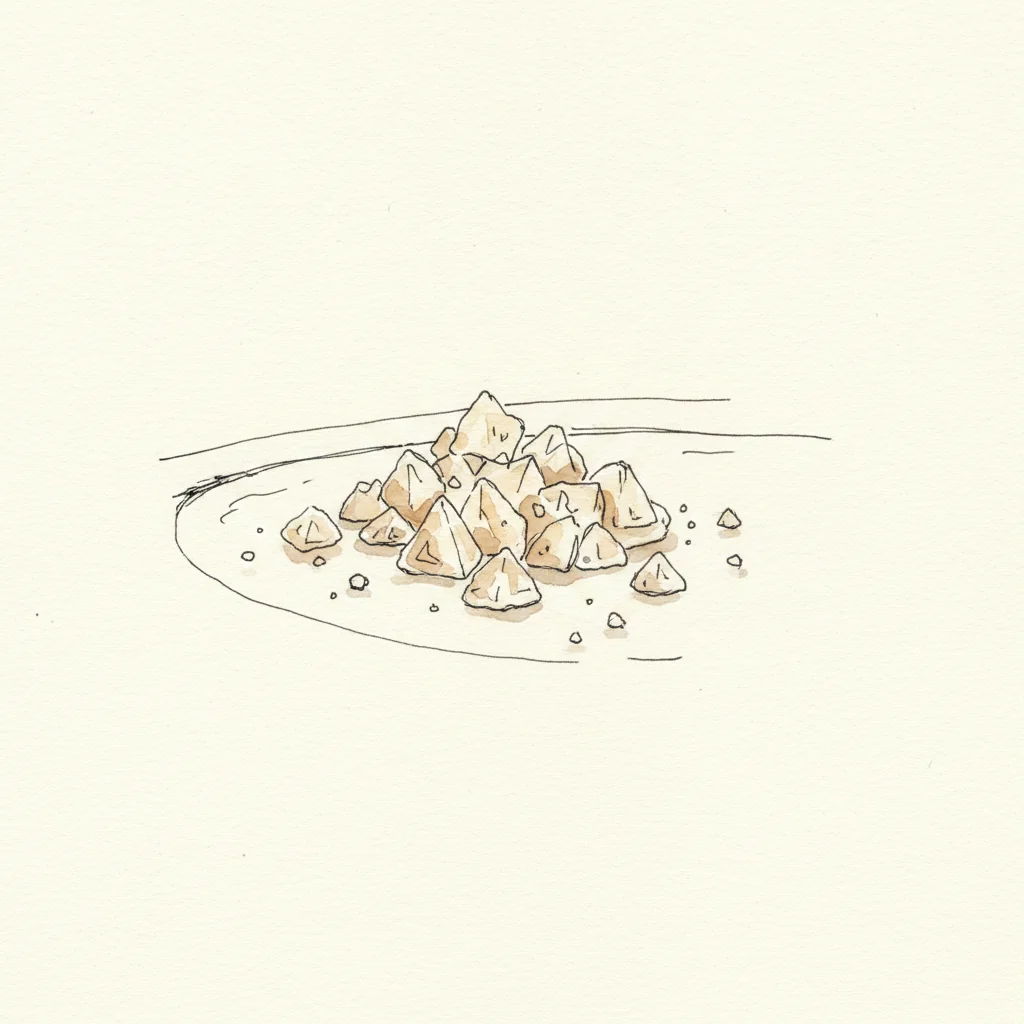
You need exactly one finishing salt to start, and for most US kitchens it's Maldon: about $7 a box, hollow pyramid flakes that shatter on the tongue, and it lasts a year of Sunday roasts. That's the answer if you want to close this tab now. Everything below is about the four cases where Maldon isn't the right grain — when you want a slow, iodine-soft melt instead of a crunch, when you're cooking British, when you want the homegrown Oregon salt, and when you just need a cheap workhorse for the pot.
Here's the thing no salt brand will tell you, because they sell salt: a finishing salt cooked into the dish is money set on fire. The crunch, the slow melt, the violet note — those are surface effects. Throw a flaky salt into a screaming pan and it dissolves into nothing you can taste. So the whole game is matching one of a handful of grains to the moment just before the plate hits the table. This guide tells you which grain, roughly what it costs, and where to buy it.
In this guide
- What a finishing salt actually is
- The six salts worth knowing
- How to choose your grain
- How to use it without wasting it
- Mistakes that cost you money
- FAQ
What a finishing salt actually is
A finishing salt is any salt you add raw, at the end, where you can see and feel it. The opposite is a cooking salt — coarse, cheap, dissolved into pasta water or a braise where its only job is salinity. The split matters because it decides where your money should go: spend nothing on the pot, spend a little on the plate.
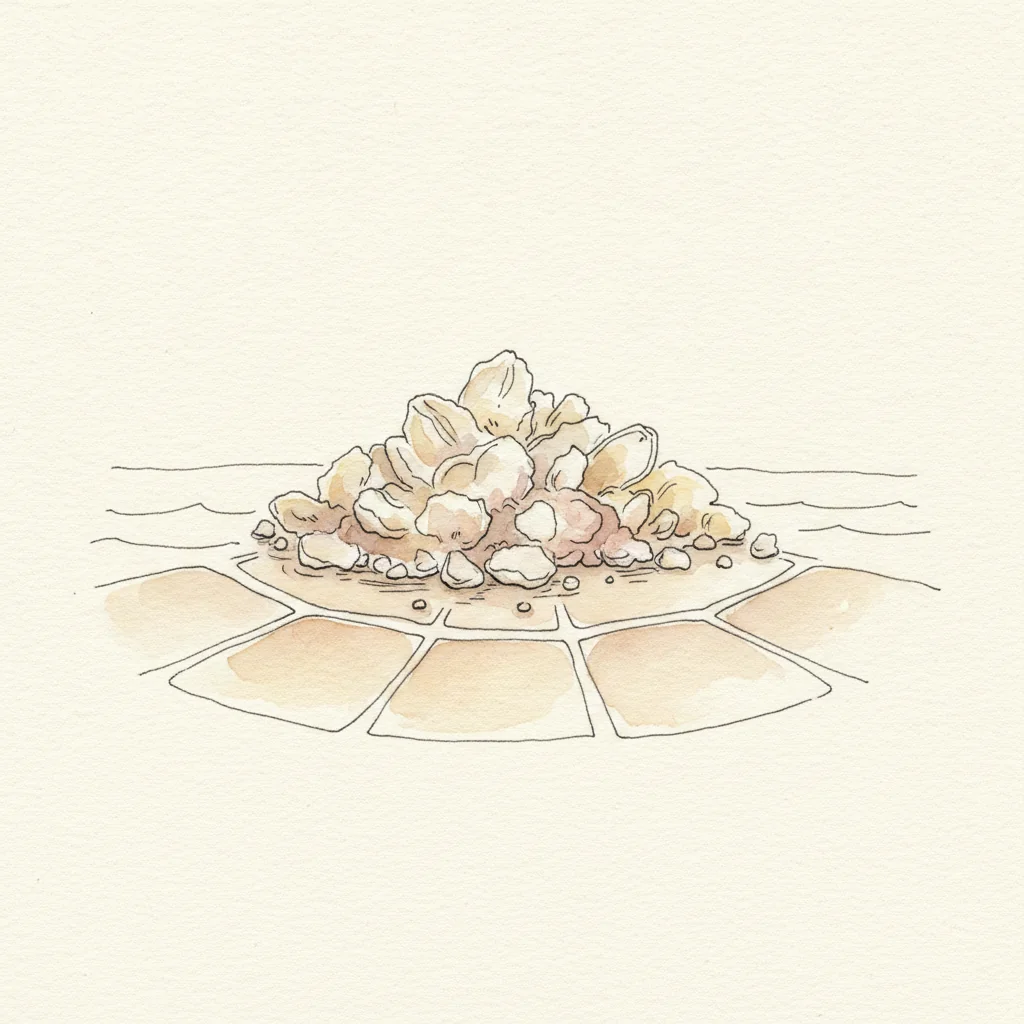
Two physical things separate the finishing salts from each other. Crystal shape controls texture. Maldon and Jacobsen are hollow pyramid flakes — they shatter, giving a loud, brittle crunch. Fleur de sel de Guérande is a fine moist crystal that crunches softly and then melts slowly, never sharp. Residual moisture controls melt speed and feel: a damp salt clings and dissolves on contact, a dry flake sits proud and stays crisp.
The third thing is provenance, and it's the one that's mostly marketing — except when it isn't. A PDO or PGI stamp (the EU's protected-origin marks) is the one provenance signal that's verifiable rather than vibes. Guérande carries a PGI; Halen Môn earned a PDO in 2014. Color, on the other hand — pink, black, blue — almost never tells you anything about taste. That's a different guide.
The six salts worth knowing
Maldon — the default crunch (England, since 1882)
Maldon is the flaky finishing salt every line cook keeps within reach, and for good reason. The Osborne family has been pan-heating and hand-skimming it in the Essex town of Maldon since 1882, refusing to industrialize, holding output to a few hundred tonnes a year. The crystals are hollow pyramids that shatter on the tongue for a crunch no fleur de sel matches, with a clean bright salinity and no bitterness.
It's the grain for a seared steak, for chocolate-chip cookies, for olive oil on toast, for a green salad. About $7 a box (8.5 oz) and it lasts a year — the cheapest upgrade in any kitchen. If you buy one finishing salt, buy this. In the UK it's at Sous Chef and most supermarkets; in the US, Amazon.
Fleur de sel de Guérande — the slow melt (France, PGI)
Fleur de sel de Guérande is the original finishing salt, and it does the opposite of Maldon. Paludiers hand-skim these fine moist crystals off the surface of Atlantic salt pans that appear in Carolingian charters from the 9th century. The trade nearly died to real-estate pressure in the 1970s, then was saved and protected — Label Rouge in 1991, PGI later. Roughly 250 paludiers work over 2,000 hectares today.
The crystals melt slow and round, with a light iodine finish and a faint violet note. That slow dissolve is the point: it's the grain for ripe summer tomatoes, for salted caramel, for dark chocolate, for steak tartare. About $11 for 125 g — a splurge, but a justified one when you want softness instead of shatter. Don't waste it cooking; it just melts like any salt and you've paid PGI money for table salt.
Jacobsen — the homegrown American flake (Oregon, since 2011)
Jacobsen Pure Flake Salt is the first commercial sea salt harvested in the Pacific Northwest since Lewis & Clark boiled seawater at Seaside in 1806. Ben Jacobsen started chasing a homegrown flake around 2008 and shipped the first Oregon-harvested salt from Netarts Bay in 2011; the company built its own harvest facility and now supplies a lot of the country's best restaurants. The flakes are thinner and softer than Maldon, with a bright Pacific brine and a delicate crunch that melts a touch faster.
It's the patriot's pick for scrambled eggs, French fries, focaccia, salted brownies, and avocado toast. The catch is the price: about $15 for 4 oz, against $7 for nearly twice as much Maldon. Buy it if buying American matters to you or you want to taste the difference on eggs — otherwise Maldon does the same job for less.
Halen Môn — the Welsh standard (Anglesey, PDO 2014)
Halen Môn is the British finishing salt with the strongest provenance claim. David and Alison Lea-Wilson started it in 1997, boiling Menai Strait seawater on their kitchen stove next to an aquarium business; it grew into a dedicated Anglesey saltworks and won PDO protection for its Pure Sea Salt in 2014. The flakes are lighter and softer than Maldon, with a clean rounded brine and a gentle crunch that melts soft.
This is the grain for a Sunday roast of lamb, for Welsh rarebit, for dressed crab, for roast potatoes and bread and butter. About £6 a tub in the UK — proper PDO provenance for the price of a sandwich. The clear UK pick when you want certified origin and a softer flake than Maldon.
Cornish Sea Salt — the everyday British flake (Cornwall, since 2008)
Cornish Sea Salt is the sound, cheap, everyday flaky salt for British plates. The company was founded in 2008 on the Lizard Peninsula, reviving sea-salt harvesting on a coast that has Iron Age salt-working sites, drawing Atlantic water from a designated conservation stretch. The crystals are finer than Maldon, with a brisk bright brine.
It's built for fish and chips, roast potatoes, Yorkshire pudding, and seared seafood. At around £3 to £4 for a small tub it's the one to reach for daily so you save the Maldon and Halen Môn for company. No PDO, no romance — just a good, honest Atlantic flake at the right price.
Noirmoutier — the workhorse, not a finishing salt (France, Vendée)
Noirmoutier sea salt is on this list precisely to tell you when not to spend. It's the honest workhorse of the French kitchen — hand-raked from the island's tidal marshes off the Vendée since at least the Middle Ages, when monks from the Abbey of Saint-Philbert organized the pans. The grey-flecked crystals carry a frank salinity and a wet mineral edge.
This is a cooking salt, not a flake for the plate. Use it in the pot, in the seafood boil, in artisan bread dough. It stays cheap — roughly $5 to $8 a kilo — and that's the whole point: any decent coarse sea salt is fine here, so don't tip Maldon into the pasta water. Save the finishing salt for the finish.
How to choose your grain
Start with one flake, not six. A US kitchen wants Maldon. A UK kitchen wants Maldon or Halen Môn. That single box covers steak, salad, eggs, cookies, and toast — most of what a finishing salt does. Buy the rest only when a specific job demands it.
Crunch or melt? That's the real fork. Want a loud shatter on a steak or a cookie? Pyramid flakes: Maldon, Jacobsen, Cornish. Want a slow, soft, iodine-round dissolve on tomatoes or caramel? Moist crystals: fleur de sel de Guérande. They are different tools, not a ranking.
Let provenance break a tie, not lead the decision. A PGI (Guérande) or PDO (Halen Môn) is the one origin signal you can actually verify. It's worth a small premium when two salts do the same job. It is not worth paying for if the cheaper flake suits the dish — which on fish and chips, it does.
Honest market prices (June 2026): Maldon about $7 / £4–5 a box (8.5 oz); fleur de sel de Guérande $9–14 for 125 g; Jacobsen $12–17 for 4 oz; Halen Môn £5–7 for 100 g; Cornish £3–5 for 150 g; Noirmoutier $5–9 a kilo. If a shop is charging double these, walk.
Skip the wellness salts for flavor. Pink Himalayan, "84 minerals," lamp-colored rock salt — that's a different category sold on health claims that don't hold up. If you want color on a plate, that's a separate, smaller decision. For taste and texture, the six above are the working set.
How to use it without wasting it
Add it raw, off the heat, at the very end. This is the one rule. A finishing salt that touches a hot pan melts and you've paid for nothing. Plate the food, then salt it — three or four flakes per portion, where you can see them.
Pinch, don't grind, and crush from a height. Take a few flakes between your fingers and scatter them from a few inches up so they land unevenly — some bites get a crystal, some don't. That contrast is the effect. A salt mill turns your $7 flake into table salt; never put a finishing salt in a grinder.
Salt the slice, not the board, and not early. On a seared steak: season the raw meat with coarse kosher salt, sear, rest, then crush Maldon over the sliced face. A slice salted ten minutes early weeps moisture and goes flat — finish at the table, plate to fork.
Match the grain to the surface.
- Steak, lamb, roast meats: crush a dry flake (Maldon, Halen Môn) over the slice after resting.
- Ripe tomatoes, caramel, dark chocolate: fleur de sel for the slow melt, never a hard dry flake.
- Eggs and fries: a soft flake like Jacobsen or French fries right at the plate.
- Fish and chips, roast potatoes: Cornish — the cheap brisk flake earns its keep here.
- Cookies and baked goods: a flake on top before baking (chocolate-chip) keeps its crunch through the oven.
Store it dry and use a dedicated dry spoon. Salt doesn't spoil — it's a mineral, not organic, and keeps for years. What ruins it is moisture: a wet spoon clumps a whole tub into a brick. Keep it in an airtight jar and use one dry wooden spoon per salt. Free, and it doubles the working life of the tub.
Mistakes that cost you money
Cooking with your finishing salt. The most common and most expensive. The flakes dissolve, lose the crunch, and you've paid finishing-salt money for what coarse cooking salt does better. Cook with Noirmoutier or any cheap coarse salt; finish with Maldon.
Buying for color instead of for the job. Pink, black, and blue salts sell on looks and health folklore. The crystal shape and moisture decide how a salt performs on the plate — color almost never does. Buy the grain that crunches or melts the way the dish needs.
Putting flaky salt in a grinder. A salt mill crushes the pyramid flakes into fine salt — you've literally ground away the only feature you paid for. Pinch by hand, every time.
Salting too early. A finishing salt sitting on a cut surface for ten minutes draws out moisture and goes flat. It's a last-second move, applied at the table or the moment before serving.
Overbuying the collection. You do not need six salts to start. One flake and one cheap cooking salt cover almost everything. Add fleur de sel when you want the slow melt, a smoked or specialty salt when a specific dish calls for it — not before.
FAQ
What's the best finishing salt to buy first?
Maldon for most US and UK kitchens — about $7 / £4–5 a box of hollow pyramid flakes that crunch on a steak, a salad, or a cookie, and last a year. It's the single most useful flake and the cheapest upgrade you can make. Add a moist salt like fleur de sel later, when you want a slow melt rather than a shatter.
What's the difference between Maldon and fleur de sel?
Different jobs. Maldon is a dry hollow-pyramid flake that shatters for a loud crunch — best on seared meat, salads, and chocolate-chip cookies. Fleur de sel de Guérande is a fine moist crystal that melts slow and round with a light iodine and violet note — best on tomatoes, caramel, and dark chocolate. A serious kitchen ends up with both.
Is Jacobsen worth it over Maldon?
Only if buying American matters to you, or you want the softer, faster-melting flake on eggs. Jacobsen runs about $15 for 4 oz against roughly $7 for nearly twice as much Maldon. The salt is genuinely excellent and the first flake harvested commercially in the Pacific Northwest since Lewis & Clark, but for pure cost-per-crunch, Maldon wins.
Can I cook with finishing salt?
You can, but you shouldn't — it's a waste. The flakes dissolve in heat and lose the crunch or slow melt you paid for, tasting like ordinary salt. Use a cheap coarse cooking salt like Noirmoutier in the pot, and save the flaky salt for the finish, added raw at the end.
Does a more expensive salt taste better?
Not reliably. Past a certain point you're paying for provenance, scarcity, or color, not flavor. A PGI or PDO stamp (Guérande, Halen Môn) is the one premium that's verifiable. Crystal shape and moisture — crunch versus melt — matter far more to a dish than price. The £3 Cornish flake beats a fancy salt on fish and chips.
How long does finishing salt last?
Years. Salt is a mineral, not organic, so it doesn't spoil or oxidize. The only enemy is moisture, which clumps it into a brick. Keep it in an airtight jar away from steam and use a dry spoon. Smoked or aromatic salts hold their added flavor for 12–18 months, but plain sea salt is effectively forever.
In short
Six salts, three jobs. One cheap cooking salt for the pot (Noirmoutier or any coarse sea salt). One crunch flake for the plate (Maldon in the US, Maldon or Halen Môn in the UK, Cornish for everyday British). One slow-melt salt for tomatoes, caramel, and chocolate (fleur de sel de Guérande). Jacobsen is the homegrown US splurge when you want it. A curious household covers all three jobs for well under $40 a year. Still stuck? The Oracle on the home page crosses your dish against a flavor profile and names the exact grain to buy.
Methodology: these recommendations follow our methodology. Affiliate links are marked sponsored and earn us a commission at no extra cost to you — see our affiliate policy.